Protecting Your Farm’s Most Valuable Assets
Farm equipment insurance coverage provides financial protection for agricultural machinery and equipment against damage, theft, and other covered perils. This specialized insurance helps farmers repair or replace vital equipment when accidents or disasters strike.
| Farm Equipment Insurance Coverage Essentials |
|---|
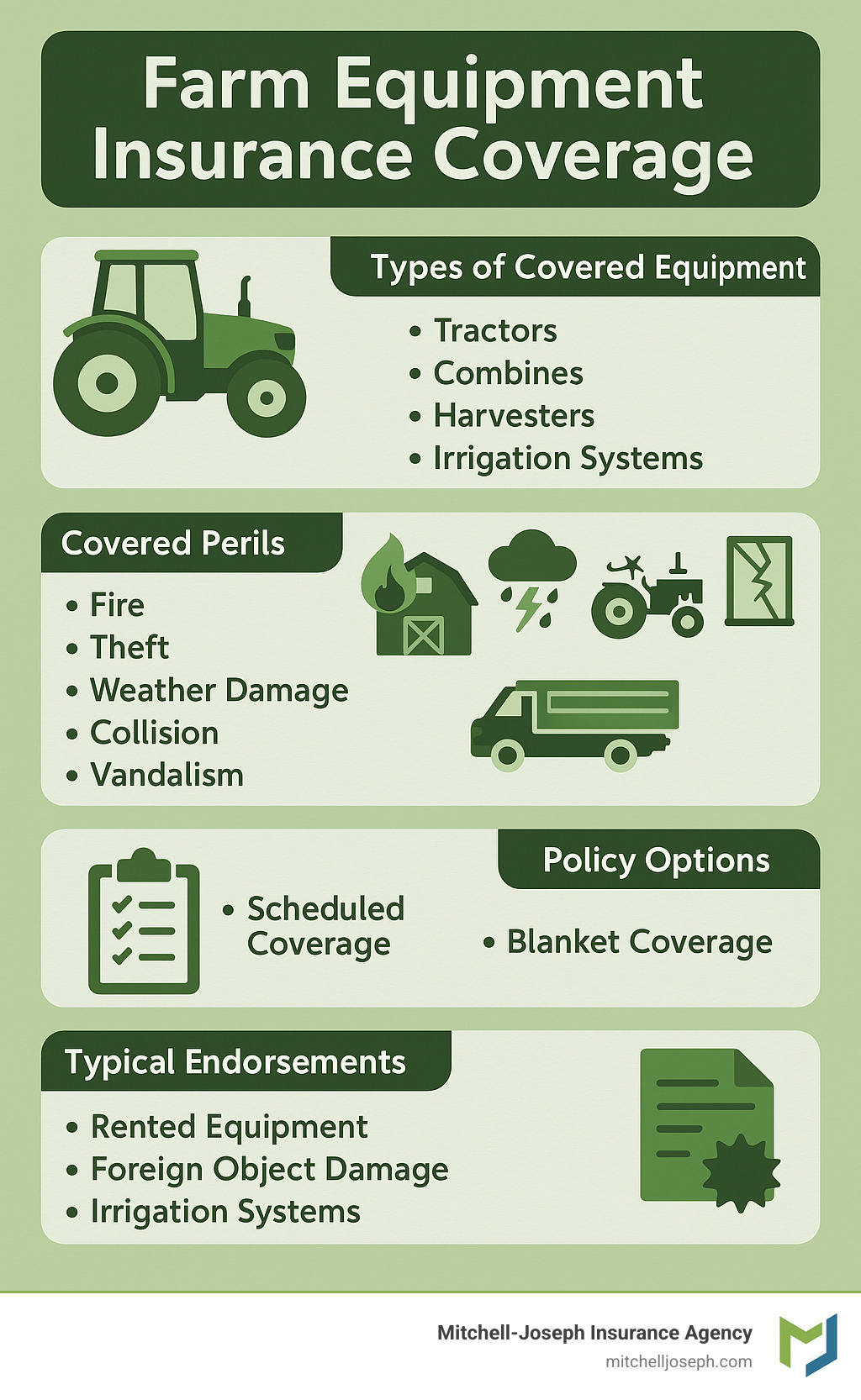
| ✅ Covers tractors, combines, harvesters, irrigation systems, and other machinery |
| ✅ Protects against fire, theft, weather damage, collisions, and vandalism |
| ✅ Available as scheduled coverage (itemized equipment) or blanket coverage (overall limit) |
| ✅ Optional endorsements for rented equipment, foreign object damage, and irrigation systems |
| ✅ Replacement cost coverage available for equipment up to 8 years old with some insurers |
Farm equipment represents one of your largest investments as a farmer. With U.S. farmers spending $13.7 billion annually on tractors and self-propelled machinery, protecting these assets is crucial to your operation’s survival. Nearly 1,500 tractors are reported missing each year, with only 16% ever recovered. Without proper insurance, a single loss could devastate your farm’s finances.
Consider this: A combine harvester can cost several hundred thousand dollars. If destroyed by fire or stolen during harvest season, your farm faces not only the replacement cost but also potential income loss during downtime.
Modern farming equipment isn’t just expensive—your daily operations. When machinery breaks down or is damaged, every day without it impacts your productivity and bottom line. That’s why specialized farm equipment insurance coverage goes beyond standard property insurance to address the unique risks farmers face.
I’m Jeffrey Joseph, owner of Mitchell-Joseph Insurance Agency, and I’ve been helping farmers across the Finger Lakes Region secure appropriate farm equipment insurance coverage since 1999. My decades of experience have taught me that proper equipment coverage is the foundation of any comprehensive farm insurance plan.
Key terms for Farm equipment insurance coverage:
– Commercial farm insurance NY
– farm insurance companies
Why Your Tractor Isn’t Just Another Asset
When I sit down with farmers across Canandaigua, Victor, and throughout our beautiful Finger Lakes region, I hear it time and again: “My equipment is my livelihood.” And they’re absolutely right. That $13.7 billion American farmers invest annually in tractors and self-propelled machinery isn’t just spending—it’s the backbone of their entire operation.
Think about it. A new combine harvester runs upwards of $500,000, while even a decent mid-sized tractor easily tops $100,000. These aren’t just expensive tools—they’re the beating heart of your farm.
I remember when one of our clients in Mendon had their main tractor stolen. Beyond the staggering $175,000 replacement cost, they faced weeks of downtime during planting season. The financial ripple effect nearly sank their entire operation.
The reality is sobering: about 1,500 tractors disappear annually across America, with only 16% ever finding their way home. Without proper farm equipment insurance coverage, these losses hit your bottom line directly and immediately.
But theft is just one concern. Equipment breakdown during critical seasons can be just as devastating. When your combine quits mid-harvest or your planter fails during that narrow spring planting window, every single day of downtime translates to real dollars lost—both in immediate repairs and in potential yield reduction.
Hidden Risks Lurking on Every Acre
The threats to your farm equipment go far beyond what most people imagine. While theft remains a major worry (especially in rural areas where sheriff response might take precious time), several other dangers lurk around every corner:
Fire damage can strike without warning—whether from mechanical failures, electrical shorts, or field fires during dry seasons. Just last year, a client in Bristol lost a $250,000 tractor to an electrical fire that started in the cab while parked overnight.
Weather-related damage doesn’t care about your schedule. Severe storms, lightning strikes, hail, and flooding can all wreak havoc on equipment, particularly if caught in the field. Even something seemingly minor like wind damage to cab glass can sideline equipment during your busiest times.
Vandalism happens more than folks realize. Agricultural equipment stored in remote locations becomes an easy target. From broken windows to cut fuel lines, these senseless acts lead to costly repairs and frustrating downtime.
Collisions and overturns occur even to the most careful operators. Challenging terrain, roadway incidents when moving between fields, or simple operator fatigue can all lead to accidents. A tractor overturn can result in significant damage even when safety systems save the driver.
Equipment breakdown has become increasingly complex with modern machinery. As one of my Canandaigua clients put it: “I never thought I’d need to worry about my tractor’s computer system failing. But when it did, the $12,000 repair bill made me grateful for my equipment coverage.”
Today’s precision agriculture components—GPS systems, monitors, sensors—add fantastic capabilities but also introduce more potential failure points. When these systems break down, the repair bills can be shockingly high.
Your equipment isn’t just a collection of assets—it’s the foundation of your farm’s success. Protecting it properly isn’t optional; your operation’s survival and your family’s future.
Farm equipment insurance coverage: What’s Protected?
When I sit down with farmers across the Finger Lakes region, they often ask me, “Jeff, what exactly does my farm equipment insurance coverage actually protect?” It’s a great question – and the answer is far more comprehensive than many realize.
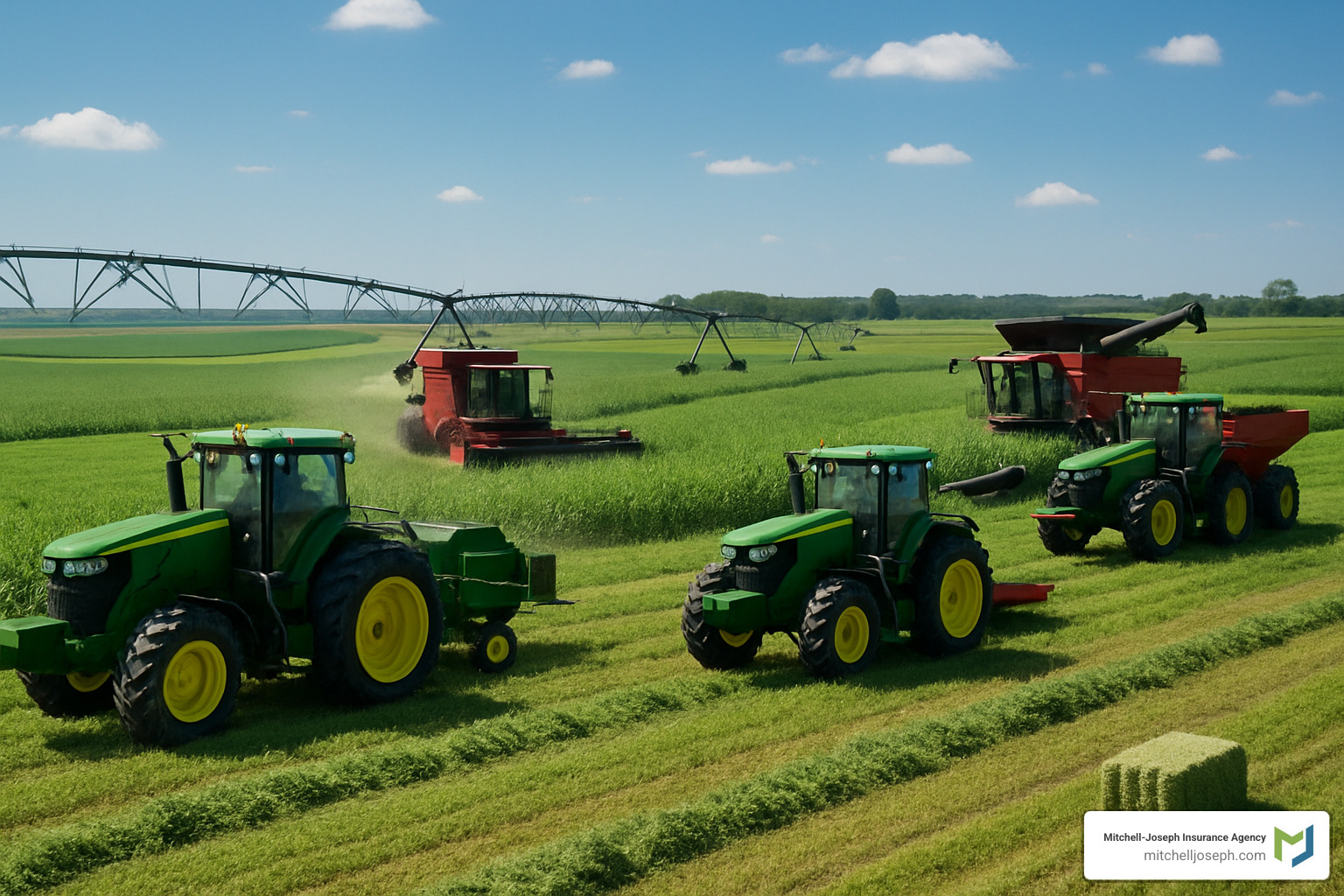
Unlike standard property insurance that might only cover equipment while it’s stored in your barn, proper farm equipment insurance coverage follows your machinery wherever it goes – whether it’s plowing a back forty, traveling between fields, or safely tucked away for the winter.
Here at Mitchell-Joseph Insurance Agency, we build policies that protect virtually all the workhorses of your operation. Your tractors – from that trusty compact utility model to your powerful 4WD articulated beast – form the backbone of this coverage. But we don’t stop there. Your combines and harvesters, the planters and seeders that start each season’s promise, and those sprayers and applicators that protect your investment all deserve protection too.
I remember sitting at Tom’s kitchen table out in Naples last spring when he mentioned his center pivot irrigation system. “Never thought much about insuring it,” he told me, “until that windstorm twisted it like a pretzel last year.” We made sure his new policy included not just irrigation systems but also all those precision agriculture investments – GPS guidance systems, yield monitors, and other electronics that represent significant investments in modern farming.
From hay equipment to tillage tools, specialized harvesters to the shop tools you rely on daily – if it helps you farm, we can help you protect it.
Core Perils Under Farm equipment insurance coverage
“So what exactly am I protected against?” This question comes up in nearly every farm insurance conversation I have. Your farm equipment insurance coverage typically shields you from a range of threats that commonly impact agricultural machinery.
Fire tops the list of concerns for most farmers I work with. Whether it starts in an overheated bearing or from a field stubble burn that gets out of control, fire damage can be catastrophic. Just last summer, a client in Bristol watched helplessly as an electrical fire consumed his $250,000 tractor in minutes. His proper coverage meant he was back up and running within weeks instead of facing financial ruin.
Lightning strikes are more common than many realize, especially with equipment left in open fields. Beyond direct strikes, the electrical surge can fry sensitive electronics and control systems that modern machinery depends on.
When severe weather rolls through, wind & hail protection becomes invaluable. I’ve seen hail damage dent housings, crack cab glass, and even damage critical components. And speaking of cabs, many policies include specialized cab glass breakage coverage with reduced or waived deductibles – a small but welcome benefit when you’re facing an unexpected repair.
Overturn and collision protection covers those heart-stopping moments when equipment tips over on uneven ground or impacts something during operation. And with the value of today’s machinery, even minor accidents can lead to major repair bills.
Flood coverage provides crucial protection in low-lying areas, though coverage specifics may vary depending on your location and flood risk assessment.
And let’s not forget theft – a growing concern as equipment values rise. With recovery rates for stolen farm machinery hovering around just 16%, theft protection isn’t optional for most operations.
For more comprehensive information about our farm insurance options, visit our Farm Insurance page.
Optional Endorsements to Expand Farm equipment insurance coverage
Basic coverage forms a solid foundation, but many farmers find tremendous value in optional endorsements that provide extra layers of protection for specific risks.
During our busiest seasons, many of us need to temporarily rent or borrow additional equipment. That’s where rented or borrowed equipment coverage becomes essential. I worked with a dairy farmer in Victor who borrowed his neighbor’s specialty forage harvester during a particularly tight harvest window. When it sustained damage while on his property, this endorsement saved him from a potentially friendship-ending financial dispute.
For operations with significant irrigation investments, irrigation system replacement cost coverage ensures you can replace damaged systems without facing depreciation deductions, regardless of age.
One endorsement I particularly recommend is foreign object ingestion coverage. Sarah, who farms just outside Canandaigua, learned its value when a metal fence post fragment was picked up by her combine, causing over $22,000 in rotor and concave damage. Without this coverage, that repair would have come straight from her operating line during harvest – exactly when cash flow is most critical.
For livestock producers, hay stack coverage protects harvested feed against fire, lightning, and other specified perils – protection that’s especially valuable with today’s hay prices.
Modern equipment is essentially a computer on wheels, which is why equipment breakdown coverage has become increasingly important. This protection goes beyond normal wear and tear to cover electrical and mechanical failures in those complex systems.
Finally, loss of use/rental reimbursement coverage helps minimize the operational impact when equipment is being repaired by covering rental costs for replacement machinery. When you’re racing against weather windows, this coverage can make the difference between getting your crop in or watching it deteriorate in the field.
For a deeper dive into agricultural equipment insurance options, the Agricultural Equipment Insurance resource provides valuable additional context.
Choosing Blanket vs Scheduled Policies
When it comes to protecting your farm equipment, one of the most important decisions you’ll face is whether to choose blanket coverage or scheduled coverage. I’ve helped hundreds of farmers across the Finger Lakes region make this choice, and the right answer always depends on your unique operation.
Blanket Coverage
Blanket coverage is exactly what it sounds like – a big, cozy insurance blanket that covers all your farm equipment under one aggregate limit. Instead of listing each piece individually, you simply establish a total value for all your machinery and tools.
Many of my clients in smaller operations love blanket coverage for its simplicity. You don’t need to call me every time you trade in a cultivator or buy a new implement – your policy automatically includes newly acquired equipment (typically for 30-60 days, up to certain limits).
“The blanket policy saved me so much paperwork last year,” one of my Honeoye Falls clients told me recently. “When I added three pieces of equipment during planting season, I didn’t have to worry about calling mid-season to update my policy.”
Blanket coverage works especially well if you have lots of similar-value items. However, it typically comes with higher deductibles, and you need to be careful not to underestimate your total equipment value – that’s a mistake I’ve seen too many times.
Scheduled Coverage
With scheduled coverage, we’ll sit down together and itemize each piece of equipment individually on your policy, with specific values assigned to each item. This approach gives you precise protection for your most valuable assets.
I remember helping a client in Victor after a fire damaged his combine. Because we had scheduled it individually with a specific value, the claims process was remarkably smooth. The insurance company didn’t question the value – it was already documented in black and white on his policy.
Scheduled coverage typically allows for lower, customized deductibles for specific items. The main drawbacks? You’ll need to update your policy whenever you buy or sell equipment, and premiums are generally higher than blanket policies.
| Comparison Factor | Blanket Coverage | Scheduled Coverage |
|---|---|---|
| Documentation Required | Total inventory value | Individual item listing with values |
| New Equipment Protection | Automatic (with limits) | Requires policy update |
| Claims Process | May require value verification | Pre-established values simplify claims |
| Premium Cost | Generally lower | Generally higher |
| Deductible Options | Usually higher | Can be customized per item |
| Best For | Operations with many similar-value items | Farms with several high-value pieces |
Here at Mitchell-Joseph Insurance, we often recommend what I call the “hybrid approach” – schedule your high-value equipment like tractors and combines individually, then cover your implements and smaller equipment under a blanket policy. This gives you precision where it matters most while maintaining simplicity for the rest.
How Replacement Cost Coverage Works
One of the most valuable options for your farm equipment insurance coverage is replacement cost coverage. Unlike Actual Cash Value (ACV) coverage, which factors in depreciation when settling claims, replacement cost coverage pays to replace damaged equipment with new equipment of similar type and quality, without those painful depreciation deductions.
Most insurers (including the 24 companies we work with) offer replacement cost coverage for machinery up to eight years old, though some may restrict it to newer equipment or offer tiered coverage based on age.
Let me show you how this works with a real example from one of my clients:
– His five-year-old tractor valued at $150,000 was destroyed in a barn fire
– The same model new would cost $175,000 today
– With replacement cost coverage, he received $175,000 (minus his deductible)
– Had he chosen ACV coverage, he might have received only $105,000 after depreciation
That $70,000 difference – what I call the “depreciation gap” – can be the difference between getting back to work quickly or facing a financial crisis.
Replacement cost options typically include:
– Full replacement cost for newer equipment (usually 0-5 years)
– Replacement cost with allowance for depreciation for middle-aged equipment (usually 5-8 years)
– Actual cash value for older equipment (usually 8+ years)
When we sit down to structure your policy at Mitchell-Joseph Insurance Agency, we’ll carefully consider the age and value of each piece of equipment to determine the most cost-effective coverage approach. After all, farming is challenging enough without worrying about whether your insurance will truly protect your operation when you need it most.
Dollars and Sense: Premium Drivers & Valuing Your Machinery
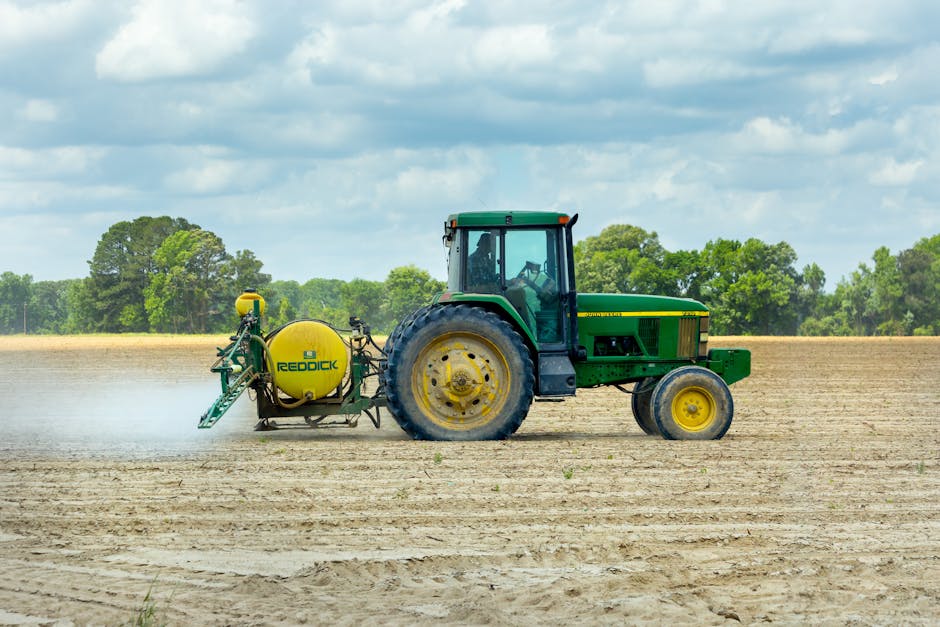
When farmers ask me what drives the cost of their farm equipment insurance coverage, I often tell them it’s like putting together a puzzle where each piece represents a different aspect of their operation. Let me walk you through what really matters when it comes to your premium costs.
The age and value of your equipment plays a major role in determining your rates. That shiny new combine might cost more to insure than your trusty 10-year-old tractor, though many insurance companies recognize that newer equipment often comes with safety features that can actually help offset some costs.
I remember a client in Bloomfield who was surprised to learn that his equipment type and horsepower significantly affected his premium. “But Jeff,” he said, “why does my 300-horsepower tractor cost so much more to insure than my old 125-horsepower model?” The answer was simple – more powerful machines generally cost more to repair or replace when damaged.
Those impressive technology features that make modern farming more efficient? They’re wonderful for productivity but can increase both your equipment’s value and your insurance costs. GPS guidance systems, yield monitors, and computerized controls might add $15,000-$30,000 to your machine’s value – and your policy needs to reflect that.
“The best discount I ever got,” a client from Victor told me, “was when I built that new equipment shed with security lighting.” She’s right – storage and security measures matter. Equipment kept in secure buildings with alarm systems or tracking devices often qualifies for lower premiums. Some farmers in our area have seen 5-15% savings just by improving their security setup.
Your geographic location matters more than you might think. Farms near Canandaigua Lake face different weather risks than those in the hills around Naples, and insurance companies factor this in. Similarly, areas with higher theft rates typically see higher premiums.
Like any insurance, your claims history tells a story. A farmer who’s filed multiple equipment claims in recent years will likely pay more than one with a spotless record. At Mitchell-Joseph, we’ve seen premium differences of up to 25% based solely on claims experience.
“I always tell folks to think carefully about their deductible choices,” says our senior farm agent. Higher deductibles generally mean lower premiums, but they also mean more out-of-pocket costs when something happens. For many of our clients, bumping a deductible from $500 to $1,000 saves around 10-15% on premiums – money that stays in your pocket if you don’t have a claim.
The breadth of your coverage affects cost too. Those optional endorsements we discussed earlier provide valuable protection but add to your premium. And don’t forget to ask about multi-policy discounts – bundling your equipment coverage with other farm policies often results in savings of 10-20%.
Getting the Numbers Right Before You Buy
“My grandfather always said an ounce of preparation prevents a pound of problems,” a multi-generation farmer from Lima told me recently. He’s right, especially when it comes to properly valuing your farm machinery.
Accurately valuing your equipment is crucial to ensuring you’re neither underinsured (leaving you vulnerable to significant out-of-pocket costs) nor overpaying for unnecessary coverage. Let me share how we help farmers get this right.
For newer equipment, dealer invoices and purchase records provide the clearest starting point. Keep these documents organized – they’re gold when it comes to establishing value.
We also regularly consult market guides and valuation services like Equipment Watch or Tractor House. These resources offer standardized valuations based on make, model, year, and condition – particularly helpful for equipment that’s a few years old.
For specialized or high-value machinery, we often recommend professional appraisals. While they cost a bit upfront, they provide the most accurate valuation and can be invaluable during claims.
“When my sprayer was damaged last year,” shared a client from Avon, “having that dealer quote on file saved me thousands.” Dealer quotes for replacement costs on comparable new models can provide solid evidence of current market value.
Don’t underestimate the value of auction results either. Recent prices for similar equipment offer real-world market values that insurers respect during valuation discussions.
At Mitchell-Joseph Insurance Agency, we believe strongly in comprehensive annual reviews of your equipment values. Equipment doesn’t always depreciate in a straight line – sometimes it even appreciates during shortage periods or when parts availability is limited. These regular check-ins ensure your coverage keeps pace with market realities.
I’ll never forget the relief on a client’s face when we helped him through a major claim after his annual review. “If we hadn’t updated those values last month,” he said, “I’d be short by almost $40,000 on my replacement.” That’s why we take valuation so seriously.
For a deeper understanding of all aspects of farm insurance, I encourage you to visit our Farm Insurance 101 resource page where we answer many common questions.
From Breakdown to Payout: Navigating the Claims Process

The moment you find damaged equipment can feel like the world is standing still – especially during critical planting or harvest periods. Yet how you handle those first few hours can dramatically impact how quickly you’ll be back in operation. Let me walk you through what a farm equipment insurance coverage claim actually looks like in real life.
When one of our clients finded their tractor had been damaged by an overnight electrical fire, their first call wasn’t to the dealer – it was to us. Smart move. Prompt reporting kicks everything into motion, and at Mitchell-Joseph, we pride ourselves on responding quickly when you need us most.
“I still remember when lightning struck near Jim’s combine last harvest,” recalls Jeffrey Joseph, our agency principal. “He called us immediately from the field, sent photos right from his phone, and we had an adjuster scheduled before he even got the equipment back to his shop. That’s exactly how the process should work.”
The documentation stage is absolutely crucial. Those photos and videos you take immediately after finding damage serve as your evidence. I always tell clients to circle the equipment and capture every angle – damage that seems minor might actually indicate significant internal problems. And don’t forget to document those serial numbers! They’re like your equipment’s fingerprints.
While your claim is being processed, you might need to keep your operation moving. This is where we discuss rental options. Many of our farm equipment insurance coverage policies include rental reimbursement that can cover temporary equipment while yours is being repaired. One of our Naples clients was able to rent a replacement tractor during their six-week repair period, saving their tomato harvest.
When the adjuster arrives – typically within 24-72 hours for farm equipment claims – they’ll evaluate whether repair or replacement makes the most sense. This decision isn’t just about cost; it considers equipment age, parts availability, and how quickly you can get back to work. Sometimes a repair might cost less on paper, but if it means waiting three weeks for parts, replacement might be the better option.
Your policy terms determine how your settlement is calculated. With replacement cost coverage, you’ll receive the full amount needed for a new equivalent machine (minus your deductible). With actual cash value, depreciation is factored in. This difference can be substantial – we’ve seen it amount to tens of thousands of dollars on older equipment.
Once approved, payment is issued either directly to you or to the repair facility. Many of our clients appreciate our direct-pay options with local dealers, which eliminate out-of-pocket expenses entirely.
Step-by-Step Claim Checklist
When damage strikes, follow these steps to ensure the smoothest possible claim experience:
Contact your agent immediately – Our claims line is available 24/7, and quick reporting often means faster resolution. Document everything thoroughly with clear photos and videos before anything is moved. Secure your equipment to prevent additional damage if it’s safe to do so.
Gather supporting documentation like purchase records and maintenance logs – these help establish your equipment’s pre-incident condition. For theft or vandalism, file a police report right away, as these are required for such claims. Remember to track your downtime costs including any rental expenses or production losses.
Keep all receipts for emergency repairs or rentals, as these may be reimbursable. Make yourself available when the adjuster visits – your insights about the equipment are invaluable. Finally, review any settlement offer carefully to ensure it aligns with your policy terms and actual replacement costs.
“Being prepared makes all the difference,” explains our claims team leader. “Our client in Gorham had carefully documented all their equipment with photos and maintenance records. When their sprayer was damaged in a building collapse, we processed their claim in just four days because they had everything ready. Compare that to the typical two-week timeline, and you see why documentation matters.”
Throughout this process, your Mitchell-Joseph agent isn’t just processing paperwork – we’re your advocate. We understand the technical aspects of farm equipment, the pressures of agricultural timelines, and how to steer insurance company procedures to get you fair, prompt settlements. When a claim hits, we’re in your corner, fighting to get you back in the field as quickly as possible.
Growing Smarter: Updating Coverage as Your Operation Evolves
Farming is anything but static. Your operation grows, changes, and adapts with each passing season—and your farm equipment insurance coverage needs to keep pace. As a farmer, you know how quickly things can change from one year to the next.
I remember working with a family farm in Canandaigua who had been using the same equipment policy for nearly a decade. During our review, we finded they were significantly underinsured after years of gradual equipment upgrades. Their coverage hadn’t evolved alongside their operation, creating a dangerous gap that could have devastated their farm had a major loss occurred.
When should you review your equipment coverage? Several key moments should trigger a conversation with your insurance agent:
New equipment purchases often represent significant investments. While many policies include automatic coverage for new purchases, this protection typically only lasts 30-60 days and may have limitations. That shiny new tractor needs permanent protection on your policy before the temporary coverage expires.
Equipment upgrades and modifications can substantially increase your machinery’s value. That GPS guidance system or precision planting technology might add thousands to your equipment’s worth—and those investments deserve protection.
Seasonal equipment leases during busy planting or harvest windows require special attention. Don’t assume your policy automatically covers that combine you’ve leased for the fall harvest.
“Last year, a client in Victor leased a sprayer for the season but didn’t notify us,” shares our farm specialist at Mitchell-Joseph. “When it was damaged in a storm, they were shocked to learn their policy didn’t automatically extend coverage. We now proactively discuss seasonal needs during our check-ins.”
Inherited or gifted equipment needs proper valuation and addition to your policy. That tractor passed down from your father might carry sentimental value, but it also needs accurate insurance valuation.
Equipment sales or trades should prompt policy updates. Why continue paying premiums on machinery you no longer own? Removing sold equipment keeps your policy lean and accurate.
Changing usage patterns can affect your coverage needs. Equipment that begins seeing heavier use or different applications might require adjustments to your policy.
Inflation and market value changes impact replacement costs continuously. Agricultural equipment values don’t remain fixed—they fluctuate with market conditions, parts availability, and inflation.
At Mitchell-Joseph Insurance Agency, we believe in proactive protection. That’s why we recommend an annual policy audit for all our farm clients. This comprehensive review includes updating your equipment inventory, assessing current market values, reviewing planned acquisitions, evaluating coverage limits and deductibles, identifying potential gaps, and recommending appropriate adjustments.
Many quality farm policies include inflation guard provisions that automatically increase coverage limits to keep pace with rising equipment costs. However, these adjustments typically rely on general inflation indexes that may not accurately reflect the unique agricultural equipment market. Your specialized equipment deserves specialized attention.
“We had a client in Bloomfield who was shocked during their annual review to find their equipment values had increased by over $200,000 due to market appreciation and technology additions,” explains our senior farm insurance specialist. “Updating their coverage prevented what could have been a financial disaster.”
The farming landscape continues to evolve—with technology advancing, equipment costs rising, and operations becoming more specialized. Your insurance protection should evolve right alongside your operation.
For more insights on maintaining appropriate farm coverage as your operation grows, visit our Farm Insurance FAQs page.
Frequently Asked Questions about Farm Equipment Insurance Coverage
Is liability included with farm equipment insurance coverage?
When farmers ask me about their equipment policies, this question comes up more than almost any other. The short answer is: not typically.
Farm equipment insurance coverage primarily protects the physical machinery itself—your tractors, combines, and implements—rather than damage or injuries your equipment might cause to others. Think of it as protection for your investment, not protection from liability claims.
For true liability protection, you’ll need complementary coverage:
Your farm liability policy handles those situations where someone gets injured on your property or your operations cause damage to someone else’s property. Auto liability coverage becomes essential when you’re operating equipment on public roads. And for those worst-case scenarios, an umbrella liability policy provides that extra layer of protection beyond your standard policies.
I remember a client from Victor who experienced this distinction firsthand. Their tractor slid on a rain-slick road, damaging their neighbor’s fence and vehicle. While their equipment policy covered the scratches and dents to their tractor, it was their farm liability coverage that handled the neighbor’s damages. Without both policies in place, they would have faced a significant out-of-pocket expense.
At Mitchell-Joseph Insurance Agency, we always recommend coordinating your equipment and liability coverages to ensure you’re protected from all angles. One without the other leaves a dangerous gap in your farm’s financial safety net.
How does replacement cost apply to older machines?
The age of your equipment plays a crucial role in replacement cost coverage availability. It’s a bit like how we value cars—newer models typically qualify for better coverage terms.
For equipment that’s relatively new (0-5 years old), most insurers offer full replacement cost with no depreciation factored in. Your 3-year-old tractor that gets damaged? You’ll receive enough to buy a brand-new equivalent.
As machinery ages into the 5-8 year range, you might still qualify for replacement cost coverage, but some depreciation factors may apply. The sweet spot for coverage is definitely with newer equipment.
Once your machinery passes that 8-year mark, most standard policies will only offer actual cash value (ACV) coverage—essentially replacement cost minus depreciation for age and condition.
But here’s where working with a knowledgeable agent makes all the difference. I recently helped a Canandaigua farmer secure replacement cost coverage for their 9-year-old tractor. The difference? Meticulous maintenance records and exceptional equipment condition. Not every insurer would make this exception, but knowing which companies value well-maintained equipment saved this client thousands in potential out-of-pocket costs.
If you’re operating older equipment, documented maintenance records, equipment condition photos, and working with an agent who understands agricultural equipment can help you secure better coverage options. There are even specialized markets for truly vintage agricultural machinery for those classic tractors some farmers still put to work.
Can I insure borrowed or rented equipment temporarily?
Absolutely! Farm operations often require flexibility, especially during those critical planting and harvest windows when you might need to borrow or rent additional equipment.
Most quality farm equipment insurance coverage can be extended to temporarily cover equipment you don’t own. The simplest approach is often adding an endorsement to your existing policy that specifically covers rented or borrowed machinery. These endorsements can be surprisingly affordable and provide peace of mind when you’re operating someone else’s expensive equipment.
For seasonal needs, some insurers offer short-term policies specifically designed for temporary equipment use. This can be ideal if you consistently rent the same type of equipment for harvest or planting each year.
While equipment rental companies typically offer insurance options, I’ve found these tend to come with premium prices and limited coverage. One of our West Bloomfield clients finded this during harvest when their combine broke down. Rather than paying the rental company’s steep daily insurance rate, we quickly added a rental equipment endorsement to their existing policy—saving them nearly $1,200 over the three-week rental period while providing more comprehensive protection.
Before you take possession of any borrowed or rented equipment, be sure to verify coverage details, understand any policy limits specific to non-owned equipment, and document the condition with dated photos. A quick conversation with your Mitchell-Joseph agent before you sign that rental agreement could save you significant money and potential headaches.
Clear communication with equipment owners about responsibility for damages can prevent misunderstandings later. Get everything in writing, especially when borrowing from neighbors or family members.
Conclusion & Next Steps
Protecting your farm equipment isn’t just about insuring metal and machinery—it’s about safeguarding your livelihood and peace of mind. Throughout this guide, we’ve explored how farm equipment insurance coverage creates a financial safety net that helps you bounce back quickly when the unexpected happens.
I’ve seen how the right coverage makes all the difference when disaster strikes. Just last harvest, one of our clients near Canandaigua lost their combine to an electrical fire. Within days, they had a replacement and were back in the fields—all because they had comprehensive coverage custom to their operation’s needs.
At Mitchell-Joseph Insurance Agency, we bring more than 200 years of combined experience to the table. Our team has deep roots in the Finger Lakes region, serving farm families from Victor to Naples and everywhere in between. We understand the unique challenges you face because we’ve walked the same fields and faced the same weather patterns that impact your operation.
What makes our approach different is our relationship with 24 different insurance companies. This means we’re not tied to a single provider’s offerings—we can shop around to find you the perfect balance of coverage and affordability. Your farm deserves protection as unique as your operation, not a one-size-fits-all policy.
When you’re ready to ensure your equipment is properly protected, we make the process simple:
First, let’s sit down for a thorough coverage review. We’ll look at your current policies, identify any concerning gaps, and recommend practical solutions. Many farmers are surprised to find they’re either paying for coverage they don’t need or missing protection for their most significant risks.
Next, we’ll craft a customized quote that reflects your farm’s specific needs. We’ll explain everything in plain English—no insurance jargon or confusing terms.
We’ll also help you develop a straightforward system for documenting your equipment. Good records make all the difference during claims, and we want you to be prepared before trouble strikes.
Finally, we’ll create a flexible coverage strategy that grows with your farm. As you add equipment, expand operations, or pass the farm to the next generation, your insurance should evolve too.
Don’t wait for a breakdown, theft, or disaster to find your coverage isn’t what you thought. Contact Mitchell-Joseph Insurance Agency today and let’s make sure your farm equipment—and your future—are properly protected.
For more information about our farm insurance services, visit our farm insurance services page.
Proper farm equipment insurance coverage isn’t an expense—it’s an investment in your farm’s resilience and your family’s future. When you’re protected right, you can focus on what matters most: growing your operation and your legacy.