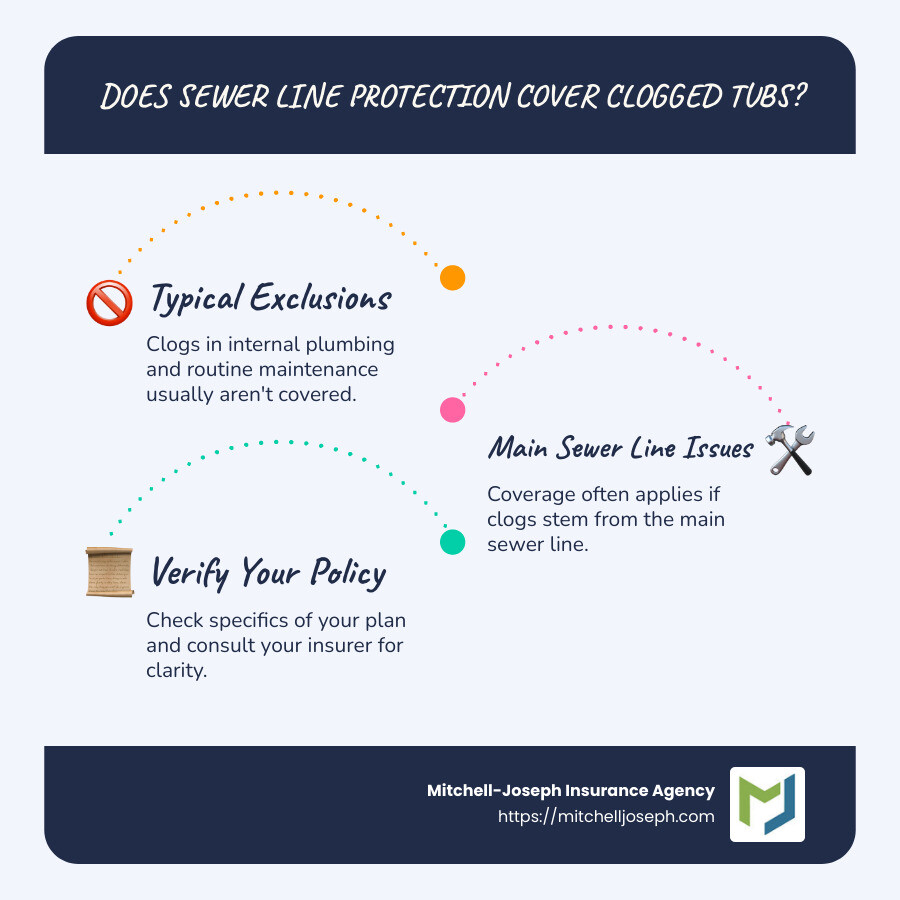
Does sewer line protection covers clogged tub? If you’re looking for a brief answer, here it is: Generally, sewer line protection plans do not cover clogged tubs directly unless the clog is due to an issue with the main sewer line itself. Factors like blockage within internal plumbing or typical wear and tear are usually not included. Always check the specifics of your plan and consider contacting your insurer for clarity.
For homeowners in upstate New York, dealing with a clogged tub can be more than a minor inconvenience—it can signal a more significant issue with your sewer line. With sewer backup being a prevalent concern, understanding how sewer line protection can offer peace of mind and financial security is crucial. While basic homeowner’s insurance might leave some gaps, specialized service line protection plans can bridge these. These plans typically cover repairs or replacements for your external sewer lines but may not extend to internal clogs or routine maintenance in fixtures like tubs.
My name is Jeffrey Joseph, and I have years of experience in navigating the complexities of service line coverage. At Mitchell-Joseph Insurance, we focus on providing personalized service backed by a deep understanding of insurance nuances, including concerns like ‘does sewer line protection covers clogged tub’.
Does sewer line protection covers clogged tub terms made easy:
- does homeowners insurance cover water damage from sewer backup
- water backup damage
- water damage due to rain
Understanding Sewer Line Protection
When it comes to protecting your home from unexpected plumbing issues, sewer line protection is a key consideration. This type of coverage is designed to help with the costs associated with repairs or replacements of external sewer lines that connect your home to the municipal system. But what exactly does this protection entail, and how does it work?
Coverage Limits
Sewer line protection typically comes with specific coverage limits. These limits define the maximum amount your insurance will pay for repairs or replacements. It’s essential to understand these limits to ensure you’re adequately covered. For instance, some plans may cover up to $4,000 per year for sewer line repairs, as noted in various service agreements. Knowing your policy’s limits can help you budget for any out-of-pocket expenses that might arise.
Repair Costs
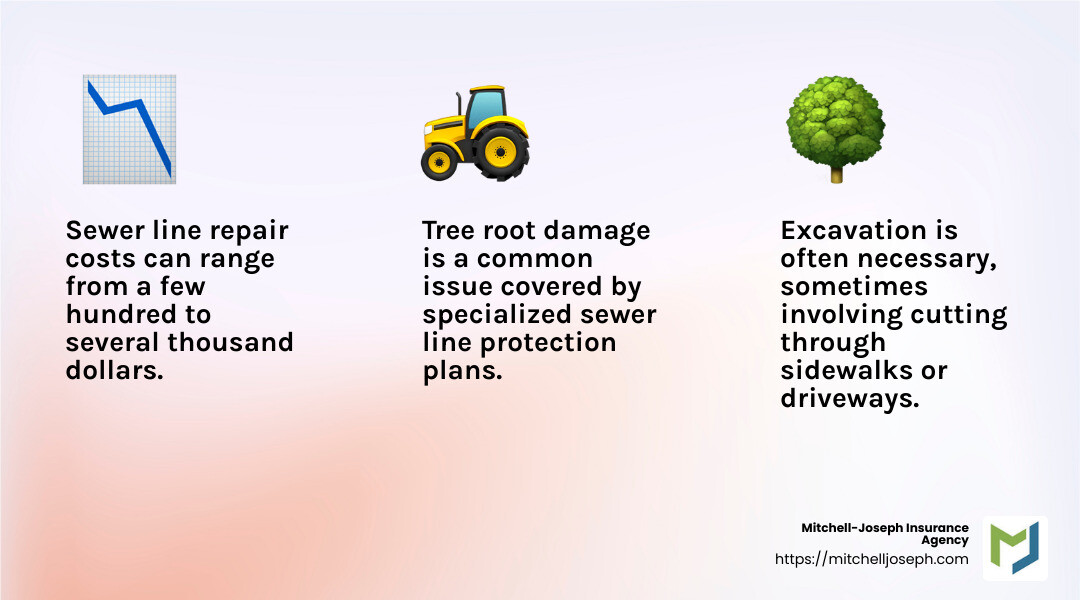
The costs of repairing a sewer line can be significant. Depending on the damage’s extent, repair costs can range from a few hundred to several thousand dollars. These costs often include labor, materials, and any additional services needed to restore your property. Without proper coverage, these expenses can quickly add up, making sewer line protection a valuable investment.
Excavation
Repairing or replacing a sewer line often requires excavation. This process involves digging up part of your yard to access the damaged line. Excavation can be costly, especially if it involves cutting through sidewalks or driveways. Some insurance policies include coverage for excavation, but it’s crucial to verify this in your plan. Additionally, policies might cover landscape restoration, which can be a relief after your yard has been disrupted.
Insurance Policies
Not all insurance policies are created equal. While standard homeowner’s insurance might cover sudden and accidental damage, it often excludes issues related to wear and tear or gradual deterioration. This is where specialized sewer line protection plans come into play. These plans are designed to fill the gaps left by standard policies, covering specific issues like corrosion, tree root damage, and severe weather impacts on your sewer lines.
In summary, understanding your sewer line protection policy means knowing your coverage limits, potential repair costs, and whether excavation is included. By doing so, you’ll be better prepared to handle any issues that arise, ensuring peace of mind and financial security for your home.
Does Sewer Line Protection Cover Clogged Tubs?
When it comes to clogged tubs, understanding what sewer line protection covers is crucial. Let’s break it down into what’s typically covered and what’s not.
What is Covered?
Sewer line protection can be a lifesaver when sudden damage occurs. If your tub is clogged due to a sudden and accidental event, like a pipe bursting, you might be in luck. In such cases, the resulting water damage—such as damage to your floors or walls—is often covered. This means your insurance could help with the repair costs to restore your home.
Water Damage: If a clog leads to significant water overflow that damages your property, this damage might be covered under the “all-perils” section of your homeowner’s insurance. The policy usually includes water clean-up and drying out the home.
What is Not Covered?
Unfortunately, does sewer line protection cover clogged tubs due to maintenance issues? Generally, no. Most insurance policies won’t cover clogs resulting from poor maintenance or gradual damage. This includes rust, mold, or other deterioration over time. Insurance companies typically view these as the homeowner’s responsibility.
Maintenance Issues: Clogged pipes due to neglect, such as failing to clean drains regularly or allowing hair and soap scum to build up, are not covered. These are considered preventable issues.
Rust and Mold: If your pipes are clogged because they are old and rusted, or if mold has built up over time, these are maintenance problems. Insurance policies generally exclude these, as they develop gradually and aren’t sudden or accidental.
In summary, while sewer line protection can help with unexpected, sudden damages, it usually doesn’t cover issues due to lack of maintenance. Regular upkeep is key to avoiding these costly repairs. Understanding the nuances of your policy can help you know what to expect if your tub clogs.
How to Add Coverage for Clogged Tubs
To protect yourself from the headaches of a clogged tub, consider adding specific coverage options to your insurance policy. Here’s how you can ensure your home is covered against water-related mishaps.
Water Backup Coverage
Water backup coverage is an essential add-on for homeowners looking to protect against water damage from unexpected backups. This type of coverage kicks in when water or sewage backs up through sewers, drains, or sump pumps.
Sump Pump Backups: If your sump pump fails during a heavy rainstorm, causing water to overflow into your basement, water backup coverage can help cover the cost of water removal and repairs.
Sewage Backup: When tree roots invade your sewer line and cause a backup that floods your home, this coverage can assist with cleanup and repair costs.
Adding a sewer backup endorsement to your policy is a smart move. It provides peace of mind by covering the costs associated with water damage from backups, which are not typically covered by standard homeowners insurance.
Sewer Line Protection Plans
Sewer line protection plans offer another layer of security by covering the cost of repairing or replacing damaged sewer lines. These plans often include:
Service Line Protection: This plan covers the repair or replacement of sewer service lines from your property line to your home’s foundation. If your line is leaking or clogged, this coverage can save you from hefty out-of-pocket expenses.
Repair or Replace: Whether it’s a minor repair or a full replacement, service line protection ensures that you’re not financially burdened in the event of a sewer line failure.
Internal Plumbing: Some plans extend coverage to internal plumbing systems, protecting against leaks or clogs within your home. This can be particularly helpful if your tub’s plumbing is the source of the problem.
To add these protections, contact your insurance provider and ask about endorsements or separate policies that can cover these specific risks. It’s a small investment for significant protection, ensuring your home is safeguarded against the unexpected costs of a clogged tub.
Frequently Asked Questions about Sewer Line Protection
Does sewer line protection cover clogged tubs?
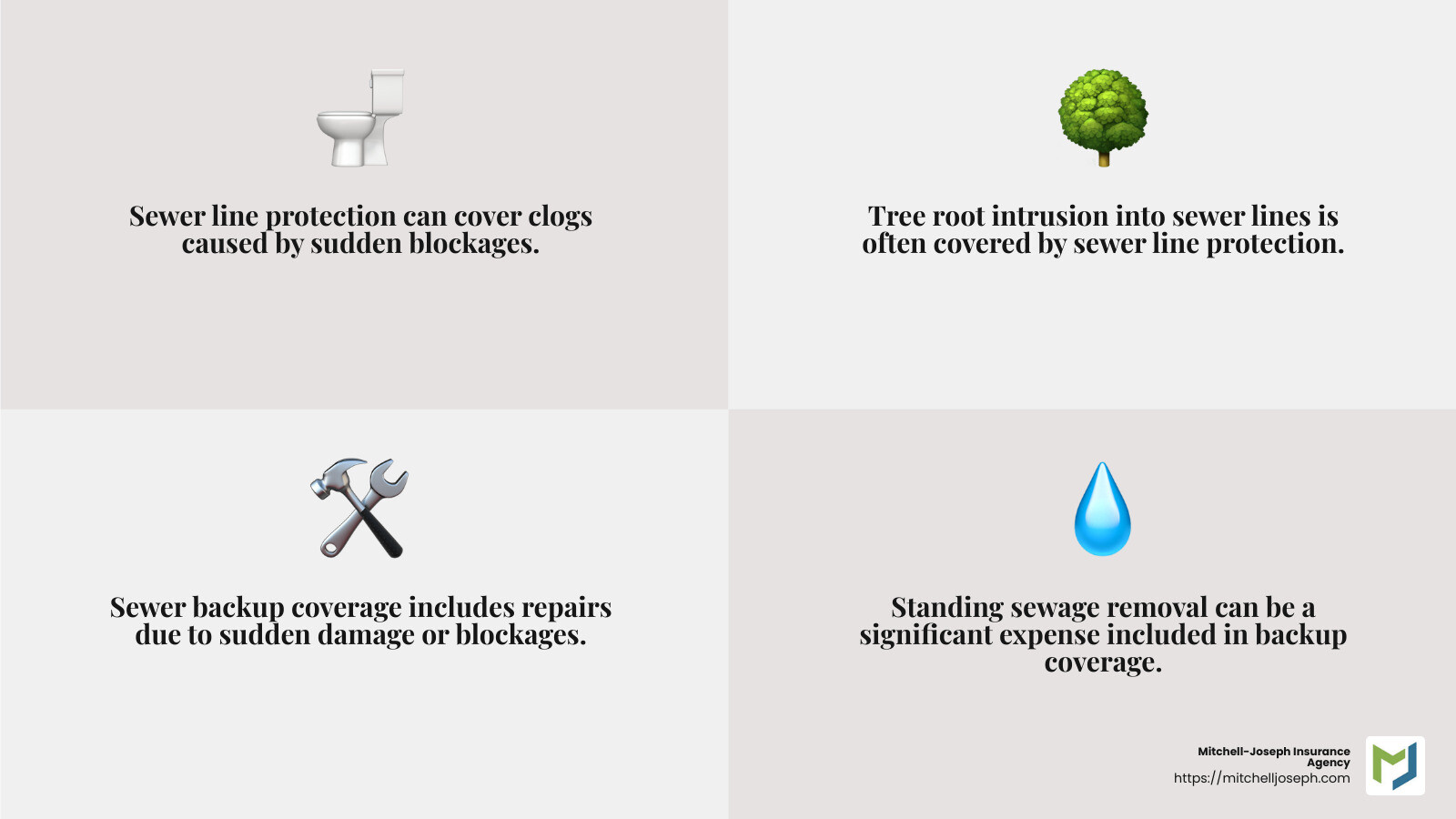
Yes, but with conditions. Sewer line protection can cover clogged tubs if the clog is due to issues with the sewer line itself, such as tree root intrusion or sudden blockages. However, it’s important to note that this coverage typically does not extend to clogs caused by poor maintenance or faulty plumbing within the home. Regular upkeep and inspections are crucial to ensure that your insurance will cover any claims related to clogged tubs.
What does sewer backup coverage include?
Sewer backup coverage is designed to protect homeowners from the financial burden of cleaning up and repairing damage caused by sewage backups. Here’s what it typically covers:
-
Damage to Sewer Lines: Coverage for the sewer line from your house to the city main, including repairs due to sudden damage or blockages.
-
Standing Sewage Removal: The cost of removing standing sewage from your home, which can be a significant expense.
-
Damage from Sewage: Repairs to floors, walls, and other structures damaged by sewage, up to the coverage limits of your policy.
How can I prevent clogged pipes?
Preventing clogged pipes requires regular maintenance and proactive measures. Here are some tips to help keep your pipes clear:
-
Regular Inspections: Have a licensed plumber inspect your plumbing system regularly to catch potential issues before they become major problems.
-
Avoid Pouring Grease Down Drains: Grease can solidify in pipes and cause blockages. Dispose of it in the trash instead.
-
Use Drain Screens: Install screens over drains to catch hair and debris that could lead to clogs.
-
Be Mindful of What You Flush: Only flush toilet paper to prevent blockages in your sewer lines.
By following these steps, you can minimize the risk of clogs and ensure that your plumbing system functions smoothly. If you experience frequent clogs, it may be worth discussing additional coverage options with your insurance provider to ensure you’re protected against unexpected plumbing issues.
Conclusion
At Mitchell-Joseph Insurance Agency, we understand that navigating the intricacies of insurance coverage can be daunting. That’s why we’re committed to providing personalized service and custom coverage options custom to your unique needs.
When it comes to protecting your home from unexpected events like sewer backups and clogged tubs, having the right insurance coverage can make all the difference. Our team, with over 200 years of combined experience, is here to guide you through the process and ensure you have the protection you need.
Custom Coverage for Peace of Mind
We know that each homeowner’s situation is different. That’s why we offer a variety of insurance products, including water backup and sewer line protection, to safeguard your home against potential water damage. Our goal is to provide you with peace of mind, knowing that you’re covered if the unexpected happens.
We invite you to reach out to us at our Honeoye Falls location or any of our other convenient locations across New York. Let us help you find the right insurance solutions that fit your lifestyle and budget.
For more information on how you can protect your home with water backup insurance, visit our Flood & Water Backup Insurance page. Our knowledgeable team is ready to assist you with all your insurance needs.