

The Renter’s Dilemma with Basement Water Damage
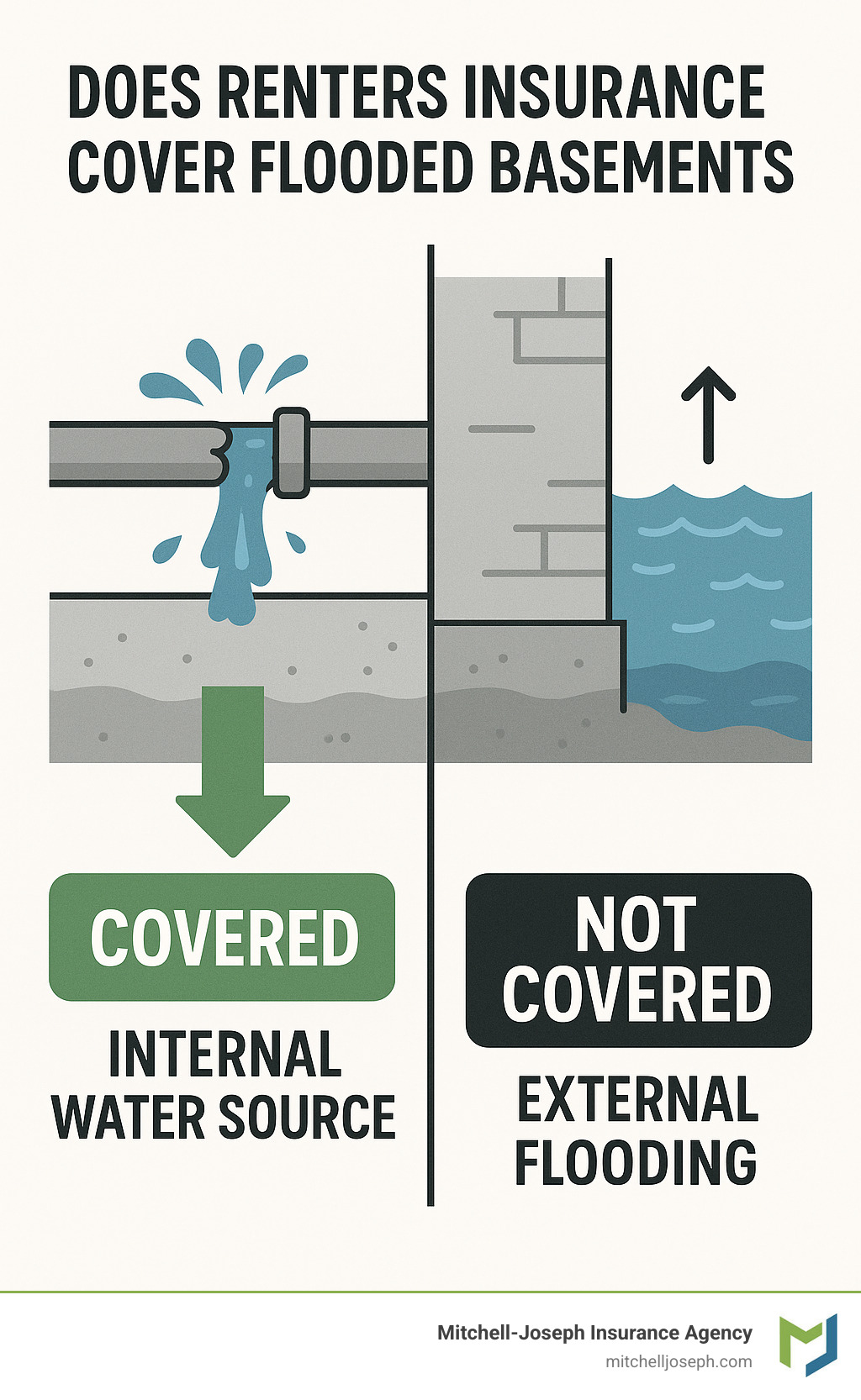
Does renters insurance cover flooded basements? The answer depends entirely on the source of the water. Your renters insurance typically covers water damage from internal sources like burst pipes or leaking appliances, but excludes natural flooding from external sources like heavy rain or storm surges.
Here’s what you need to know:
- COVERED: Burst pipes, leaking washing machines, overflowing toilets, fire suppression systems
- NOT COVERED: Natural floods, surface water, groundwater seepage, storm surges
- SOMETIMES COVERED: Sewer backup and sump pump failure (requires special endorsement)
- SEPARATE POLICY NEEDED: Flood insurance for natural disasters
The distinction matters because basement flooding can happen from many different sources. A pipe that bursts in your basement wall? That’s usually covered. Heavy rain that causes water to seep through your foundation? That requires separate flood insurance.
Your personal belongings – furniture, electronics, clothing, and other possessions – face significant risk when basements flood. The key is understanding which water sources your policy protects against and which ones leave you financially exposed.
I’m Jeffrey Joseph, and I’ve been helping Finger Lakes region residents steer complex insurance coverage questions since 1999 at Mitchell-Joseph Insurance Agency. Throughout my career, I’ve seen countless renters find too late that does renters insurance cover flooded basements isn’t a simple yes-or-no question – it requires understanding the specific circumstances of each water damage event.
Does renters insurance cover flooded basements terms to learn:
Does Renters Insurance Cover Flooded Basements? The Critical Difference
When your basement fills with water, your insurance company won’t just ask “How much damage?” They’ll want to know “Where did the water come from?” This single question determines whether you’ll receive coverage or face the costs alone. Does renters insurance cover flooded basements? The answer hinges entirely on the water’s source, and understanding this distinction can save you thousands of dollars.
Let’s break down exactly what’s covered, what leaves you high and dry, and how to fill the gaps in your protection.
What basement flooding does renters insurance cover?
Here’s some welcome news: your renters insurance policy typically covers water damage when it comes from sudden and accidental sources inside your rental unit. Think of these as the “oops” moments that happen without warning within your home’s walls.
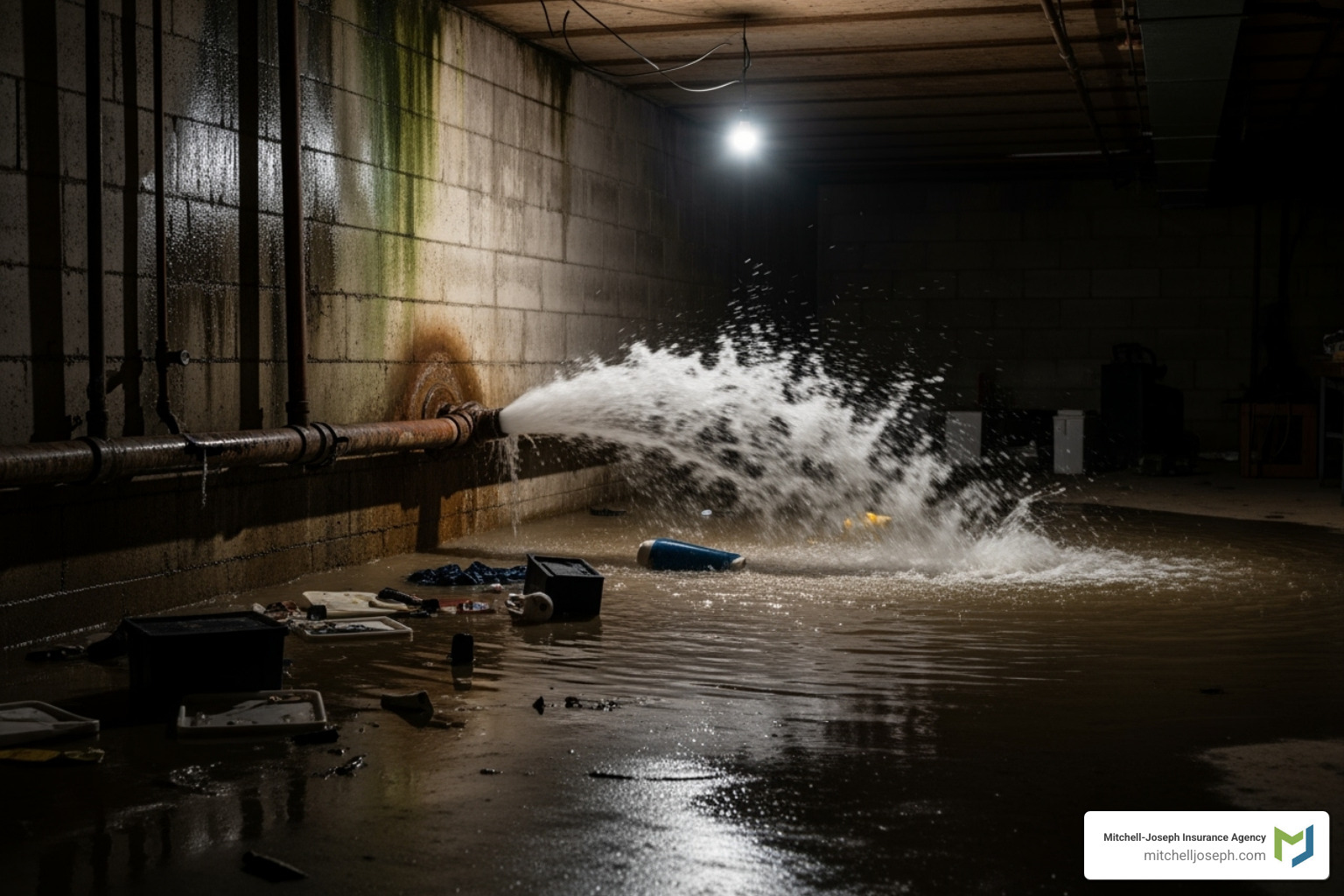
Burst pipes represent the classic covered scenario. When an old pipe finally gives way or freezing temperatures cause a pipe to crack, the resulting flood typically falls under your policy’s protection. Your insurance won’t fix the pipe itself (that’s your landlord’s responsibility), but it will cover your waterlogged furniture, electronics, and other personal belongings.
Leaking appliances also trigger coverage in most cases. Whether your basement washing machine springs a leak or the water heater decides to call it quits, the damage to your personal property usually qualifies for reimbursement. The key phrase here is “sudden and accidental” – gradual leaks that you should have noticed and addressed won’t make the cut.
Overflowing toilets and sinks can create basement flooding when the water finds its way downstairs. As long as the overflow wasn’t caused by your negligence (like flushing inappropriate items), your renters insurance typically steps in to help.
Fire suppression systems present an interesting coverage scenario. If sprinklers activate to fight a fire and flood your basement in the process, your policy generally covers the water damage. After all, the system was responding to another covered peril.
The tricky situation involves water damage due to rain. If rain enters your basement because a covered peril like windstorm damage created an opening, you might have coverage. However, rain that simply seeps through foundation cracks or enters through a window you left open typically won’t be covered. For more details on this complex topic, check out our guide on Water Damage Due to Rain.
Why Renters Insurance Doesn’t Cover Natural Flooding
Now for the reality check that catches many renters off guard: does renters insurance cover flooded basements from natural causes? Unfortunately, no. Standard renters insurance policies exclude natural flooding with remarkable consistency across the industry.
Natural flooding means water coming from outside your home. This includes surface water that accumulates on the ground and flows into your basement, groundwater seepage that pushes through foundation walls, storm surge from nearby bodies of water, and flooding from heavy rainfall that overwhelms drainage systems.
Insurance companies exclude these events because they affect many properties simultaneously, creating catastrophic losses that would make standard policies unaffordable for everyone. When the creek behind your building overflows its banks or flash flooding sends water cascading into your basement from street level, your renters insurance won’t help.
This exclusion also covers situations involving negligence. Leave a window open during a storm and rain damages your belongings? That’s considered preventable and typically won’t be covered.
For protection against natural flooding, you need separate coverage through the National Flood Insurance Program (NFIP) or private insurers. Many renters don’t realize this option exists, but you can explore whether Can Renters Get Flood Insurance? makes sense for your situation.
The Special Case of Water & Sewer Backup
Here’s where things get interesting. Sump pump failure and sewer backup events fall into a gray area that standard policies typically exclude, but you can often add protection through special endorsements.
Picture this: heavy rains overwhelm your basement’s sump pump, or the municipal sewer system backs up and sends wastewater into your basement through floor drains. These scenarios don’t qualify as “sudden and accidental” internal plumbing failures, nor do they count as natural flooding. They exist in their own category.
Water backup endorsements bridge this gap by covering damage from water backing up through sewers, drains, or sump pumps. For a relatively small additional premium, this add-on coverage can save you thousands when these specific events occur.
| Feature | Standard Renters Policy | Policy with Water Backup Endorsement |
|---|---|---|
| Personal Property Coverage | Yes | Yes |
| Burst Pipe Damage | Yes | Yes |
| Leaking Appliance Damage | Yes | Yes |
| Natural Flood Damage | No | No (requires separate flood insurance) |
| Failed Sump Pump Damage | No | Yes |
| Sewer Line Backup Damage | No | Yes |
Understanding the difference between water backup coverage and flood insurance prevents confusion. Water backup addresses internal drainage system failures, while flood insurance covers external water sources. Learn more about this distinction in our article Water Backup Insurance vs. Flood Insurance.
Given the relatively low cost and high potential benefit, we often recommend this endorsement to clients, especially those with basements. Find why in Is Water Backup Insurance Worth It?.
Your First Steps After Finding a Flooded Basement
Finding water in your basement ranks among life’s most unwelcome surprises. Taking the right immediate steps protects your safety, minimizes damage, and sets you up for insurance success.
Safety comes first, always. Don’t enter a flooded basement if water levels are high or you suspect electrical problems. Call your landlord immediately and, if necessary, emergency services or an electrician to shut off power to the affected area.
Contact your landlord immediately – preferably in writing through email or text to create a record. They’re responsible for the building’s structure and often for stopping the water source.

Document everything thoroughly. Use your smartphone to capture extensive photos and videos of the flooded area, the water source (if you can identify it), and every damaged item. Take wide shots showing the overall scene, then close-ups of specific damaged belongings. Create a detailed inventory listing descriptions, brands, models, and estimated values of damaged items. Keep receipts if you have them.
Mitigate further damage safely once the water source stops. Move undamaged items to dry areas, use fans or dehumidifiers if power is safe, and remove wet carpets if possible. Don’t attempt major cleanup or repairs without consulting your landlord and insurance company first.
Contact your renters insurance provider after securing the scene and notifying your landlord. Clearly explain the water source – say “burst pipe” or “appliance leak” rather than just “flood” unless it truly was external flooding. For common questions about the claims process, review our Renters Insurance FAQs.
Consider preventing future disasters by installing a water detection system near vulnerable areas like your water heater, washing machine, or sump pump. These devices alert you the moment they detect moisture, allowing you to address problems before they become disasters.
Landlord vs. Renter: Who Pays for What?
When basement flooding strikes, understanding who’s responsible for what prevents finger-pointing and gets repairs moving faster. Insurance policies draw clear lines between landlord and tenant responsibilities.
Your landlord’s insurance covers the building’s structure, including walls, floors, ceilings, and permanent fixtures. If a pipe bursts within the building’s infrastructure, their policy should handle pipe repairs and structural damage. When flooding results from landlord negligence – like ignoring a leaky roof or failing to winterize pipes – their insurance might cover broader damages, or you might have a direct claim against them.
This is why thorough documentation matters so much. Understanding the claims process can make a huge difference in your outcome, so we recommend you Learn the 3 Secrets You Should Know Before Placing a Water Damage Insurance Claim.
Your renters insurance handles your personal belongings and your potential liability to others. If water damage originates in your unit and spreads to neighboring apartments, your liability coverage can help pay for damages to their property. However, if the flooding resulted from your negligence – like leaving a bathtub overflowing or failing to report a known leak – your insurance might deny your claim and leave you financially responsible for all damages.
The landlord covers the bones of the building; you cover your stuff and your responsibility to others. Both policies work together to address different aspects of water damage recovery.
Does renters insurance cover flooded basements and temporary housing?
When basement flooding makes your apartment uninhabitable, where do you go? Who pays for it? This is where Loss of Use coverage or Additional Living Expenses (ALE) becomes invaluable.
If a covered peril like a burst pipe forces you out of your home during repairs, your renters insurance helps with temporary relocation costs. This includes hotel stays, the additional cost of meal costs when you can’t cook at home, laundry services when you can’t use your own facilities, and other essential expenses that arise from displacement.
This coverage maintains your normal standard of living without creating financial hardship during an already stressful time. Policy limits typically range from $3,000 to $5,000 or represent a percentage of your personal property coverage, so check your specific policy for details.
ALE coverage only applies to covered perils. If external flooding forces you out (a non-covered event), your renters insurance won’t provide temporary housing assistance. However, if you have separate flood insurance, that policy might include its own “loss of use” benefits.
After helping families throughout the Finger Lakes region steer these challenging situations, I’ve seen how this coverage provides crucial peace of mind when your home becomes temporarily uninhabitable due to uninhabitable conditions from water damage.
Securing the Right Protection for Your Rented Space
When you’re sitting in your basement apartment wondering “does renters insurance cover flooded basements,” it’s easy to feel overwhelmed by all the fine print and exceptions. I get it – insurance can feel like a puzzle with half the pieces missing. But here’s the thing: once you understand the basics, you can make smart choices that actually protect what matters most to you.
After helping thousands of renters steer these waters over the years, I’ve learned that the most important thing isn’t memorizing every policy detail. It’s understanding the big picture and making sure you’re not caught off guard when life happens.
The source of the water is everything. This single factor determines whether you’re covered or facing a major expense out of pocket. Your standard renters insurance has your back when water comes from inside your home – that burst pipe, leaking washing machine, or overflowing toilet. But when Mother Nature sends water from outside through heavy rains or flooding, you need separate flood insurance to protect your belongings.
Think about where you live and what risks make sense for your situation. If you’re renting a basement apartment near a creek, or if your building has an aging sump pump, water backup coverage might be worth every penny of that small additional premium. It’s one of those add-ons that seems unnecessary until you desperately need it.

Here’s what I tell all my clients: review your policy every year, especially if your living situation changes. Moving from a third-floor apartment to a basement rental completely changes your water damage risks. Your coverage should change too.
Don’t wait until disaster strikes to figure out what’s covered. Take photos of your belongings now, keep receipts for major purchases, and know exactly how to contact both your landlord and insurance company in an emergency. These simple steps can save you thousands of dollars and weeks of headaches later.
At Mitchell-Joseph Insurance Agency, we’ve been protecting families across the Finger Lakes region for over 200 years combined. Whether you’re in Honeoye Falls, Rochester, Canandaigua, or any of our neighboring communities, we understand the unique challenges that come with our beautiful but sometimes unpredictable weather patterns.
We work with 24 different insurance companies, which means we can find coverage that fits both your needs and your budget. No cookie-cutter policies here – we believe your insurance should be as unique as your living situation.
For personalized advice on protecting your belongings from every type of water damage, explore your flood insurance options. Give us a call when you’re ready to have a real conversation about your coverage. We’re here to make sure you sleep well at night, knowing your belongings are protected – even if that basement decides to flood.

