

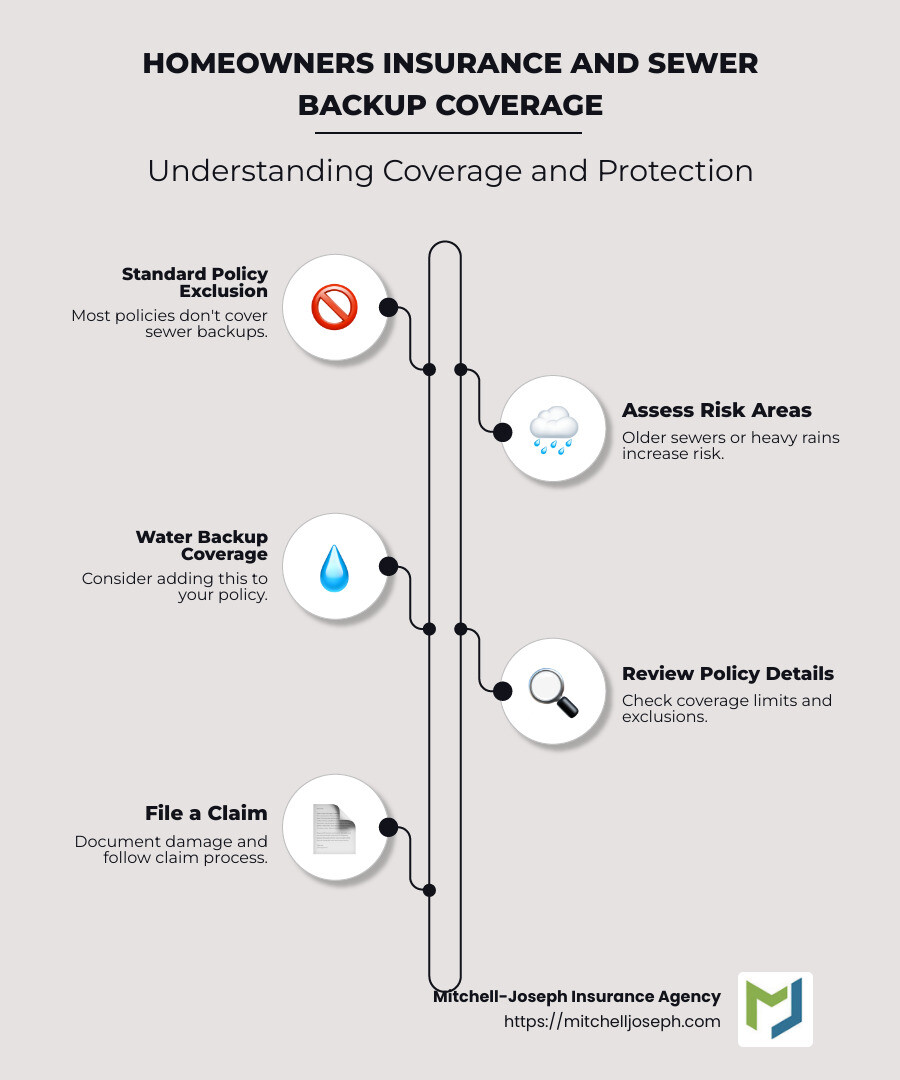
Does homeowners insurance cover water damage from sewer backup? The short answer is no, it typically doesn’t. Standard homeowners insurance usually excludes coverage for water damage resulting from sewer backups. To be protected against these specific incidents, you would generally need to purchase additional water backup coverage that specifically includes sewer backup issues.
For homeowners living in areas with older sewer systems or frequent heavy rains, understanding this exclusion is crucial. Here at Mitchell-Joseph Insurance, we see many residents from Honeoye Falls to Canandaigua, NY, puzzled by this gap in their insurance. The potential damage from a sewer backup can be devastating to both your home and your peace of mind. But thankfully, there are solutions to protect your property and your wallet.
As Jeffrey Joseph, with years of experience at Mitchell-Joseph Insurance, I’ve seen how the question “does homeowners insurance cover water damage from sewer backup” can catch homeowners by surprise. Our goal is to provide you with insurance custom to your needs, ensuring comprehensive coverage when the unexpected happens.
Understanding Sewer Backup
Sewer backups are more common than you might think. They can happen for several reasons, and understanding these can help you take preventive steps.
Causes
-
Aging Infrastructure: Many areas, especially older towns, have sewer systems that are decades old. These systems can deteriorate over time, leading to blockages and backups.
-
Tree Roots: Tree roots naturally seek out water sources and can infiltrate sewer lines, causing blockages. This is a common issue in residential areas with mature trees.
-
Heavy Rainfall: Sudden, intense rain can overwhelm both the sewer system and sump pumps, particularly in regions prone to heavy storms.
-
Blockages: Improper disposal of items like grease, paper towels, and other non-flushable products can cause clogs in the sewer lines.
Prevention
Taking proactive steps can reduce the risk of sewer backups:
-
Regular Maintenance: Schedule regular inspections and cleanings of your sewer line. This helps identify and address potential problems before they escalate.
-
Tree Management: If you have large trees near your sewer lines, consider consulting an arborist to manage root growth.
-
Proper Disposal: Avoid flushing items that can cause blockages. Educate your household on what should and shouldn’t go down the drain.
-
Install a Backwater Valve: This device can prevent sewage from backing up into your home during heavy rain or system overloads.
Impact
The impact of a sewer backup can be both financially and emotionally draining. Here’s why:
-
Property Damage: Water from sewer backups can ruin floors, walls, and personal belongings. The cost of repairs can be significant.
-
Health Hazards: Contaminated water can pose serious health risks, leading to potential illnesses from bacteria and viruses.
-
Emotional Stress: Dealing with property damage and health concerns can be overwhelming. It’s not just about the physical cleanup; it’s also about the emotional toll it takes on homeowners.

For residents in areas like Honeoye Falls and Canandaigua, NY, understanding the causes and impacts of sewer backups is crucial. Implementing preventive measures can save you from the unexpected costs and stress associated with these incidents.
Next, we’ll explore Does Homeowners Insurance Cover Water Damage from Sewer Backup? and what you can do to ensure your home is fully protected.
Does Homeowners Insurance Cover Water Damage from Sewer Backup?
Understanding if homeowners insurance covers water damage from sewer backup is essential for safeguarding your home. Here’s what you need to know about the coverage, common exclusions, and policy limits.
Common Exclusions
When it comes to sewer backup, homeowners insurance typically has several exclusions:
-
Flood Damage: Standard policies do not cover flood-related water damage. Flooding is defined as water affecting two or more acres or properties. For this, a separate flood insurance policy is necessary.
-
Maintenance Issues: Insurance won’t cover damage resulting from neglected maintenance. If your pipes are clogged due to improper disposal or lack of upkeep, you might be on your own.

Coverage Limits
Homeowners policies have specific coverage limits for sewer backup:
-
Policy Caps: There is often a cap on the amount the insurance will pay for sewer backup claims. This cap might not cover extensive damage, especially if it involves significant repairs or replacements.
-
Additional Endorsements: To improve coverage, consider adding endorsements or riders to your policy. These can increase your protection limits and cover more scenarios. For example, water backup coverage can be an excellent addition, specifically targeting sewer and drain backups.

In areas like Rochester and Victor, NY, where aging infrastructure and tree root issues are common, understanding these exclusions and limits is crucial. By knowing what your policy covers, you can better prepare and possibly adjust your coverage accordingly.
Next, we’ll dig into Additional Coverage Options to help you further protect your home from water-related incidents.
Additional Coverage Options
When it comes to protecting your home from water damage, understanding additional coverage options is key. Let’s explore two important types: water backup coverage and endorsements and riders.
Water Backup Coverage
Water backup coverage is an add-on to your standard homeowners insurance policy. It specifically covers damage caused by water backing up through sewers, drains, or sump pumps. This is crucial because standard policies often exclude such incidents.
Benefits of water backup coverage include:
-
Protection against costly repairs: Covers the cost of repairs and replacements due to water damage from backups.
-
Peace of mind: Knowing you’re covered if your sump pump fails or if sewer lines back up.
-
Flexibility: You can tailor the coverage to fit your specific needs and risk factors.
The cost of adding water backup coverage varies. It depends on factors like your location and the level of coverage you choose. However, it is generally affordable compared to the potential costs of water damage repairs.
Endorsements and Riders
Endorsements and riders are additional policy options that allow you to customize and improve your insurance coverage. They can extend your policy limits or cover specific scenarios not included in your standard policy.
Customization options with endorsements and riders include:
-
Increased coverage limits: Raise the cap on what your policy will pay out for certain types of damage.
-
Specific scenario coverage: Add protection for situations unique to your home or location.
-
Policy improvement: Improve overall protection by covering gaps in your existing policy.
Adding these options can be a smart move, especially in areas prone to sewer backup issues, like those around Honeoye Falls and Pittsford, NY. By investing in these additional coverages, you ensure that your home is better protected against unexpected water-related incidents.
Next, we’ll guide you through How to File a Claim for Sewer Backup Damage, so you know exactly what to do if the unexpected happens.
How to File a Claim for Sewer Backup Damage
Experiencing a sewer backup can be stressful, but knowing how to file a claim can make the process smoother. Here’s what you need to know about the documentation and claim process.
Documentation Needed
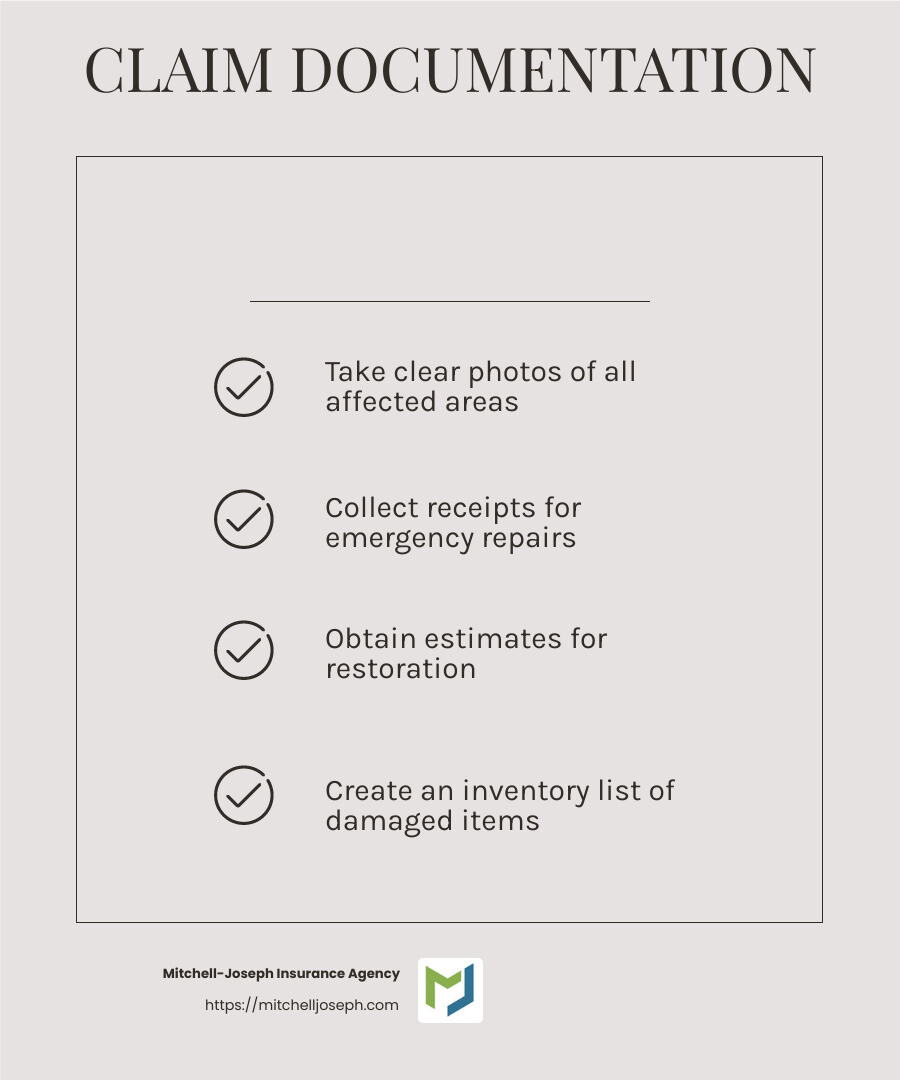
Before you start your claim, gather all necessary documentation. This will help your insurance company assess the damage and process your claim efficiently.
-
Photos: Take clear pictures of all affected areas. Capture the extent of the damage from multiple angles to provide a comprehensive view.
-
Receipts and Estimates: Collect receipts for any emergency repairs or cleaning services you’ve already paid for. Obtain estimates from contractors for the cost of repairs or restoration needed.
-
Inventory List: If personal belongings were damaged, list these items with their estimated value. Include purchase receipts if available.
Claim Process
Once you have all your documentation ready, follow these steps to file your claim:
-
Contact Your Insurance Provider: Notify your insurance company as soon as possible. They will guide you on the next steps and provide any forms you need to fill out.
-
Submit Documentation: Provide the photos, receipts, estimates, and any other relevant documents to your insurer. This helps them understand the scope of the damage.
-
Schedule an Adjuster Visit: An insurance adjuster will visit your home to assess the damage firsthand. They will use your documentation to verify your claim.
-
Review and Approval: After the adjuster’s visit, your insurance company will review the details. They will determine the coverage based on your policy and the extent of the damage.
-
Receive Payment: If approved, you will receive payment for the covered damages. This can help you start repairs and replace damaged items.
Tips for a Smooth Claim Process:
-
Act Promptly: The sooner you start the process, the faster you can get repairs underway.
-
Stay Organized: Keep all your documentation in one place. This makes it easier to access and share with your insurer.
-
Communicate Clearly: Maintain open communication with your insurance company. Ask questions if you’re unsure about any part of the process.
Understanding these steps will help you steer the claim process with confidence. Next, we’ll address Frequently Asked Questions about Sewer Backup Coverage, providing more insights to help you protect your home effectively.
Frequently Asked Questions about Sewer Backup Coverage
What is Sewer Backup Coverage?
Sewer backup coverage is an add-on to your homeowner’s insurance policy. It helps cover damage when water backs up into your home from sewers or drains. This could happen due to heavy rain, a clogged sewer line, or a sump pump failure.
Without this coverage, you might have to pay for repairs out of pocket. Homeowners insurance doesn’t usually cover water damage from sewer backup. Adding this coverage can save you from unexpected expenses.
How Can I Prevent Sewer Backup?
Preventing sewer backup is crucial to avoid damage and hassle. Here are some tips to help you keep your home safe:
-
Install a Backwater Valve: This device prevents sewage from flowing back into your home. It’s a smart investment, especially in areas prone to heavy rainfall.
-
Maintain Your Plumbing: Regularly inspect and clean your drains and sewer lines. This helps prevent clogs that can lead to backups.
-
Avoid Flushing Inappropriate Items: Don’t flush items like wipes, diapers, or grease. They can block the sewer lines and cause backups.
-
Check Your Sump Pump: Ensure your sump pump is working properly. Test it regularly, especially before the rainy season.
Following these steps can reduce the risk of a sewer backup and the potential damage it can cause.
What Should I Do Immediately After a Sewer Backup?
If you experience a sewer backup, it’s important to act quickly. Here’s what you should do:
-
Ensure Safety First: Avoid contact with the water. Sewage can contain harmful bacteria.
-
Stop the Water Flow: If possible, stop the source of the backup. This might involve turning off the water supply or addressing a sump pump failure.
-
Document the Damage: Take photos and videos of the affected areas. This documentation will be crucial for your insurance claim.
-
Contact Your Insurance Provider: Report the incident to your insurer as soon as possible. They will guide you on the next steps.
-
Start Cleanup: Begin cleaning and disinfecting the area. You may need professional help, especially for severe damage.
Taking these steps promptly can help minimize damage and make the recovery process smoother. Next, we’ll dive into Conclusion, where we discuss how Mitchell-Joseph Insurance Agency can offer personalized service and custom coverage to meet your needs.
Conclusion
At Mitchell-Joseph Insurance Agency, we understand that every home and homeowner is unique. That’s why we take pride in offering personalized service and custom coverage to meet your specific needs. With over 200 years of combined experience, our team is dedicated to helping you steer the complexities of insurance with ease and confidence.
Why Choose Us?
-
Custom Solutions: We don’t believe in one-size-fits-all insurance. Our agents work closely with you to understand your home, lifestyle, and potential risks. This allows us to craft a policy that provides the right coverage for you.
-
Comprehensive Options: From water backup coverage to flood insurance, we offer a wide range of products to protect your home from unexpected events. Our goal is to ensure you have peace of mind knowing you’re covered no matter what happens.
-
Local Expertise: With locations across New York, including Honeoye Falls and Rochester, we’re familiar with the local risks and challenges. This local knowledge helps us provide relevant advice and services that truly benefit our clients.
-
Competitive Quotes: As an independent agency, we have access to 24 different insurance companies. This means we can provide competitive quotes and help you find the best policy at the best price.
Whether you’re considering adding sewer backup coverage or need a complete home insurance review, we’re here to help. Contact us today to learn more about how we can protect your home and family with a policy that fits your needs.
For more information on our water backup and flood insurance options, visit our Flood and Water Backup Insurance page. Let us help you find the coverage that makes sense for you.

