

Understanding the Flood vs. Water Backup Dilemma
Does flood insurance cover water backup? No, standard flood insurance policies do not cover water backup from sewers or drains unless the backup is a direct result of flooding. These are two distinct perils that require different insurance coverages.
| Insurance Type | Covers | Doesn’t Cover |
|---|---|---|
| Flood Insurance | Damage from rising water from outside sources affecting 2+ acres or properties | Sewer backups unrelated to flooding |
| Water Backup Coverage | Damage from sewer, drain backups, or sump pump failures | External flooding or groundwater seepage |
| Homeowners Insurance | Sudden internal water damage (burst pipes) | Floods or water backups without endorsements |
When it comes to protecting your home from water damage, understanding the difference between flood insurance and water backup coverage is crucial. More than 20% of flood insurance claims come from outside high-risk flood zones, yet only 12% of U.S. homeowners carry flood insurance. Meanwhile, with over 500,000 miles of aging sewer infrastructure in America, water backups represent a separate but equally significant risk.
Flooding is defined by FEMA as inundation of two or more acres of normally dry land or two or more properties. This is covered by flood insurance through the National Flood Insurance Program (NFIP) or private insurers. On the other hand, water backup – which includes sewage or drain backups and sump pump failures – requires a special endorsement on your homeowners policy.
The distinction matters because the source of water determines which policy covers the damage. Water coming from the ground up (external flooding) is handled differently than water backing up through internal plumbing systems.
I’m Jeffrey Joseph, owner of Mitchell-Joseph Insurance Agency, and I’ve helped countless homeowners steer the complexities of does flood insurance cover water backup questions over my 20+ years in the insurance industry. My experience has shown that many property owners find coverage gaps only after suffering water damage.

Quick does flood insurance cover water backup definitions:
– sewer backup
– water backup damage
– water damage due to rain
Does Flood Insurance Cover Water Backup?
Does flood insurance cover water backup? The short answer is: generally no, but there’s one important exception worth understanding.
Flood insurance, whether through the National Flood Insurance Program (NFIP) or private insurers, follows specific guidelines about what qualifies as a flood. According to FEMA’s definition, a flood is:
“A general and temporary condition of partial or complete inundation of two or more acres of normally dry land area or of two or more properties from overflow of inland or tidal waters, from unusual and rapid accumulation or runoff of surface waters from any source, or from mudflow.”
This definition matters tremendously because it establishes what flood insurance will and won’t cover. The source and scope of the water determine everything when it comes to your coverage.
Standard flood insurance policies specifically exclude water backup from sewers, drains, or sump pumps—unless the backup is directly caused by flooding as defined above. This creates a crucial distinction between water entering your home from outside (rising floodwaters) versus water that backs up through your internal plumbing systems.
| Water Source | Flood Insurance Covers? | Water Backup Endorsement Covers? |
|---|---|---|
| River overflow entering home | Yes | No |
| Heavy rain causing sewer backup | No (unless directly caused by flooding) | Yes |
| Sump pump failure during normal rain | No | Yes |
| Municipal sewer line backup | No (unless directly caused by flooding) | Yes |
| Storm surge from hurricane | Yes | No |
| Broken water main flooding neighborhood | Possibly (if meets 2+ acres/properties criteria) | No |
Here at Mitchell-Joseph Insurance Agency, we often explain to our clients throughout Rochester, Canandaigua, and our other service areas that understanding the distinction between these coverages is essential. Check out our article on Water Backup Insurance vs Flood Insurance: What’s the Difference? for a deeper dive.
When Does Flood Insurance Cover Water Backup?
There is one specific scenario where flood insurance does cover water backup: when the backup is a direct result of flooding as defined by FEMA.
Imagine this situation: Rising floodwaters from a nearby creek enter your neighborhood, affecting multiple homes. These same floodwaters cause your municipal sewer system to back up into your house. In this case, your flood insurance would likely cover damage from both the floodwater and the sewer backup.
The key factors that make this exception work are:
1. The flooding meets FEMA’s definition (affecting multiple properties or acres)
2. The sewer backup is directly caused by those same floodwaters
3. You can demonstrate the connection between the flood and the backup
This exception is important but limited in scope. You’ll need to prove that the backup wouldn’t have happened without the flooding event—often requiring documentation from local authorities or engineering assessments that establish the link between the external flooding and your internal backup.
Why Flood Insurance Usually Doesn’t Cover Water Backup
There are several practical reasons why flood insurance typically excludes water backup coverage:
Different risk profiles come into play—floods are external, natural disasters, while backups often relate to infrastructure failures or maintenance issues with your home’s systems.
NFIP program limitations exist because the National Flood Insurance Program was specifically designed to address the gap in homeowners insurance for external flooding, not internal plumbing problems.
Basement exclusions are significant in NFIP policies, with major limitations on what’s covered in basements (areas below ground level on all sides), where many water backups occur.
Separate endorsement availability means that since water backup coverage is readily available as an add-on to standard homeowners policies, the NFIP doesn’t need to duplicate this protection.
It’s worth noting that NFIP flood policies provide only limited coverage for areas below your home’s lowest liftd floor. This means that even with flood insurance, many items in your basement might not be covered, regardless of whether the damage came from external flooding or internal backup.
Understanding these distinctions isn’t just insurance jargon—it’s about making sure you have the right protection for your home’s specific risks. As we often tell our clients, water damage doesn’t care about policy definitions, but your insurance company certainly does!
Policy Comparison & Coverage Limits
Understanding the differences between standard homeowners insurance, water backup endorsements, and flood insurance is crucial for comprehensive protection. Each policy type has different coverage triggers, limits, and exclusions that affect how your property is protected.

Standard Homeowners Insurance
Most homeowners are surprised to learn that standard homeowners insurance policies have significant limitations when it comes to water damage:
- What’s Covered: Sudden and accidental water damage from internal sources, such as:
- Burst pipes (not caused by lack of heat or maintenance)
- Accidental overflow from appliances
- Sudden roof leaks from storm damage
-
Water damage from extinguishing a fire
-
What’s NOT Covered:
- Flooding from external sources
- Water backup from sewers or drains
- Sump pump failures
- Gradual leaks or seepage
- Damage from lack of maintenance
For example, if your washing machine hose suddenly bursts and damages your floor, standard homeowners insurance would typically cover this. However, if heavy rain causes your municipal sewer line to back up into your basement, you would not be covered without additional endorsements.
Water Backup Endorsement
A water backup endorsement (sometimes called “sewer and drain backup coverage” or “sump pump overflow coverage”) is an add-on to your homeowners policy that specifically addresses water damage from:
- Sewer backups
- Drain backups
- Sump pump failures or overflows
This endorsement is particularly valuable because:
- Coverage Limits: Typically available in increments of $5,000, with options ranging from $5,000 to $50,000 depending on the insurer
- Affordability: According to industry data, $5,000 of water backup coverage costs approximately $30-$70 per year, with each additional $5,000 of coverage costing $25-$35 annually
- Deductibles: Often subject to your standard homeowners deductible, though some insurers may apply a separate deductible
Water backup coverage is essential for homeowners with basements, homes in areas with aging sewer infrastructure, or properties with sump pumps. Here in upstate New York, where many homes in communities like Honeoye Falls and Canandaigua have basements and experience seasonal heavy rains, we at Mitchell-Joseph Insurance Agency strongly recommend this endorsement.
Flood Insurance (NFIP & Private)
Flood insurance operates differently from both standard homeowners policies and water backup endorsements:
- Separate Policy: Flood insurance is a standalone policy, not an endorsement to homeowners insurance
- Purchase Options: Available through the NFIP or private insurers
- Waiting Period: Typically has a 30-day waiting period before coverage begins (with some exceptions)
- Two Coverage Types:
- Building Coverage: Up to $250,000 for homeowners
- Contents Coverage: Up to $100,000 for personal belongings
The Flood Insurance Coverage Limits are standardized for NFIP policies but may vary with private flood insurance. It’s important to understand what flood insurance covers to avoid surprises when filing a claim.
Key Flood Insurance Limitations:
* Limited coverage for basements and areas below the lowest liftd floor
* No coverage for temporary living expenses if your home is uninhabitable
* No coverage for currency, precious metals, or valuable papers
* No coverage for property outside your home (landscaping, decks, patios, etc.)
* No coverage for water backups unless directly caused by flooding
For many of our clients in areas like Victor, Canandaigua, and Rochester, we recommend a combination of flood insurance and a water backup endorsement to ensure comprehensive protection against all water-related perils.
Real-World Backup Scenarios & Prevention Strategies
Let’s talk about what actually happens when water invades your home. I’ve seen these scenarios play out countless times, and understanding them can help you see why having the right coverage matters so much.
Scenario 1: Basement Flood from Sump Pump Failure
Picture this: It’s springtime in Honeoye Falls. After days of heavy rain, the ground around your home is completely saturated. Your trusty sump pump has been working overtime, but then—right when you need it most—it stops working. Maybe the power went out during the storm, or perhaps the pump simply wore out after years of service.
Water begins pooling in your basement. Within hours, your carpeting is soaked through. By morning, your finished walls are damaged, your stored holiday decorations are ruined, and that nice sectional sofa is sitting in several inches of water.
Insurance Response:
* Your standard homeowners policy? Not a penny.
* Your flood insurance? Nothing—this isn’t a “flood” by FEMA’s definition.
* That water backup endorsement you wisely added? It would cover damages up to your selected limit.
The financial impact can be staggering. Even a relatively minor basement water event might cost $2,000 for water removal and drying. If you have a finished basement with damage to walls, flooring, and belongings, you’re looking at $25,000 or more—all out of pocket without the right coverage.
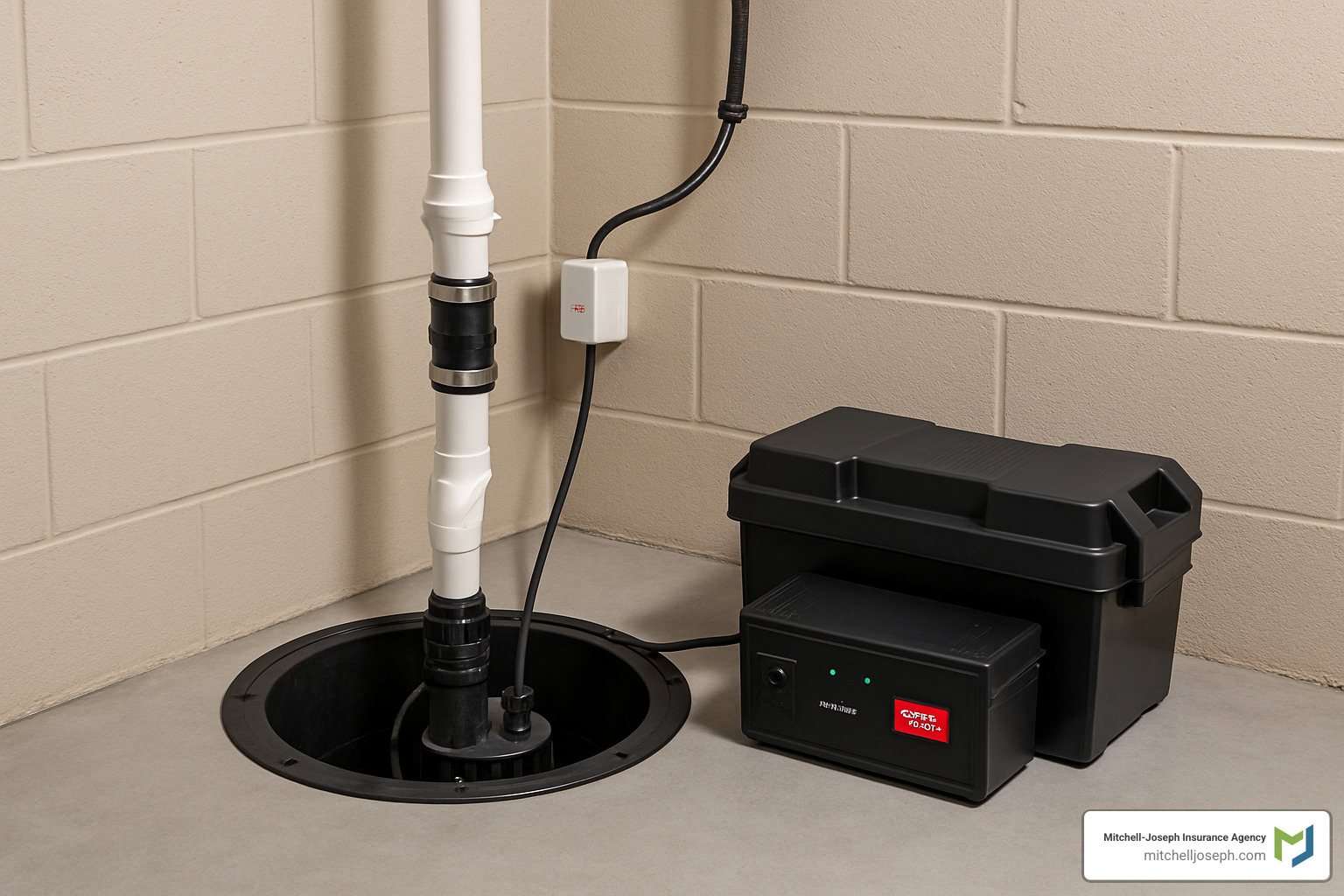
Does flood insurance cover water backup in this scenario? No, and that’s why prevention is so important. Installing a battery backup for your sump pump is like buying insurance for your insurance—it gives you protection when power outages occur during the very storms that make your pump essential. Water-powered backup pumps are another excellent option, as they use your home’s water pressure to function without electricity.
Scenario 2: Municipal Sewer Backup Into Home
Here’s a situation no homeowner wants to face: A powerful thunderstorm rolls through Victor, NY. The municipal sewer system—which combines stormwater and sanitary sewage in many older communities—simply can’t handle the deluge.
Then the unthinkable happens. Water starts backing up through your basement floor drain. But this isn’t clean water—it’s contaminated with raw sewage. The smell is overwhelming, and the health risks are serious. Your finished basement is now a biohazard zone.
Insurance Response:
* Standard homeowners policy? Sorry, not covered.
* Flood insurance? Only if this backup was directly caused by flooding that affected multiple properties (rarely the case).
* Water backup endorsement? This would be your financial lifeline, covering cleanup, sanitization, and repairs up to your limit.
Sewage backups are particularly nasty—and expensive. Professional sanitization is essential, and contaminated materials often need complete replacement rather than just drying out. These incidents typically start at $5,000 and can easily exceed $30,000 for serious cases.
Prevention Checklist
As I always tell my clients in Rochester, Canandaigua, and throughout our service area: “An ounce of prevention is worth a gallon of water backup.” Here’s how to protect your home:
Keep your plumbing healthy by scheduling annual inspections of your sewer lateral. Those slow-draining sinks? Address them immediately—they’re warning signs. Consider using enzyme-based treatments if you have trees near your sewer line, as they can help control invasive roots without damaging pipes.
Your sump pump needs love too. Test it quarterly by simply pouring water into the pit to make sure it kicks on. Clean the pit annually and check that the discharge pipe is clear and directed away from your foundation. A battery backup system is one of the smartest investments you can make—especially in our New York communities where spring storms and power outages often go hand-in-hand.
Don’t forget the outside of your home. Clean those gutters at least twice a year. Make sure downspouts extend at least 10 feet from your foundation. Your landscaping should slope away from your home, not toward it. If water still tends to collect near your foundation, consider installing a French drain system.
One of the most effective preventative measures is installing a backwater valve on your main sewer line. These clever devices allow sewage to flow out of your home but prevent it from flowing back in when the municipal system gets overwhelmed.

These prevention measures might seem expensive in the moment—a quality backwater valve costs $1,000-$2,000 installed, and a battery backup for your sump pump runs $150-$500—but they’re bargains compared to the alternative. I’ve seen families at Mitchell-Joseph Insurance Agency save tens of thousands of dollars because they took these precautions.
The question “does flood insurance cover water backup?” has a complicated answer, but the value of prevention is crystal clear. These measures, combined with the right insurance coverage, give you the comprehensive protection every homeowner deserves.
For more information on whether water backup coverage makes sense for your specific situation, check out our guide: Is Water Backup Insurance Worth It?
Frequently Asked Questions about does flood insurance cover water backup
Do I Need Both Flood and Water Backup Coverage?
Yes, for complete protection, most homeowners should have both coverages. I’ve seen this question come up time and again when sitting down with families across Honeoye Falls and Canandaigua.
Think of it like wearing both a belt and suspenders – they serve different but complementary purposes. Flood insurance protects you from rising external waters, while water backup coverage handles those internal plumbing nightmares that keep homeowners up at night.
Your mortgage lender might require flood insurance if you’re in a designated flood zone, but they rarely mention water backup coverage – even though it’s just as important. What many of my clients find surprising is that about 20% of flood claims actually come from areas considered low to moderate risk. Every single state has experienced flooding in the past five years, and when those floods hit, the average claim tops $30,000.
Having both coverages eliminates those worrisome gaps in protection. Here in upstate New York, where we experience everything from spring thaws to summer thunderstorms, this comprehensive approach gives you true peace of mind. I can’t tell you how many times I’ve seen the relief on clients’ faces when they understand they’re fully protected from water damage, no matter where it comes from.
How Do I File a Claim for Water Backup Damage?
When water starts creeping across your basement floor, the last thing you need is confusion about how to file your claim. Here’s my straightforward advice after helping hundreds of homeowners through this process:
Safety comes first – always turn off electricity and gas before entering a flooded area. If there’s any hint of sewage, please wear protective gear. Your health matters more than your property.
Documentation is your best friend. Take plenty of photos and videos before you start cleaning up. Create a detailed inventory of everything that’s damaged – from furniture to family heirlooms. Save samples of damaged materials like carpet or drywall if possible, and keep every receipt for emergency repairs and cleanup costs.
Then give us a call at Mitchell-Joseph Insurance Agency right away. We’ll help determine whether this falls under your water backup endorsement or flood policy and guide you through the entire process. When the adjuster visits, be ready to show all your documentation and clearly explain where the water came from, as this determines which policy applies.
For more information about your coverage options, our page on Sewer and Water Backup Insurance provides additional details that might help.
What Does Water Backup Insurance Cost?
Water backup coverage is one of the best insurance values available today. For the protection it provides, the cost is remarkably reasonable – especially when you consider the alternative of paying thousands out-of-pocket for water damage.
Most of our clients are pleasantly surprised to learn that basic coverage of $5,000 typically runs between $30-$70 per year – about the cost of a nice dinner out. If you need more protection, each additional $5,000 increment usually adds just $25-$35 to your annual premium. Most insurers offer options ranging from $5,000 up to $50,000 in coverage.
Your specific cost will depend on several factors: where your home is located, any previous water backup claims you’ve filed, the age and condition of your plumbing, your chosen coverage limit, and even your credit-based insurance score.
For most of our Rochester area clients, adding water backup coverage to their homeowners policy costs less than $100 per year. That’s a small investment that can save you from a $10,000+ repair bill.
Flood insurance, by comparison, varies much more widely. NFIP policies average around $700 annually but can range from $200 to several thousand dollars depending on your flood zone, home elevation, and coverage amounts.
When you consider that the average water damage claim exceeds $10,000, these premiums represent remarkable value. As I often tell my clients while reviewing their coverage, this is one area where cutting corners simply isn’t worth the risk.
Conclusion
The question “does flood insurance cover water backup?” has a clear answer: generally no, unless the backup is directly caused by flooding as defined by FEMA. This creates a significant coverage gap that many homeowners unfortunately find only when they’re facing thousands in uncovered damages.
Water damage doesn’t play by simple rules. Your home faces threats from multiple directions – pipes can burst, sewers can back up, and rivers can overflow. That’s why protecting your home requires a thoughtful, layered approach:
Your standard homeowners insurance handles those sudden, accidental water mishaps from internal sources – like when your washing machine decides to flood the laundry room. But it stops there.
For those nasty sewer backups, drain problems, and sump pump failures, you’ll need a water backup endorsement. This affordable add-on can save you from some truly unpleasant (and expensive) cleanup scenarios.
And then there’s flood insurance – your protection against rising external waters that affect multiple properties. Even homes outside “high-risk” zones can and do flood.
Here at Mitchell-Joseph Insurance Agency, we’ve walked alongside homeowners throughout Honeoye Falls, Canandaigua, Rochester, and surrounding communities for decades. We’ve seen how water damage claims consistently rank among the most common and costly disasters homeowners face. Our team brings over 200 years of combined experience to help you steer these complex coverage options.
Every home tells its own story – with unique risk factors based on location, construction, age, and other variables. That’s why we strongly recommend a personalized insurance review. With access to quotes from 24 different insurance companies, we can help you find protection that’s both comprehensive and competitively priced.
Don’t wait until you’re ankle-deep in water to find coverage gaps. Contact Mitchell-Joseph Insurance Agency today for a thorough review of your water damage protection strategy and to learn more about flood & water backup options.
It’s a sobering fact: just one inch of water can cause up to $26,000 in damage to your home. The right insurance coverage isn’t just about checking boxes for your mortgage company—it’s about protecting your most valuable asset and your family’s peace of mind.
Water may follow the path of least resistance, but your insurance strategy shouldn’t. Let us help you build protection that stands up to whatever water challenges come your way.

