The Nightmare Scenarios: Real Cyber Insurance Claims
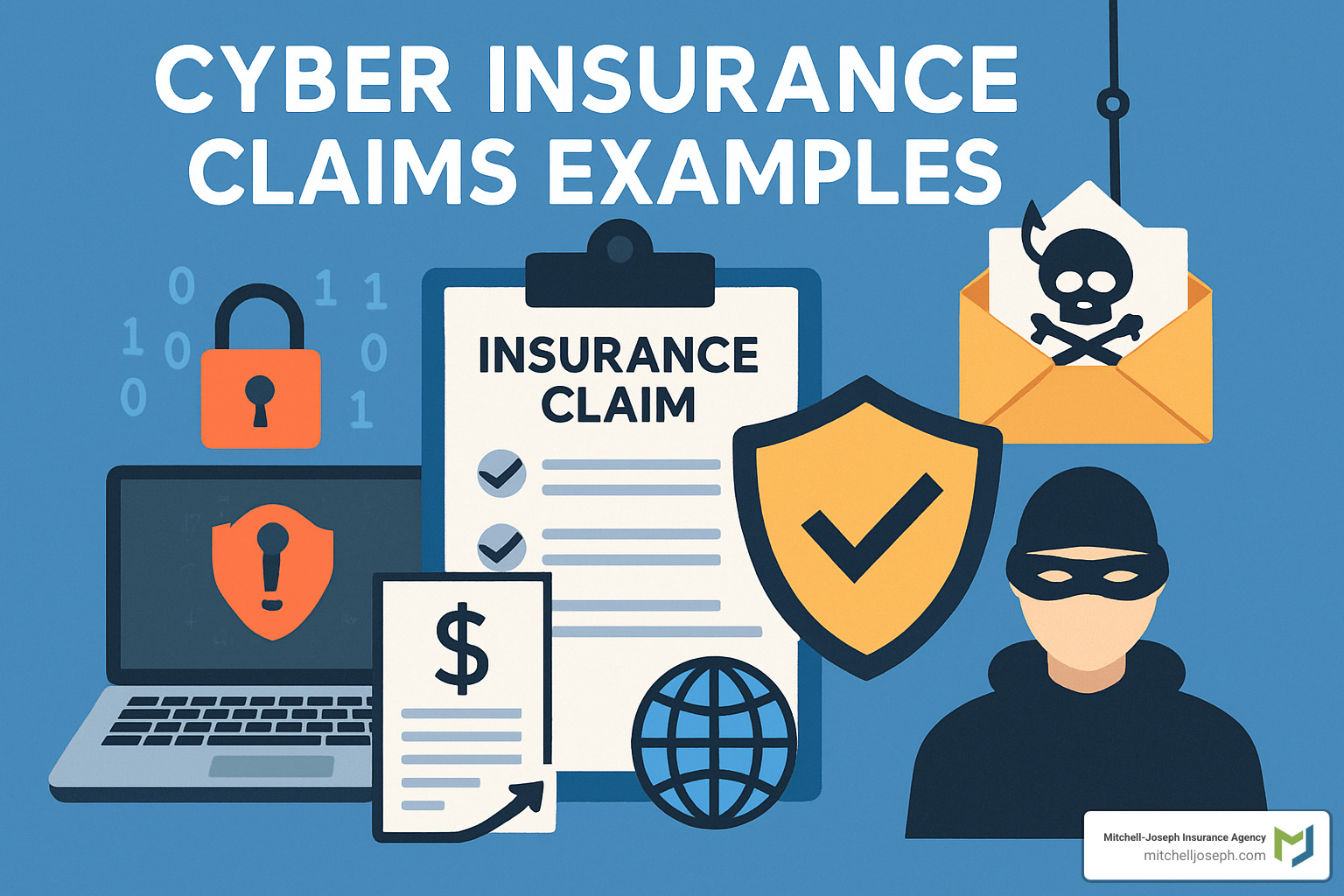
Cyber insurance claims examples are becoming increasingly common as digital threats evolve. For businesses seeking to understand what these claims actually look like in practice, here are the most common types:
- Ransomware Attacks – Average claim: $350,000 for mid-market businesses
- Business Email Compromise – Example: $325,000 claim at a real estate firm
- Data Breaches – Healthcare example: $1.3 million claim affecting 50,000 patient records
- Funds Transfer Fraud – Claims increased 54% among small businesses recently
- Insider Threats – Example: $575,000 claim after HR employee stole 1,000 records
If you’re a business owner who thinks cyber attacks only happen to large corporations, these real-world examples might keep you awake at night. Small and mid-sized businesses are increasingly targeted, with over half unable to recover following a serious breach. The average cost of a cyber insurance claim for a small business is around $100,000, while middle-market businesses face average claim severity of about $350,000.
“It is sad how easy it is to suffer from a breach, which makes having cyber insurance a simple decision,” noted one small business owner after experiencing an attack.
I’m Jeffrey Joseph, and as the owner of Mitchell-Joseph Insurance Agency, I’ve helped numerous clients steer the complex world of cyber insurance claims examples across various industries throughout the Finger Lakes region.
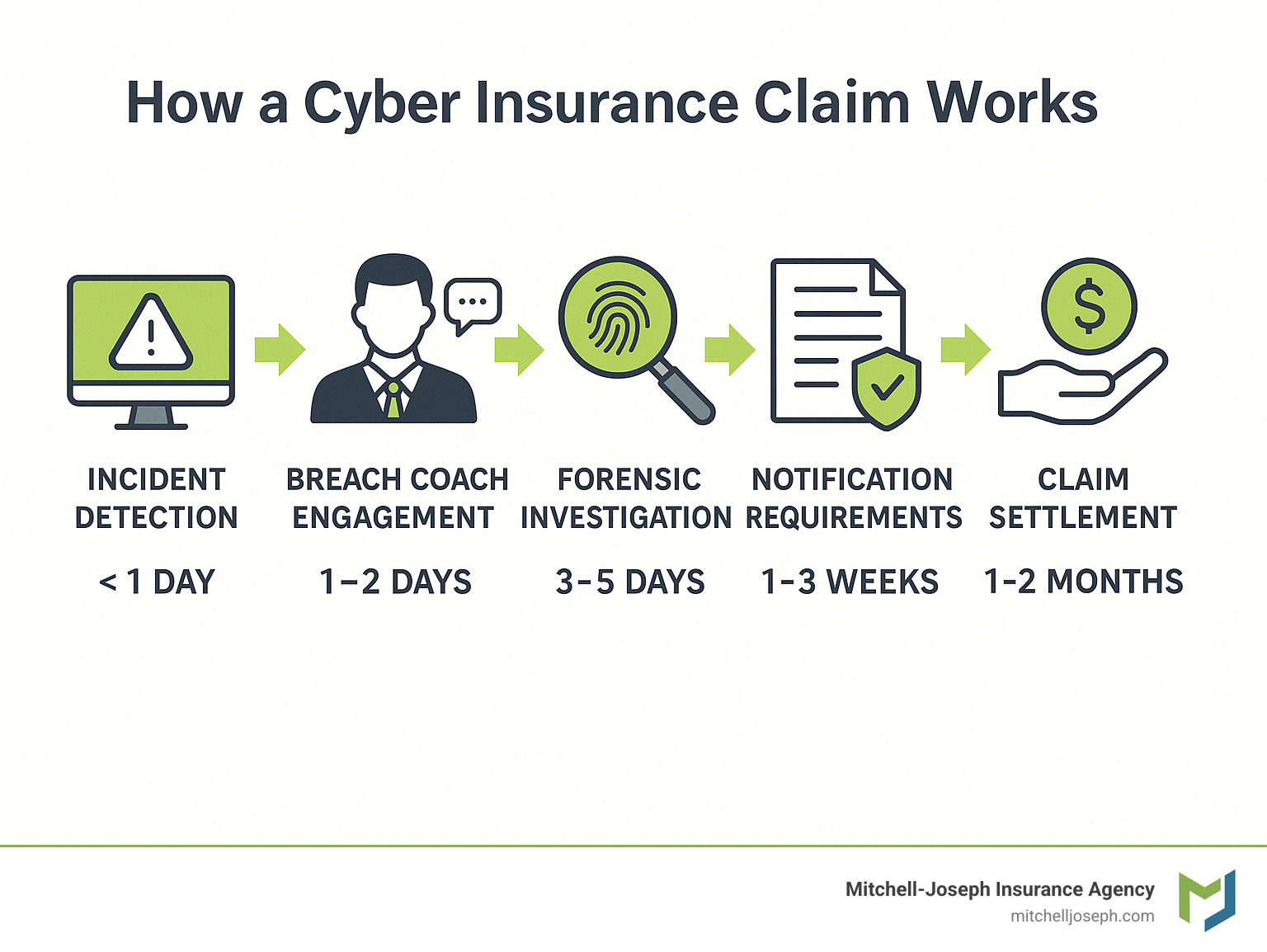
How a Cyber Insurance Claim Works
Let’s face it – nobody wants to think about making a cyber insurance claim. But when digital disaster strikes, knowing how the process works can be your lifeline.
When your business faces a cyber attack, the clock starts ticking immediately. Most policies require you to notify your insurer within 24-72 hours of finding the incident. This quick notification isn’t just a technicality – it’s the first critical step in containing damage and protecting your business.
Once you’ve made that initial call, your insurer typically assigns a breach coach (usually an attorney) who becomes your guide through the chaos. Think of them as your personal crisis coordinator who helps maintain attorney-client privilege while orchestrating your response.
“The day we finded the ransomware was the worst day of my professional life,” shared one of our manufacturing clients. “But having that breach coach call me back within 30 minutes made all the difference. They knew exactly what to do when I had no idea where to start.”
Your breach coach activates an incident response team – forensic investigators who determine what happened, contain the threat, and gather the evidence needed to support your claim. Meanwhile, your insurer reviews all documentation to determine coverage, applicable limits, and any exclusions that might apply.
After thorough assessment, your insurer issues payment for covered losses, minus your deductible. Many policies also include a waiting period for business interruption claims – typically 8-12 hours after the incident before coverage kicks in.
First-Party vs. Third-Party Coverage
Understanding the difference between first-party and third-party coverage is essential when filing a cyber insurance claim:
| First-Party Coverage | Third-Party Coverage |
|---|---|
| Covers direct losses to your business | Covers claims made against you by others |
| Breach notification costs | Legal defense costs |
| Data recovery expenses | Settlements and judgments |
| Business interruption losses | Regulatory fines and penalties |
| Ransomware payments | Payment card industry (PCI) fines |
| Crisis management/PR services | Media liability claims |
“Many business owners focus solely on first-party coverage – the direct costs to their business,” I often explain to clients at Mitchell-Joseph Insurance Agency. “But third-party claims can actually be more financially devastating in the long run. You need protection on both fronts.”
The average first-party claim for a small business runs about $80,000, while third-party claims involving regulatory actions or customer lawsuits can easily exceed $500,000. This is why comprehensive coverage is crucial – the costs add up quickly when you’re facing both internal recovery and external liability.
Your policy’s claim process is designed to help you get back on your feet. One of our retail clients described their insurer’s response as “heartwarming,” noting that “the response was immediate, comprehensive and made a terrible situation manageable.”
Having guided dozens of businesses through cyber claims, I can tell you that familiarity with your policy’s claim procedures before an incident occurs can save precious time when minutes matter most.
Cyber Insurance Claims Examples Across Industries
Cyber insurance claims examples vary significantly across different industries, with each sector facing unique threats and vulnerabilities. Here in the Rochester area and across Western New York, we’ve seen businesses of all sizes affected by cyber incidents.
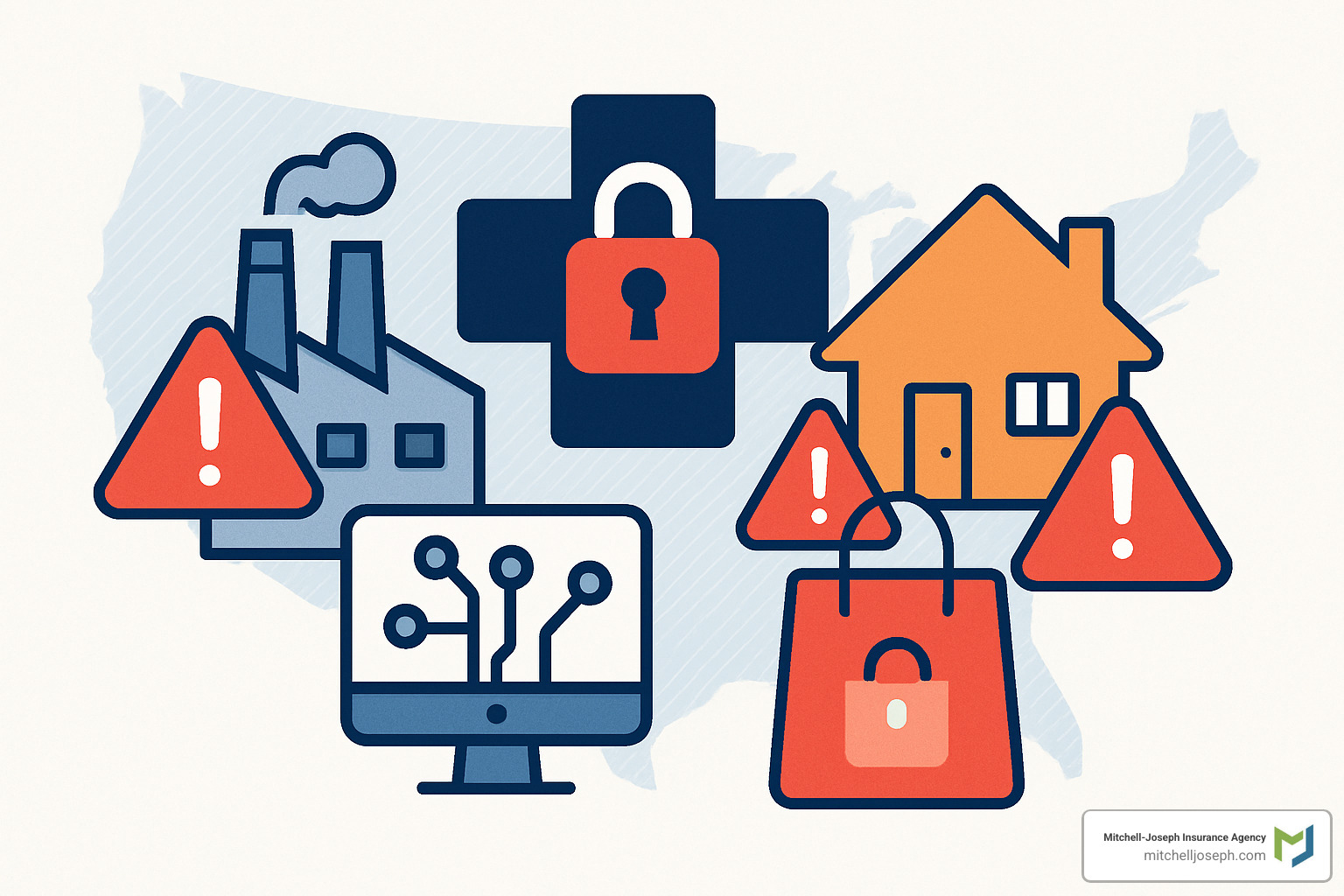
Cyber insurance claims examples: manufacturing ransomware
In a case that sent shockwaves through the manufacturing sector, a mid-sized manufacturing company with approximately 200 employees fell victim to a devastating ransomware attack that nearly brought operations to a complete standstill.

The attackers gained entry through an unpatched Remote Desktop Protocol (RDP) vulnerability, which typically runs over TCP port 3389. This seemingly minor oversight provided all the access the attackers needed to deploy ransomware throughout the company’s network.
The financial impact was staggering – a $500,000 ransom demand, $750,000 in business interruption losses from 5 days of downtime, $200,000 in system recovery costs, and $100,000 in forensic investigation expenses. The total claim reached an eye-watering $1.55 million, highlighting how quickly costs can escalate. Thankfully, the company’s cyber insurance policy covered these expenses after the deductible, preventing what could have been a business-ending event.
Many of our manufacturing clients in Canandaigua and Victor have similar vulnerabilities. As I often tell them over coffee, “Your operational technology might seem isolated, but modern attackers are finding creative bridges between systems that weren’t designed with today’s threats in mind.”
Cyber insurance claims examples: healthcare data breach
Healthcare organizations face some of the most stringent regulatory requirements and highest costs when breaches occur. In one notable cyber insurance claim example, a regional healthcare provider experienced a breach affecting approximately 50,000 patient records.
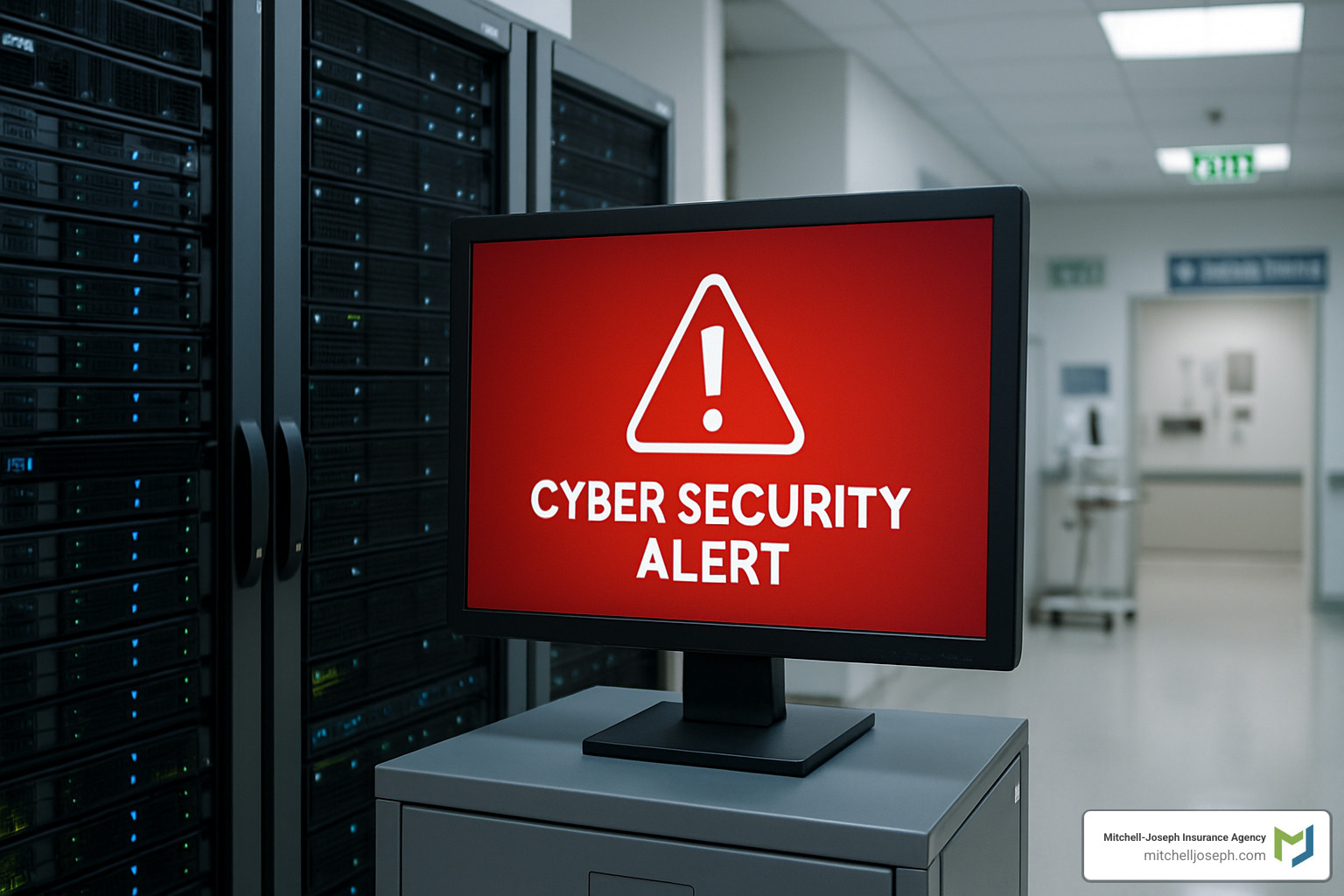
The incident began when an employee clicked on a phishing email that appeared to come from a trusted medical supplier. This single click gave attackers access to Protected Health Information (PHI), triggering HIPAA breach notification requirements and potential penalties.
The claim breakdown was substantial: $400,000 in forensic investigation and containment, $350,000 in notification costs, $250,000 in credit monitoring services, $200,000 in regulatory defense expenses, and $100,000 in crisis management and PR. All told, the claim reached $1.3 million. The provider’s cyber insurance covered these costs, allowing them to maintain operations while addressing the breach.
For healthcare providers across Rochester and the Finger Lakes region, data breaches aren’t just expensive—they can damage patient trust that took years to build. I recently helped a medical practice in Pittsford recover from a similar incident, and their office manager told me, “Having the right coverage meant we could focus on our patients instead of worrying if we’d survive the breach.”
Cyber insurance claims examples: real-estate BEC fraud
Real estate transactions involve large sums of money moving between parties, making the industry a prime target for Business Email Compromise (BEC) attacks.
In one cyber insurance claim example, a real estate firm fell victim to an elaborate BEC scheme where attackers compromised an executive’s email account. The attackers patiently monitored communications for weeks, learning about transaction patterns and terminology.
When the time was right, they sent seemingly legitimate wire transfer instructions from the executive’s email to the accounting department, resulting in a $175,000 fraudulent transfer to an overseas account. The claim grew to include $75,000 in forensic investigation costs, $50,000 in legal expenses, and $25,000 in additional security measures, bringing the total to $325,000. Thanks to their cyber insurance policy’s social engineering coverage, the firm recovered most of these losses.
Real estate firms in our region handle millions in transactions every month. Last year, I helped a client in Victor implement both insurance protection and security protocols after they narrowly avoided a similar scheme. As they told me afterward, “We never thought we’d be targeted, but now we understand why you were so insistent about the social engineering coverage.”
Cyber insurance claims examples: cloud misconfiguration exposure
As businesses increasingly rely on cloud services, misconfigurations have become a major source of data exposure. In one significant case, a cloud service provider experienced a configuration error that left customer data publicly accessible for 72 hours before findy.
The misconfiguration exposed approximately 100,000 customer records containing names, addresses, and partial payment information. Though no evidence of malicious access was found, the company was legally obligated to treat it as a breach.
The claim quickly added up: $500,000 in notification and credit monitoring services, $300,000 in legal defense against customer lawsuits, $250,000 in regulatory investigation response, $150,000 in forensic investigation, and $100,000 in crisis management services. The total reached $1.3 million. The company’s cyber insurance policy covered these expenses, helping them weather both the financial impact and reputational damage.
Cloud security requires specialized knowledge. I’ve seen similar incidents with businesses in Rochester who assumed their cloud provider handled all security aspects, only to find that “shared responsibility” means they still bear significant risk. As one client in Honeoye Falls put it after we helped them through a similar claim, “We thought we were paying for security, but we were really just renting the infrastructure.”
Cyber insurance claims examples: insider data-theft
Not all cyber threats come from outside your organization. In one alarming cyber insurance claim example, a disgruntled HR employee at a retail company downloaded and exfiltrated sensitive employee records before resigning.
The employee took approximately 1,000 employee records containing Social Security numbers, salary information, and personal details. The theft was finded when employees began reporting identity theft incidents.
The claim breakdown was substantial: $200,000 in forensic investigation, $175,000 in notification and credit monitoring, $100,000 in legal defense costs, $75,000 in regulatory penalties, and $25,000 in additional security controls. The total claim reached $575,000. The company’s cyber insurance policy covered these expenses, allowing them to address both the immediate crisis and implement stronger access controls to prevent future incidents.
Insider threats are particularly challenging because these individuals already have legitimate access. I recently helped a small business in Monroe County develop both insurance and security strategies after they experienced a similar situation. The owner later told me, “We never imagined someone we trusted would do this, but having the right coverage meant we could recover without going under.”
At Mitchell-Joseph Insurance Agency, we understand that cyber threats aren’t just statistics—they’re real risks that can affect your business, your employees, and your customers. Our approach combines the right coverage with practical advice to help you steer this complex landscape.
When Coverage Helps—and When It Doesn’t
Cyber insurance claims examples reveal both the lifeline that proper coverage can provide and the surprising gaps that might leave your business vulnerable. Understanding where these boundaries lie isn’t just about policy knowledge—it’s about protecting your company’s future.
What Cyber Insurance Typically Covers
When cyber disasters strike, comprehensive policies typically step in to cover the most critical expenses. These include breach response costs like forensic investigations and customer notifications, which can quickly add up to hundreds of thousands of dollars. Most policies also cover ransomware payments (when legally permitted), helping businesses recover encrypted data when no alternatives exist.
The financial safety net extends to business interruption losses during system downtime and data recovery expenses to restore compromised information. Your policy likely also covers legal and PR services to manage both compliance requirements and public perception—crucial for maintaining customer trust after a breach.
“The right coverage doesn’t just pay bills—it provides a roadmap through crisis,” explains our team at Mitchell-Joseph Insurance Agency. “We’ve seen how regulatory defense coverage and third-party liability protection have saved local businesses from financial ruin after breaches.”
However, even with these protections in place, not every claim receives approval. Understanding why can make all the difference.
Common reasons claims are rejected
The heartbreak of a denied claim often comes down to preventable issues. Late notification tops the list of rejection reasons—a painful lesson learned by BitPay when their delayed reporting complicated a $1.8 million claim following a sophisticated phishing attack.
Inadequate security controls create another common stumbling block. If your application stated you use multi-factor authentication but you don’t consistently implement it, your insurer may have grounds for denial. Similarly, policy exclusions can create unexpected gaps—as Target finded when they had to sue Chubb after the insurer denied coverage for replacing compromised payment cards, arguing it wasn’t “physical damage” under their general liability policy.
Misrepresentation on insurance applications, even if unintentional, can void coverage entirely. And sometimes, claims hinge on seemingly minor semantic distinctions. In the BitPay case, the insurer argued that coverage applied to “fraudulently causing a transfer” but not “causing a fraudulent transfer”—a distinction that cost the company $1.8 million.
As cyber insurance expert Andreas Baumhof observed, “Cyber insurances are a bit of a rip-off. Think of car insurance—if it is insured for theft, it doesn’t matter how the theft was executed. In the cyber world, it seems it does matter.”
Steps to secure a successful claim
Taking the right actions immediately after finding a breach can dramatically improve your chances of claim approval:
-
Notify your insurer immediately – Most policies require notification within 24-72 hours of findy. This isn’t just a formality—it’s often a binding requirement.
-
Engage your breach coach first – Don’t hire outside vendors without insurer approval, as they may not cover unauthorized providers.
-
Document everything – Keep detailed records of the incident, response actions, and all associated costs.
-
Preserve evidence – Secure logs, affected systems, and other evidence that will support your claim.
-
Follow your incident response plan – Having a pre-approved plan can streamline the claims process.
-
Cooperate fully with investigators – Provide all requested information promptly and transparently.
-
Review coverage before making payments – Especially for ransom demands, consult with your insurer before making any payments.
“When clients contact us immediately after finding a breach, we can guide them through these critical first steps,” shares our claims specialist at Mitchell-Joseph Insurance Agency. “Those first 24 hours often determine whether a claim will be approved or denied. We’ve helped businesses throughout Honeoye Falls and the Rochester area steer these turbulent waters.”
The difference between a smooth claim process and a denied claim often comes down to preparation, prompt action, and partnership with your insurance provider. For more guidance on preparing for potential claims, visit our Business Insurance FAQ page.
Reducing Risk Before the Next Claim
While cyber insurance claims examples show how coverage can save businesses, prevention remains the best protection. Here’s how businesses across Western New York can reduce their cyber risk:
Implement a Layered Security Strategy
Think of cybersecurity like protecting your home – you wouldn’t rely solely on a front door lock, would you? The same goes for your business data.
A truly effective approach requires multiple layers of protection working together. We’ve seen countless Rochester businesses prevent attacks by implementing multi-factor authentication (MFA) for all remote access. It’s a simple step that could have prevented many of the ransomware cases we’ve handled over the years.
Manufacturing company with the $1.55 million claim? Their entire nightmare started with an unpatched RDP vulnerability. Regular patching might seem tedious, but it’s far less painful than explaining to clients why their data is being sold on the dark web.
“Last year, a client called me in a panic about a ransomware demand,” shares Jeffrey Joseph, our agency owner. “Fortunately, they had followed our advice about offline, tested backups. While their competitors might have paid the ransom, they were back up and running within 48 hours.”
Email remains the number one attack vector across all the businesses we serve in the Finger Lakes region. Implementing DMARC email authentication significantly reduces business email compromise attacks by verifying sender legitimacy. Pair this with regular employee security awareness training, and you’ve addressed the human element that cybercriminals so often exploit.
Don’t forget about your vendors, either. Remember Target’s massive breach that began through an HVAC contractor? Your security is only as strong as your weakest third-party connection, making vendor risk management essential.
“The investment in prevention is minimal compared to the average claim cost of $100,000 for small businesses,” notes our cybersecurity specialist who works with clients throughout Canandaigua and Victor. “It’s the difference between a minor inconvenience and potentially closing your doors.”
Emerging Threats to Watch
The cyber threat landscape never stands still, and neither should your defenses. We’re currently seeing several concerning trends affecting businesses right here in Monroe County.
Ransomware-as-a-Service (RaaS) has dramatically lowered the technical barrier for attacks. Criminal groups now offer ransomware on a subscription basis, meaning your business could be targeted by someone with minimal technical skills but maximum malicious intent.
We’re also seeing more supply chain attacks where trusted software vendors are compromised to distribute malware. The SolarWinds attack affected several businesses in our area, proving that even trusted tools can become vectors for attack.
Do you use smart devices in your office? Internet-connected devices often lack basic security controls. One of our retail clients had their website knocked offline for six hours by a DDoS attack leveraging compromised IoT devices. The lost sales and customer trust cost far more than securing those devices would have.
As more businesses accept cloud services, cloud misconfigurations have become increasingly common attack vectors. Our team at Mitchell-Joseph Insurance Agency has helped numerous businesses across the Finger Lakes region implement a layered security strategy that addresses these vulnerabilities before they lead to claims.
“These emerging threats make comprehensive cyber insurance more important than ever,” explains our risk advisor. “But insurance works best when paired with proactive security measures. Think of it as both the seatbelt and the airbag – you really need both.”
Looking for more guidance on protecting your business? Our team at Mitchell-Joseph Insurance Agency can help you steer both the insurance and security aspects of cyber risk. Learn more about our approach to Insurance Coverage: Business Insurance and how we can help safeguard what you’ve worked so hard to build.
Frequently Asked Questions about Cyber Insurance Claims
What costs does cyber insurance usually cover?
When disaster strikes, knowing what your cyber policy covers can be a real lifesaver. Most comprehensive policies cover a wide range of expenses that would otherwise come straight out of your pocket.
Think of forensic investigations (those digital detectives who figure out what happened), notification costs to let affected individuals know about the breach, and credit monitoring services to help protect them afterward. Your policy likely also covers crisis management and PR support to help protect your reputation, plus legal defense costs when you need them most.
Many policies also cover regulatory fines, ransomware payments (when legal), business interruption losses during downtime, and the often substantial data recovery costs.
One of our healthcare clients experienced this in a cyber insurance claims example we handled last year. Their $1.3 million claim covered all these elements after a breach affecting 50,000 patient records – without insurance, that cost would have been devastating to their practice.
How long does a typical claim take to settle?
“So when will I get my money?” That’s usually the first question clients ask after filing a claim, and honestly, it depends on how complex your situation is.
Simple claims might wrap up in just 30-60 days – these are your straightforward incidents with clear documentation and limited scope. On the other hand, complex breaches that attract regulatory attention can stretch to 6-12 months as investigations unfold. And if litigation enters the picture? You might be looking at over a year before full resolution.
The secret to faster claims? Documentation, documentation, documentation. As I tell my clients in Canandaigua and across the Finger Lakes, “The businesses that keep detailed records and follow their incident response plans typically see much faster resolutions.” Having that paper trail ready when your adjuster calls can shave weeks or even months off your claim timeline.
Will filing a cyber claim raise my premiums?
Let’s be honest – yes, filing a cyber insurance claims example will likely impact your future premiums. That’s just the reality of insurance. But several factors influence how much that increase might be.
The severity of your claim matters tremendously – a $1.5 million ransomware payout will affect your renewal differently than a $50,000 email compromise. Frequency is another big factor – one claim might be forgiven as bad luck, but multiple incidents suggest higher risk.
What many businesses don’t realize is how much their post-breach actions matter. Implementing stronger security controls after an incident shows insurers you’re serious about prevention, which can significantly soften premium increases. And of course, broader market conditions affect everyone’s pricing regardless of claims history.
I recently sat down with a manufacturing client in Victor who was hesitant to file a legitimate claim because they feared premium increases. My advice was simple: “Rather than focusing solely on premium impacts, view your cyber insurance as an essential risk transfer mechanism. The alternative—absorbing a six-figure loss—would be far more damaging to your business.”
At Mitchell-Joseph Insurance Agency, we help you steer these decisions with your long-term business health in mind, not just next year’s premium.
Conclusion
The cyber insurance claims examples we’ve explored illustrate both the devastating impact of cyber attacks and the crucial protection that proper insurance coverage provides. From ransomware shutting down manufacturing operations to data breaches exposing sensitive healthcare information, these incidents demonstrate that no industry is immune.

When I sit down with clients across Western New York, I often see the same look of concern when we discuss these real-world scenarios. The manufacturing company that lost $1.55 million to ransomware, the healthcare provider facing a $1.3 million claim after a data breach, the real estate firm that experienced a $325,000 loss from a simple email compromise – these aren’t just statistics, they’re cautionary tales from businesses just like yours.
The lessons learned from these claims are clear: preparation matters, insurance is essential, and no business is too small to be targeted. Many of our clients in Honeoye Falls and Canandaigua initially believed cyber attacks only happened to large corporations or tech companies. Unfortunately, smaller businesses often make more attractive targets precisely because they typically have fewer security resources.
For businesses throughout Rochester and the Finger Lakes region, the question isn’t if a cyber attack will occur, but when—and whether you’ll be ready when it does. Having witnessed the aftermath of attacks firsthand, I can tell you that the businesses that recover most successfully are those with both strong security practices and comprehensive cyber insurance.
At Mitchell-Joseph Insurance Agency, we bring over 200 years of combined experience to help local businesses steer the complex world of cyber insurance. We’re not just insurance agents – we’re your neighbors who understand the unique challenges facing businesses in our community. By working with 24 different insurance companies, we find the right coverage at rates that make sense for your business.
Don’t let your company become the next cautionary tale in our collection of cyber insurance claims examples. Reach out to our team today to review your cyber insurance needs and ensure you have the protection required in today’s increasingly dangerous digital landscape.
For more information about comprehensive business insurance options, including cyber coverage, visit our Business Insurance page or call our office for a friendly conversation with one of our experienced agents. We’re here to help you and your business throughout Rochester, the Finger Lakes, and Western New York sleep a little easier at night, knowing you’re protected against whatever cyber threats tomorrow may bring.