

The Hidden Risks in the Booming Beauty Industry
Cosmetic product liability insurance is crucial protection for beauty businesses, shielding them from financial loss if a product causes injury, allergic reactions, or property damage. Whether you manufacture, distribute, or sell beauty products, this coverage handles legal fees, settlements, and damages from product-related claims.
Key Coverage Areas:
- Bodily injury and property damage
- Allergic reactions, chemical burns, and rashes
- Mislabeling and failure to warn
- Manufacturing defects and contamination
- Legal defense costs and settlements
The U.S. beauty market is a multi-billion dollar industry, but this growth comes with significant risk. For context, see Statista’s market overview: Leading cosmetics, fragrances and personal care products markets worldwide. A single lawsuit from an allergic reaction or contaminated product can cost tens of thousands of dollars.
Once you put your name on a beauty product—whether you make, import, or sell it—you become legally responsible for its safety, ingredients, and labeling. If a consumer has an adverse reaction, your business is the first in line for a potential lawsuit.
I’m Jeffrey Joseph. Since 1999, I’ve helped beauty and personal care businesses in the Finger Lakes region secure the right cosmetic product liability insurance. At Mitchell-Joseph Insurance Agency, we understand the industry’s unique risks and find you comprehensive protection at competitive rates.
Your Ultimate Guide to Cosmetic Product Liability Insurance

Now that you understand the risks, let’s dig into what cosmetic product liability insurance protects, who needs it, and how it differs from other coverage. This is your roadmap to protecting your beauty business.
Who Needs This Essential Coverage?
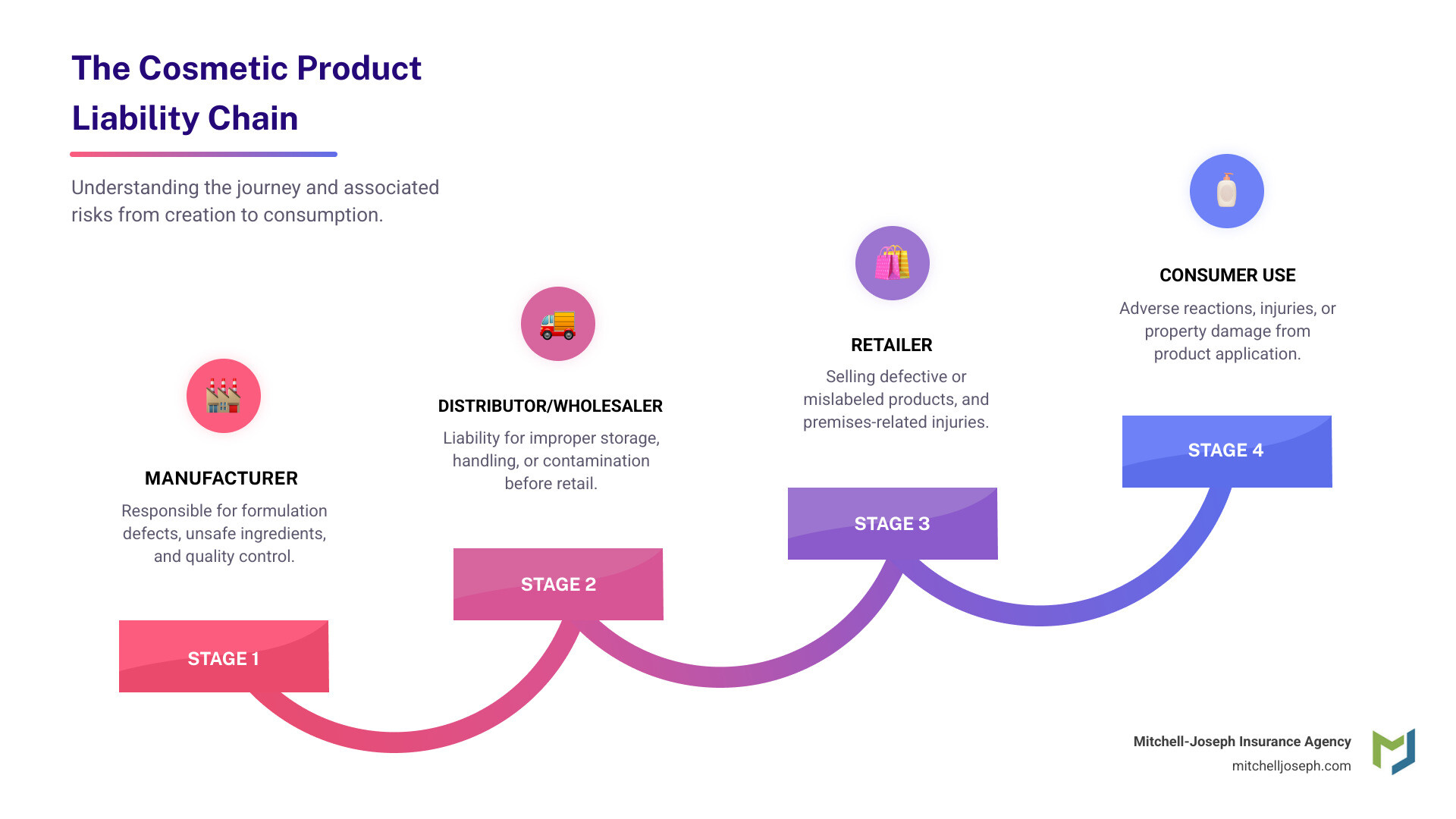
If your business is involved with a cosmetic product at any stage before it reaches the consumer, you need this coverage. When a product causes harm, lawsuits can target everyone in the supply chain. This includes:
- Manufacturers: You are responsible for the formula, ingredients, and production process.
- Distributors, Wholesalers, and Importers: You vouch for the safety of products you handle. U.S. law often treats importers as manufacturers regarding liability.
- Retailers (Online and Brick-and-Mortar): Selling directly to consumers exposes you to claims, regardless of whether you have a physical storefront.
- Private Label and Indie Brands: Putting your name on a product makes you legally responsible for it, even if manufactured by someone else. The risks are just as real for small brands as for large corporations.
- Contract Fillers: Your packaging process could introduce defects or contamination, leading to claims.
Whether you’re just launching or have been in the industry for years, protection is essential. For more guidance, see our guide on business insurance for startups.
What Specific Risks Does Cosmetic Product Liability Insurance Cover?
This specialized insurance focuses on the unique dangers of beauty products, covering issues that general liability policies often don’t.
- Bodily Injury: This is the most common claim, covering medical bills and lost wages if a customer is harmed by your product, such as from a severe rash or eye irritation.
- Allergic Reactions and Chemical Burns: Even natural ingredients can cause reactions. This covers costs when customers suffer from swelling, hives, or more severe chemical burns from improperly formulated products.
- Property Damage: Protects you if your product damages a customer’s property, like a hair dye staining furniture.
- Mislabeling and Failure to Warn: Covers claims arising from incorrect ingredient lists, omitted allergen warnings, or failure to provide safety instructions (e.g., the need for a patch test). For regulatory guidance, see the FDA’s Cosmetics Labeling Guide.
- Manufacturing Defects and Contamination: Protects against claims from entire batches being compromised due to incorrect ingredient ratios, contamination, or other production errors.
- Product Recall Costs: Often included in comprehensive policies, this helps manage the enormous expenses of notifying customers, handling returns, and disposing of a defective product.
To learn more about different types of liability protection, explore our guide on business liability insurance policies.
Product Liability vs. General Liability: What’s the Difference?
Business owners often confuse cosmetic product liability insurance with general liability insurance, but they cover distinct risks.
- General Liability covers issues related to your business operations. For example, a customer slipping and falling in your store or an advertising injury claim.
- Product Liability covers harm caused directly by your products. For example, a customer suffering a chemical burn from your face cream.
Example: A customer tripping over a display in your store is a general liability claim. That same customer developing a rash from your lotion is a product liability claim.
You need both types of coverage for complete protection. While some general liability policies include limited product liability, it’s rarely sufficient for the high-risk nature of the cosmetics industry. Products with active ingredients, imported goods, or bold marketing claims all increase your exposure beyond what a standard policy covers.
At Mitchell-Joseph Insurance Agency, we ensure you don’t have dangerous coverage gaps. We help you understand your specific needs and find a policy that provides complete protection.
Securing Your Brand’s Future: Costs, Consequences, and Coverage

You’ve built something special, but without the right protection, all that hard work could disappear. This section covers the practical steps of obtaining insurance, the factors that affect your cost, and the severe consequences of operating without this critical protection.
What Factors Influence the Cost of Your Policy?
The cost of cosmetic product liability insurance is custom to your business. You don’t want a one-size-fits-all policy, as you’d be paying for risks you don’t have. Key factors include:
- Product Type: A gentle lip balm carries less risk (and a lower premium) than a chemical peel or permanent hair dye.
- Sales Volume: Higher sales mean more exposure and a higher premium.
- Ingredients: Products with high-risk ingredients, known allergens, or certain chemicals will cost more to insure. Some policies may even exclude coverage for products containing specific ingredients.
- Claims History: A clean record can lower your rates, while past claims will increase them.
- Coverage Limits and Deductible: Higher coverage limits increase your premium, while a higher deductible (what you pay out-of-pocket) can lower it.
- Quality Control: A documented, compliant manufacturing process demonstrates you take safety seriously and can lead to better rates.
- Target Market: Products for sensitive groups (like babies) or international sales increase your risk and premium.
Navigating these factors is complex, but we’re here to help. At Mitchell-Joseph Insurance Agency, we find competitive rates by knowing the market and the carriers. Learn more about how we approach business insurance quotes in NY.
The Potentially Devastating Consequences of Being Uninsured
Operating without cosmetic product liability insurance is a gamble with your entire livelihood. The consequences can be devastating:
- Financial Ruin: A single lawsuit can cost hundreds of thousands of dollars. Even if you win, legal defense costs alone can be crippling, draining your business and personal savings.
- Reputational Damage: An accusation of a harmful product can quickly spiral on social media, destroying the trust you’ve worked years to build.
- Loss of Retail Contracts: Most retailers and distributors require proof of insurance. Without it, you lose access to major sales channels.
- Business Closure: The combination of legal fees, settlements, and lost sales can easily lead to business closure.
- Inability to Pay Settlements: If a court orders a payment you can’t afford, your business and even personal assets could be seized.
The beauty industry is competitive and consumer-focused. One mistake can end everything. Understanding the importance of business insurance is the first step to ensuring your business survives the unexpected.
How to Get the Right Cosmetic Product Liability Insurance
Getting the right coverage is a straightforward process when you work with an expert.
- Assess Your Risks: Honestly evaluate your products, ingredients, supply chain, and quality control processes. Understand where your greatest exposures lie.
- Gather Documentation: Prepare key documents for insurers, including product specifications, ingredient lists, sales data, and details about your manufacturing process.
- Consult an Expert: This is where we come in. At Mitchell-Joseph Insurance Agency, we have over 200 years of combined experience. We understand the nuances of the beauty industry and act as your advocate. We serve businesses throughout Honeoye Falls, Pittsford, Naples, Rochester, Victor, and the surrounding NY communities, providing the local service big agencies can’t match.
- Compare Policies: As an independent agency working with 24 different insurance companies, we don’t push one product. We help you compare quotes, limits, and exclusions to find the best value—not just the cheapest price. A cheap policy with gaps isn’t a bargain; it’s a future liability.
The peace of mind from proper coverage allows you to focus on growing your business confidently.
Ready to protect what you’ve built? Get a quote for your General Liability Insurance needs today! Let’s build a comprehensive plan that includes the cosmetic product liability insurance your brand needs to thrive.

