

Why Condo Owners Face Hidden Financial Risks
Condominium loss assessment coverage protects condo owners from unexpected bills when their building’s master insurance policy doesn’t cover all the costs of damage or lawsuits. Here’s what you need to know:
What it covers:
- Your share of repair costs when the HOA’s insurance falls short
- Common area damage from fires, storms, or other covered events
- Liability claims that exceed the master policy limits
- The building’s insurance deductible split among unit owners
Why you need it:
- Master policies often have deductibles exceeding $100,000
- You could face assessments of thousands of dollars without coverage
- Standard condo policies typically include only $1,000 in protection
Living in a condo means you’re not just responsible for your own unit – you’re also on the hook for shared expenses when things go wrong. As one condo owner finded after a severe windstorm, she faced a $10,000 loss assessment fee when her building’s exterior cladding was damaged and the master policy couldn’t cover all the repairs.
The gap between what your condo association’s master policy covers and what you actually need can leave you exposed to major financial surprises. Most condo master policies have high deductibles and coverage limits that don’t always match the real cost of repairs or liability claims.
I’m Jeffrey Joseph, and I’ve been helping condo owners in the Finger Lakes region steer these complex insurance situations since 1999. Through my experience at Mitchell-Joseph Insurance Agency, I’ve seen how proper Condominium loss assessment coverage can save owners from devastating unexpected expenses that could otherwise threaten their financial security.

What is Loss Assessment Coverage and Why Do You Need It?
Imagine the joy of condo living: the shared amenities, the freedom from exterior maintenance, and that wonderful sense of community. It’s truly fantastic! But beneath this often carefree lifestyle lies a unique financial puzzle that many condo owners might not even know about. This puzzle often appears as something called a “loss assessment.”
So, what exactly is a loss assessment? It’s simply a financial charge that your condo association (or HOA) can levy on unit owners. These charges usually pop up to cover costs when the association’s main insurance policy (the “master policy”) doesn’t quite cover all the damages or liability claims. Think of it this way: if something big happens to the shared property – like the roof, the lobby, or even the swimming pool – and the master policy falls short, the remaining bill gets split among all the condo owners. That’s your loss assessment.
This is precisely where Condominium loss assessment coverage steps in. It’s a really important part of your own personal HO-6 condo insurance policy. It’s designed to help pay your share of these unexpected bills. Without it, you could be stuck with a surprisingly large sum for repairs to common areas. It’s truly a lifeline when those unforeseen costs hit.
We’ve seen how vital this coverage can be, especially during major, unexpected events. The tragic collapse of Champlain Towers South in Surfside, Florida, highlighted just how much financial risk condo owners can face when a building suffers catastrophic damage and the existing insurance isn’t enough. While such extreme events are rare, even smaller (but still costly) incidents can lead to significant assessments. For instance, if a nasty windstorm severely damages the exterior of your building, and the repair costs exceed what the master policy covers, your HOA might issue a loss assessment for thousands of dollars per unit. Your personal condo insurance, specifically the Condominium loss assessment coverage part, is there to protect your wallet in these very real scenarios.
At Mitchell-Joseph Insurance Agency, we understand these unique risks inside and out. We believe every condo owner should be fully aware of this potential financial gap and take simple steps to protect their investment. For even more helpful details on protecting your condo, we invite you to visit our page on Insurance for Condominium Owners.
The Two-Policy System Explained
To truly grasp why Condominium loss assessment coverage is so incredibly vital, it helps to understand the “two-policy system” that protects most condo buildings and their residents. It’s like two layers of a safety net working together.
- The Condominium Corporation’s Master Policy: This policy is purchased by your HOA. It covers the main structure of the building, all the common areas (think hallways, elevators, the roof, exterior walls, and shared amenities like that gym or pool), and the association’s liability for accidents that happen in those common spaces. You can imagine it as the insurance for the “shell” of the building and everything outside your unit’s front door.
- Your Personal Unit Owner Policy (HO-6): This is your individual condo insurance policy. It covers your personal belongings inside your unit (like your furniture, electronics, and clothes), any improvements or upgrades you’ve made to your unit (such as those beautiful hardwood floors or custom kitchen cabinets), and your personal liability for incidents that happen within your unit. It also often includes coverage for additional living expenses, which can help pay for temporary housing if your unit becomes unlivable due to a covered loss.
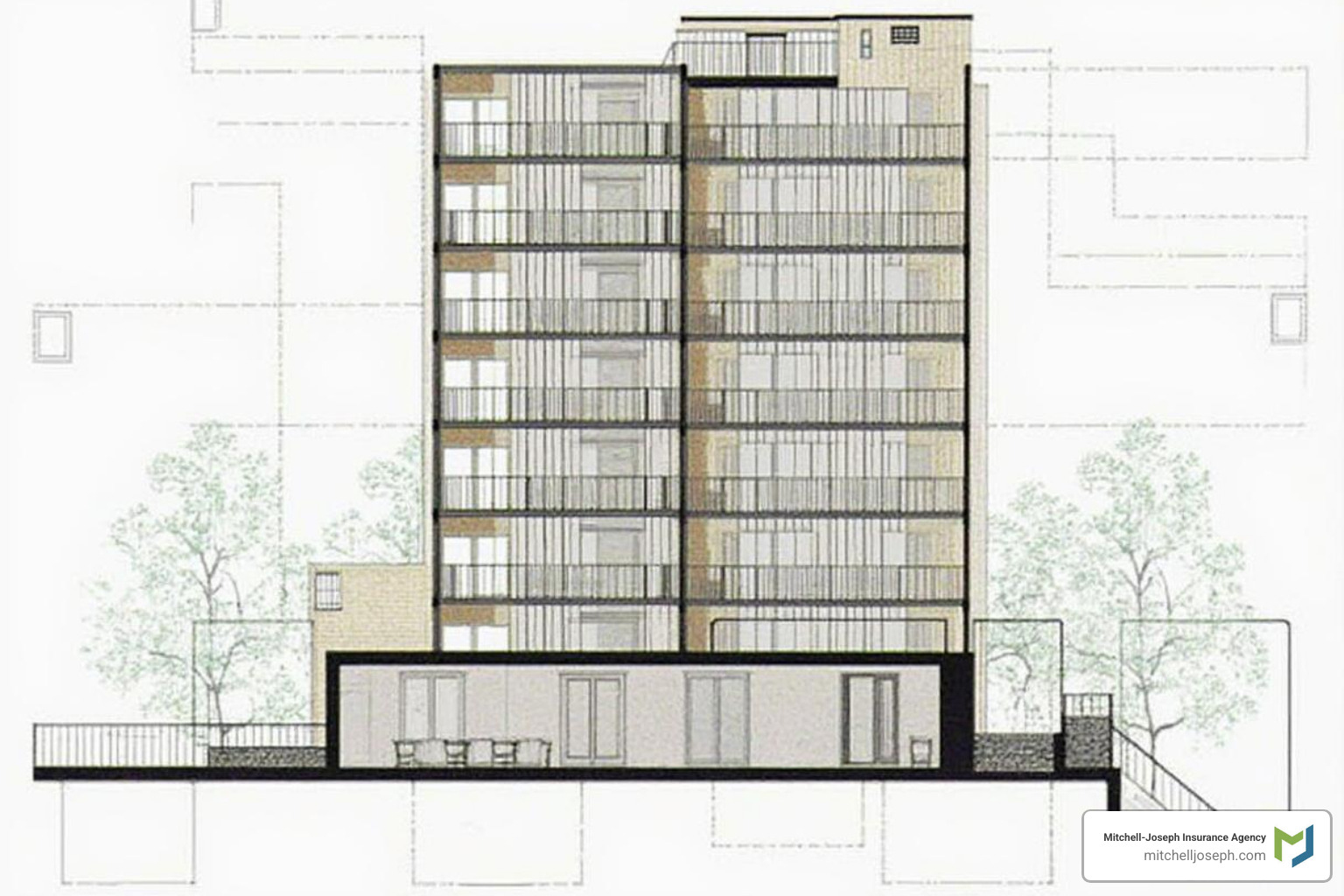
These two policies are designed to complement each other, not overlap. The master policy protects the shared property, while your HO-6 policy protects your personal space and possessions. This dual-layer protection is usually quite effective, but it leaves a potential financial gap – and that’s precisely what Condominium loss assessment coverage is designed to fill!
Why the Master Policy Isn’t Enough
You might be thinking, “Wait a minute, doesn’t the HOA’s master policy cover everything?” And sadly, the answer is often a resounding “No.” While these master policies are very comprehensive, they do have limitations that can directly impact your wallet.
Here’s why the master policy alone simply isn’t enough:
- Sky-High Deductibles: Condo master policies often come with incredibly high deductibles, sometimes even over $100,000! If an insured event occurs, like a large fire in the lobby, the HOA is responsible for paying this big deductible before their insurance even starts to pay. If the HOA’s reserve funds aren’t enough to cover it, they’ll pass that cost directly onto the unit owners as a loss assessment. So, if the deductible is $100,000 and there are 50 units, each owner could suddenly be assessed $2,000 just for the deductible!
- Coverage Shortfalls: Sometimes, the cost to repair a major incident simply goes beyond the master policy’s coverage limits. For example, if a fire causes $200,000 worth of damage to the community gym, but the master policy only covers $150,000, there’s a $50,000 “shortfall” that the HOA will need to get back from the unit owners.
- Lawsuits and Liability Claims: If someone gets hurt in a common area (imagine slipping in the lobby or falling by the pool) and sues the condo association, the legal judgment or settlement could easily exceed the master policy’s liability coverage. Any amount over that limit would then be assessed to the unit owners. Ouch!
- Unforeseen Expenses: While HOAs usually keep reserve funds for planned maintenance and repairs, unexpected major expenses (like a sudden structural problem or extensive repairs after a big storm) can quickly drain these funds. This often leads to a need for special assessments.
As a condo owner, you’re a bit like a “shareholder” in the condo corporation. This means you share responsibility for the common property. And yes, this also means you can be held accountable for your portion of these unexpected costs. Understanding how HOAs work, including their financial duties and how they process assessments, is key to truly protecting yourself. You can learn even more about how they operate through helpful resources like An explanation of how HOAs work.
What Does Condominium Loss Assessment Coverage Actually Cover?
Now that we understand why you need it, let’s dive into what Condominium loss assessment coverage actually protects. It’s designed to cover your portion of specific financial assessments related to shared property damage or liability that the HOA’s master policy can’t fully handle.

This coverage is typically part of your personal HO-6 condo insurance policy. While your policy primarily focuses on your unit, belongings, and personal liability, the loss assessment component extends protection to scenarios involving the broader condo community. For more on what your personal policy covers, see our guide on Personal Property Condo Insurance.
What’s Typically Included in Your Coverage
When you have Condominium loss assessment coverage, it generally steps in for your share of costs in these common scenarios:
- Damage to Common Areas: This is the most frequent trigger. If a covered peril, like a fire, severe windstorm, burst pipe, or vandalism, causes damage to shared spaces (e.g., the roof, exterior walls, lobby, gym, pool, elevators) and the repair costs exceed the master policy’s limits, your loss assessment coverage can pay your portion of the shortfall. For example, if a fire causes $250,000 in damage to the lobby, but the master policy only covers $150,000, the remaining $100,000 will be assessed to unit owners. If there are 50 units, that’s $2,000 per unit that your coverage can handle.
- Master Policy Deductible Assessments: As mentioned, master policies often have very high deductibles. If a covered loss occurs, and the HOA assesses unit owners to cover that deductible, your Condominium loss assessment coverage can pay your share. Some policies might have a specific limit for this, such as $25,000.
- Bodily Injury or Property Damage Liability: If someone is injured in a common area (e.g., a visitor slips on wet floor in the hallway) or their property is damaged, and the resulting liability claim or lawsuit against the HOA exceeds the master policy’s liability limits, your coverage can help pay your assessed portion. This protects you from having to pay out-of-pocket for a situation you didn’t directly cause. For example, if a $3 million lawsuit arises from an accident in a common area, but the master policy only has $2 million in liability coverage, the $1 million shortfall could be assessed to unit owners.
Some policies even offer generous limits for property damage assessments, such as up to 250% of your chosen contents coverage amount, highlighting how significant this protection can be.
Common Exclusions and Limitations
While powerful, Condominium loss assessment coverage isn’t a magic wand for all financial issues your HOA might face. It’s crucial to understand what it typically does not cover:
- Routine Maintenance and Cosmetic Improvements: Your coverage won’t pay for assessments related to everyday upkeep, such as repainting the building, landscaping, or upgrading the lobby for aesthetic reasons. These are considered operational costs or capital improvements, not losses from an insured peril.
- Assessments for Uncovered Perils: If the damage to common areas is caused by something not covered by the master policy (e.g., floods or earthquakes, unless the master policy specifically includes these, or you have separate flood/earthquake coverage), your loss assessment coverage typically won’t apply.
- Mismanagement or Negligence: Assessments levied due to poor financial management by the HOA, failure to maintain the property properly (leading to non-insured damage), or violations of bylaws by the HOA or unit owners are generally excluded.
- Replenishing Reserve Funds: If the HOA needs to assess owners simply to boost their reserve funds for future, non-loss-related projects, your Condominium loss assessment coverage won’t kick in. This coverage is tied to actual insured losses or liability.
- Damage within Your Unit: Loss assessment coverage is for common areas. It doesn’t cover repairs inside your own unit, nor does it cover your personal belongings. That’s what the other parts of your HO-6 policy are for.
Understanding these distinctions is key. Your coverage is designed to protect against unexpected costs stemming from insured losses to shared property, not general operating expenses or capital improvements. For a broader understanding of property protection, you can explore our Property and Casualty Insurance offerings.
How Much Coverage Do You Need and What Does It Cost?
Now that you know why Condominium loss assessment coverage is so important, let’s get to the practical questions: how much do you need, and what will it cost? The right amount of coverage is personal to your specific condo and HOA because one size definitely doesn’t fit all.
Here at Mitchell-Joseph Insurance Agency, serving communities like Honeoye Falls, Pittsford, and Naples in the beautiful Finger Lakes region, we love helping our neighbors figure this out. Our goal is to make sure you’re perfectly protected, without paying a penny more than you need to. Thinking about your home’s insurance is a big part of smart financial planning. You can explore different ways to protect your home on our page about Home Insurance Coverage Types.

Determining Your Ideal Coverage Amount
So, how do we figure out your perfect amount of Condominium loss assessment coverage? It’s like putting together a puzzle, and here’s how we approach it:
First, and this is super important, you’ll want to take a good look at your condo corporation’s master policy. This is the big insurance policy your HOA buys for the whole building. We’ll want to check its deductible (that’s the amount the HOA has to pay before their insurance kicks in) and how much coverage it has overall. Imagine if their deductible is $100,000 – you’d want your personal loss assessment coverage to be big enough to cover your share if that bill ever comes your way! Many experts suggest aiming for at least $50,000 in coverage, and sometimes even $100,000, especially with those high deductibles.
Next, it’s wise to peek into your HOA’s bylaws and their financial health. These documents can tell you a lot about how they handle assessments and if they even recommend a certain amount of coverage for owners. Knowing if your HOA has a healthy “rainy day fund” (reserve funds) can also give you a clue about how likely they are to hit you with an assessment for smaller issues.
It also helps to ask about any past assessments. Has your building had a history of these unexpected bills? This can give you a heads-up on what kind of issues might pop up again.
Then, take a little walk around your building. Assess potential risks in common areas. Do you see any signs of wear and tear, like an aging roof or old pipes? Sometimes, these visual clues can hint at future problems that might lead to assessments down the road.
Finally, and this is where we shine, talk to your friendly insurance folks at Mitchell-Joseph Insurance Agency! We’re here to help you put all these pieces together. We can help you understand the tricky language in your HOA’s master policy and suggest a coverage limit that truly safeguards your wallet. Did you know that many basic HO-6 condo policies only come with a tiny amount, maybe just $1,000, of Condominium loss assessment coverage? That’s barely a drop in the bucket for a big assessment! But don’t worry, we can easily add more through a super affordable endorsement to your policy.
It’s not just about getting the minimum; it’s about being ready for anything. For even more great tips on putting together a solid HO-6 policy, you might find this expert advice helpful: Expert advice on designing an HO-6 policy.
Understanding the Cost of Condominium Loss Assessment Coverage
Now for the good news! You might be surprised to hear that Condominium loss assessment coverage is usually quite affordable, especially when you think about how much financial heartache it can save you. It’s not a separate policy, but typically an add-on, or “endorsement,” to your existing HO-6 condo insurance.
Think of it this way: for just a few hundred dollars a year, you can add this powerful protection. In some cases, boosting your coverage from that tiny standard amount to, say, $50,000 or even $100,000 might only add “tens of dollars” to your yearly premium. That’s less than a fancy coffee a week for a whole lot of peace of mind! While the cost for your entire personal condo policy (which includes this coverage) usually falls somewhere between $400 and $600 a year, this specific part is a small but mighty player.
So, what makes the price tag tick up or down? A few things:
- Where you live: If your area sees more natural disasters or has higher repair costs, premiums might be a little higher.
- How old your building is, and its condition: Older buildings or ones with known maintenance quirks might have a higher chance of assessments, which can affect the cost a bit.
- How much coverage you choose: Naturally, if you want a higher coverage limit, it’ll cost a little more – but often not by much.
- Your insurance company: Every company has its own way of pricing things. That’s why we’re so proud to work with 24 different insurance companies here at Mitchell-Joseph! It means we can shop around for you to find the very best fit and price.
Honestly, when you consider that you could face a bill for $10,000, $20,000, or even more for an unexpected assessment, paying a few extra dollars a month for strong Condominium loss assessment coverage is one of the smartest investments you can make. Got more questions about home insurance costs in general? Our Home Insurance FAQs page is packed with answers!
Frequently Asked Questions about Condo Loss Assessments
We often get excellent questions from our clients in Rochester, Victor, Canandaigua, and surrounding areas about the nuances of condo insurance and loss assessments. Here are some of the most common ones:
Is a loss assessment the same as a deductible?
No, a loss assessment is not the same as a deductible, though they are certainly related! This is a common point of confusion, and we’re happy to clear it up:
Think of it this way: A deductible is the amount you agree to pay out-of-pocket before your own personal insurance policy (like your HO-6) starts paying for a claim you file. For example, if you have a $1,000 deductible on your HO-6 policy and your unit suffers $5,000 in covered damage, you’d pay the first $1,000, and your insurer would cover the remaining $4,000. It’s your portion of your claim.
A loss assessment, on the other hand, is a charge that your Homeowners Association (HOA) places on all unit owners. This happens when the condo building’s master insurance policy doesn’t fully cover the costs of damage to common areas or a liability claim. Maybe the repair costs exceeded the master policy’s limits, or perhaps the HOA needed to cover their master policy’s high deductible. So, while a loss assessment might be for your share of the HOA’s master policy deductible, it’s not the same as your personal deductible. It’s a bill from the HOA that spreads unexpected costs among all unit owners for shared property issues.
Does loss assessment coverage cover all special assessments?
This is another excellent question, and the answer is generally no, not all special assessments are covered by Condominium loss assessment coverage.
Your Condominium loss assessment coverage is specifically designed to protect you from assessments that come from an insured peril. This means things like a fire, windstorm, burst pipes, or a liability claim that impacts the common property. If these events cause a shortfall in the master policy, your coverage can step in.
However, your coverage typically does not apply to special assessments that are levied for other reasons. For example, it won’t pay for assessments related to routine maintenance, like general upkeep, painting, landscaping, or minor repairs that are just part of the HOA’s regular budget. It also doesn’t cover capital improvements, such as planned upgrades to the property that aren’t related to an insured loss – think building a new gym, renovating the lobby just for aesthetics, or adding new amenities.
Furthermore, if the damage is caused by an uninsured event (like a flood or earthquake, unless the master policy specifically includes these, or you have separate coverage), your Condominium loss assessment coverage won’t apply to that assessment. And finally, assessments that are simply for replenishing reserve funds (to build up the HOA’s savings for future, non-loss-related expenses) are typically not covered either.
It’s really important to understand the difference. Your coverage is there for unexpected costs from insured losses to shared property, not for general operating expenses or planned upgrades.
How do I get condominium loss assessment coverage added to my policy?
Adding or increasing your Condominium loss assessment coverage is a straightforward process, and we’re here to help you every step of the way.
The first and easiest step is to reach out to us at Mitchell-Joseph Insurance Agency. As an independent, family-owned business with over 200 years of combined experience, we can guide you through all your options. We’ll likely need a few details about your condo corporation’s master insurance policy, especially its deductible amount and overall coverage limits. This helps us make the best recommendation for your personal policy.
Condominium loss assessment coverage is typically added as an endorsement or rider to your existing HO-6 condo insurance policy. Think of it as a special add-on that customizes your standard policy to include this important protection. We’ll work with you to review the proposed coverage limits and make sure they align with your needs and the potential risks of your building. We partner with 24 different insurance companies, which means we can find custom coverage that perfectly fits your unique situation and budget.
It’s a simple step that can offer immense peace of mind. And just so you know, we also assist condo associations themselves with their insurance needs, giving us a deep understanding of both sides of the coin. Learn more about our services for Insurance for Condo Associations.
Protect Your Investment with the Right Coverage
Living in a condo truly offers a wonderful lifestyle! You get to enjoy shared amenities, often less exterior maintenance, and a built-in community. It’s a fantastic setup. But, as we’ve talked about, this carefree living comes with some unique financial responsibilities that stretch beyond just your own unit.
This is exactly why Condominium loss assessment coverage isn’t just another item on an insurance checklist. It’s a really important shield that protects you from those unexpected and potentially huge bills. Without this coverage, if something big happens to your building’s common areas, you could be left with thousands of dollars to pay out of your own pocket. We’ve seen how much stress and financial strain this can cause.
At Mitchell-Joseph Insurance Agency, we truly care about making sure our neighbors in Honeoye Falls, Pittsford, Naples, and all across the Finger Lakes region are fully protected. As a family-owned business, we pride ourselves on offering personalized service. Plus, since we work with 24 different insurance companies, we can shop around to find you the best coverage that truly fits your unique needs and budget.
So, don’t let a surprise loss assessment catch you off guard and “assess you to death.” It’s about taking control of your financial security. Make sure your valuable condo investment is properly protected. It gives you incredible peace of mind!
Ready to get that peace of mind? Let’s chat! Get a personalized quote for your condominium insurance today!

