So, You Bought a Box in the Sky: An Intro to NY Condo Life
Condominium insurance in ny protects your personal belongings, interior upgrades, and provides liability coverage that your HOA’s master policy doesn’t include. Here’s what you need to know:
- HO-6 Policy: Covers your unit’s interior, personal property, and liability
- Average Cost: $656 per year statewide, $691 in NYC
- Master Policy Gap: Your HOA covers common areas and building exterior only
- Required Coverage: Most lenders and HOAs require individual condo insurance
- Key Benefits: Personal property protection, guest injury coverage, temporary living expenses
As one condo owner noted, assuming your HOA covers everything is a costly mistake. The reality is simple: your condo association’s insurance covers the building structure and shared spaces. Your personal condo policy covers everything from your walls inward—your belongings, upgrades, and liability if someone is injured in your unit.
In New York, condominium insurance in ny isn’t just smart—it’s usually required by your lender or HOA. The cost can range from a few hundred dollars per year to over $1,000 with some carriers, depending on your coverage needs and location.
I’m Jeffrey Joseph of Mitchell-Joseph Insurance Agency. Since 1999, I’ve helped Finger Lakes residents steer condominium insurance in ny. I’ve found most condo owners are surprised by what their HOA policy doesn’t cover—and how affordable proper protection is.
Condominium insurance in ny terms to learn:
Your HOA’s Policy vs. Your Policy: The Great Coverage Divide
Understanding condo insurance starts with knowing the difference between your HOA’s master policy and your personal condominium insurance in ny.
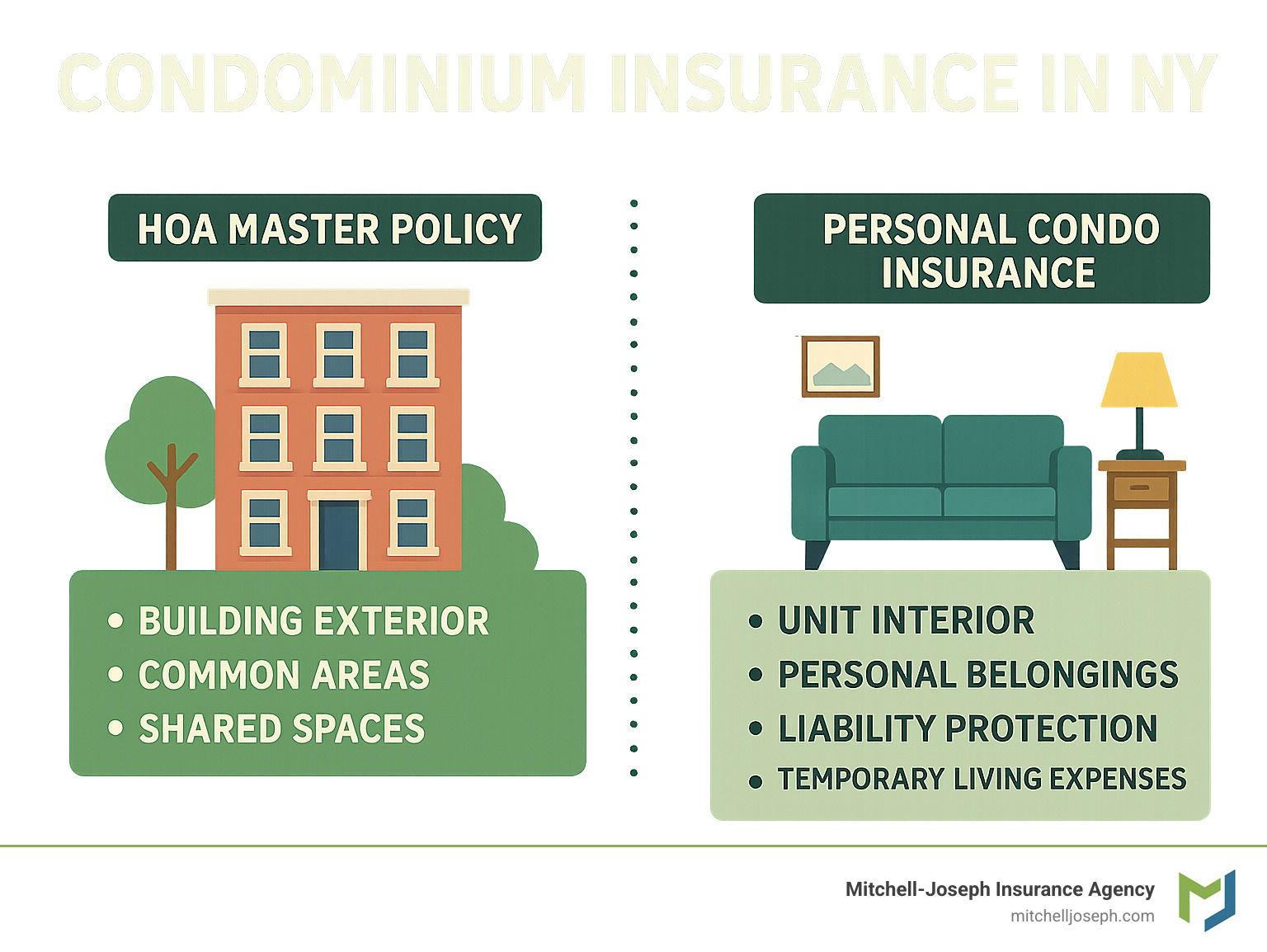
Your Homeowners Association (HOA) master policy covers the big things: the building’s exterior, roof, foundation, and common areas like hallways, elevators, and the gym. This policy protects the structural integrity and shared amenities of the entire building.
However, the master policy stops at your front door. Everything inside your unit is your responsibility. This is where your personal condo policy provides “walls-in coverage.” It protects the paint on your walls, kitchen cabinets, flooring, and fixtures. For more details on what your HOA’s policy covers, you can check out our page on Insurance for Condo Associations.
Your personal policy also includes personal liability. If a guest is injured in your unit or your overflowing tub damages a neighbor’s ceiling, your HOA’s policy won’t cover it. Your personal liability coverage provides a financial safety net for these incidents.
What is condo insurance (HO-6) and why do I need it in New York?
An HO-6 policy is insurance designed specifically for condominium owners. It complements the HOA’s master policy to protect your unique ownership situation. Here’s why it’s a necessity in New York:
- Personal Belongings: Your electronics, furniture, clothing, and other valuables are not covered by the HOA’s policy. An HO-6 policy protects your personal property from perils like theft or fire.
- Interior Structures: Your unit’s interior—including cabinets, flooring, and fixtures—is your responsibility. If a pipe bursts and ruins your kitchen, your personal policy helps cover repair costs.
- Guest Injuries: If a guest is injured inside your unit, you could be held financially responsible for their medical bills. Personal liability coverage protects your assets in these situations. The average dog bite claim in New York can be over $55,000, making this coverage essential.
- Temporary Living Expenses (Loss of Use): If a covered event like a fire makes your condo uninhabitable, your HO-6 policy can cover additional living expenses, such as hotel stays and meals, while your unit is repaired.
- Lender Requirements: Most mortgage lenders require you to carry an HO-6 policy to protect their investment (and yours).
An HO-6 policy protects your investment, possessions, and financial well-being. For more details, check out our page on Insurance for Condominium Owners.
What’s the difference between condo and co-op insurance?
In New York, you’ll encounter both condos and co-ops. While condominium insurance in ny (HO-6) is for condo owners, co-op insurance is very similar.
The main difference is ownership. With a condo, you own the real estate of your unit. With a co-op, you buy shares in a corporation that owns the building, which gives you a proprietary lease to occupy a unit.
Despite this, insurance needs are nearly identical. Both condo and co-op owners need coverage for:
- Personal Property: Your furniture, electronics, and other belongings.
- Interior Fixtures and Improvements: Renovations and finishes inside your unit.
- Personal Liability: Protection if someone is injured in your unit.
- Loss Assessment Coverage: Helps pay your share if the association levies an assessment after a major loss.
- Additional Living Expenses: Covers costs if your unit becomes uninhabitable.
The practical need to protect your space is the same. Many insurers use a similar policy (like an HO-6) for both. We can help you find the right Apartment Insurance for your situation.
What’s Actually Covered? Unpacking Your Condominium Insurance in NY
Let’s explore the details of what a standard HO-6 policy actually covers to safeguard your investment and personal comforts.

This section explains what a standard HO-6 policy protects you from, ensuring your investment and personal comforts are safeguarded.
The Good Stuff: What a Standard NY Condo Policy Includes
A typical condominium insurance in ny policy (HO-6) provides protection where your HOA’s master policy stops. Here’s a breakdown of key coverages:
- Dwelling Coverage (Unit Coverage): This is your “walls-in” protection. It covers structural elements inside your unit, such as paint, cabinets, fixtures, and flooring. If a pipe inside your unit bursts and damages your kitchen, this coverage helps pay for repairs.
- Personal Property Coverage: This covers your belongings, including furniture, clothing, electronics, and artwork. If your laptop is stolen or your furniture is damaged in a fire, this coverage helps you replace them. For more on this, check out our guide to Personal Property Condo Insurance.
- Liability Protection: This is critical. If someone is injured in your unit and you’re found legally responsible, this covers their medical expenses and your legal fees. It also covers property damage you accidentally cause to others. With the average NY dog bite claim costing $55,671, this coverage is a vital shield.
- Medical Payments to Others: This provides a limited amount to pay for medical bills for guests injured in your unit, regardless of who is at fault. It’s a goodwill coverage that can prevent larger legal issues.
- Loss of Use (Additional Living Expenses): If a fire or other covered disaster makes your condo unlivable, this coverage pays for additional costs like temporary housing and meals while your unit is repaired.
The Not-So-Good Stuff: Common Exclusions
An HO-6 policy is robust, but it doesn’t cover everything. It’s crucial to be aware of common exclusions:
- Floods: Standard policies do not cover flood damage. If you live in a flood-prone area, you’ll need a separate policy, often through the National Flood Insurance Program (NFIP).
- Earthquakes: Damage from earthquakes is also typically excluded and requires a separate policy or endorsement.
- Wear and Tear/Lack of Maintenance: Insurance doesn’t cover damage from gradual deterioration or failure to perform routine maintenance.
- Intentional Damage: Your policy won’t cover damage you cause to your own property on purpose.
- Pest Infestations: Damage from termites, rodents, or other pests is generally not covered.
- War and Nuclear Hazard: These catastrophic events are standard exclusions in most insurance policies.
Understanding these exclusions helps you identify coverage gaps and decide if you need additional protection.
The Price of Peace of Mind: Costs, Coverage & Quotes
Let’s talk about the cost of condominium insurance in ny and how to get the right amount of coverage without overpaying.

This section breaks down the financial aspects of your policy, helping you steer the numbers with confidence.
How much does condominium insurance in ny cost?
The cost of condominium insurance in ny varies. Statewide, the average is around $656 per year (about $55/month), while in New York City, it’s slightly higher at $691 per year (about $58/month). These averages typically assume $60,000 in personal property coverage, $300,000 in liability, and a $1,000 deductible.
However, your actual premium depends on several factors. Rates can range from under $300 to over $1,400 in different parts of New York. Key factors influencing your price include:
- Location: Proximity to risks like crime or severe weather affects rates.
- Coverage Amount: Higher limits for property or liability will increase the premium.
- Deductible: A higher deductible typically lowers your annual cost.
- Claims History: A clean claims record can lead to better rates.
- Building Construction: The age and materials of your building also play a role.
How much coverage do I actually need?
Determining the right amount of coverage is key to being protected without overpaying.
- Personal Property: Create a home inventory to estimate the replacement cost of your belongings. High-value items like jewelry or art may need extra coverage.
- Dwelling Coverage: This should cover the cost to rebuild your unit’s interior, not its market value. Consider the cost of replacing cabinets, flooring, and fixtures. An agent can help you estimate this based on rebuilding costs per square foot.
- Liability Limits: A minimum of $300,000 is recommended. If you have significant assets, consider $500,000 or more. An umbrella insurance policy offers an extra layer of protection for those with substantial assets. Learn more on our page: Do You Need Umbrella Insurance?.
- Loss Assessment Coverage: This is crucial. If your HOA levies an assessment on all owners to cover a major loss or a high deductible, this coverage helps pay your share.
An experienced agent can help you tailor a policy that fits your specific needs and budget.
Scoring a Deal: Discounts and Getting a Quote
There are several ways to save on your condominium insurance in ny premium.
Common discounts include:
- Bundling Policies: Combine your condo and auto insurance with the same provider for significant savings.
- Home Safety: Installing security systems, smoke detectors, or fire alarms can lower your rate.
- Claims-Free History: You may qualify for a discount if you haven’t filed claims recently.
- Higher Deductible: Choosing a higher deductible will lower your premium, but ensure you can afford it.
- Other Discounts: Ask about savings for paperless billing, automatic payments, being a new condo buyer, or having a manager on-site.
Getting a personalized quote is easy. You’ll typically need to provide:
- Your condo’s address and details (size, age, construction).
- Information about safety features (alarms, sprinklers).
- Your desired coverage levels and deductible.
- Your claims history.
We can guide you through the process to find the best coverage at a competitive price.
Frequently Asked Questions about NY Condo Insurance
It’s normal to have questions about condominium insurance in ny. We’re here to make it clear by tackling some of the most common queries from New York condo owners.
Is condo insurance required by my HOA in New York?
While no state law mandates it, the answer is almost always yes. There are two main reasons you’ll need an HO-6 policy:
- Lender Requirements: If you have a mortgage, your lender will almost certainly require you to have condo insurance to protect their investment.
- HOA Bylaws: Most condo association bylaws require individual owners to carry their own insurance. This protects you, your neighbors, and the association from financial risk if an incident occurs in your unit.
Even if it’s not required, it’s highly recommended. The HOA’s master policy leaves significant gaps in coverage for your personal belongings and liability, leaving you financially vulnerable without your own policy.
Is condo insurance cheaper than homeowners insurance in New York?
Yes, on average, condominium insurance in ny is more affordable than a traditional homeowners policy.
- Average NY condo insurance cost: ~$588/year.
- Average NY homeowners insurance cost: ~$974/year.
The reason for the price difference is responsibility. A homeowners policy must cover the entire structure (roof, foundation, walls). With a condo, the HOA’s master policy covers the building’s exterior and common areas. Your personal policy only needs to cover your unit’s interior, which means less structural risk and a lower premium. For more details on home protection, explore our Homeowners Insurance NY options.
If a pipe bursts in my condo, who is responsible?
Determining responsibility for a burst pipe depends on a few factors:
- Pipe Location: If the pipe is entirely within your unit’s walls (e.g., a pipe to your sink), you are likely responsible for the repairs and damage to your unit. Your HO-6 policy would cover this. If the pipe is a common element serving multiple units, the HOA is typically responsible for the pipe itself, but your HO-6 policy would still cover damage to your unit’s interior and belongings.
- Condo Bylaws: Your association’s governing documents will specify responsibility for the plumbing system. It’s essential to review them.
- Negligence: If the burst was due to your negligence (e.g., ignoring a known leak), your liability coverage may be needed for damage to other units. Conversely, if the HOA was negligent, its policy might be triggered.
- Damage to Other Units: If a pipe in your unit damages a neighbor’s property, your personal liability coverage is crucial for covering their repair costs.
Protecting Your NY Pad with the Right Partner
You now understand the basics of condominium insurance in ny, from what’s covered to what it costs. But knowing about insurance and getting the right policy are two different things. Choosing the perfect coverage can be complex, but the right partner makes all the difference.

Just as you’d use a real estate agent to buy a condo, an independent insurance agent is invaluable for protecting it. They steer options from multiple carriers, compare coverage quality beyond just price, and find discounts you might miss.
At Mitchell-Joseph Insurance Agency, we’ve helped residents of the Rochester and Finger Lakes region protect their homes since 1999. We’re your local neighbors in Honeoye Falls, NY, with over 200 years of combined experience.
As an independent agency, we work with 24 different insurance companies. This allows us to shop on your behalf to find the perfect fit for your needs and budget, whether you’re in a downtown high-rise or a quiet Finger Lakes community. We explain everything in plain English, ensuring you understand your policy without jargon or pressure.
Your condo is a major investment. Don’t leave its protection to a generic online policy. Let us help you find condominium insurance in ny that truly fits your needs, giving you complete peace of mind.
Ready to get started? Find the right home insurance coverage for you and find what personalized service really means.