

Protecting Your Passion: A Classic Car Insurance Comparison
For passionate owners, navigating Classic car insurance comparison can seem complex. But it doesn’t have to be. Understanding how specialized classic car policies differ from standard auto insurance is key to protecting your prized possession.
Here’s a quick look at the main differences:
- Cost: Classic car insurance is often much cheaper. It can be 40% to 50% less than standard daily-use vehicle insurance. The typical policy costs between $200 and $600 a year.
- Valuation: Classic policies use “Agreed Value.” This means you and the insurer agree on your car’s worth upfront. If it’s a total loss, you get that full amount, without depreciation. Standard policies use “Actual Cash Value,” which pays out less due to depreciation.
- Usage: Classic cars are for fun, not daily chores. These policies have mileage limits, usually under 7,500 miles a year. They expect your car is for pleasure drives, shows, or club events.
- Storage: Insurers usually require your classic car to be stored in a secure, enclosed space, like a private garage.
- Coverage: Classic car policies offer specialized features. Think coverage for spare parts, vehicles under restoration, or even trip interruption during a car rally.
As Jeffrey Joseph, I’ve spent over 20 years helping clients like you find the right coverage, ensuring our expertise in Classic car insurance comparison provides personalized service and competitive rates.

Understanding Classic Car Insurance vs. Standard Auto Policies
When it comes to safeguarding a collectible, classic car insurance is not just a re-labeled version of your everyday auto policy—it’s built from the ground up for vehicles that are loved, pampered, and often appreciating in value.
Agreed Value vs. Actual Cash Value
• Standard auto policies rely on Actual Cash Value (ACV), paying only the depreciated market price after a loss.
• Classic policies use Agreed Value: you and the insurer lock in the car’s worth at the start, and that exact figure (minus any deductible) is what you receive after a covered total loss. No haggling, no depreciation.
Premiums & Usage
Because classics are driven sparingly and kept under cover, insurers see far less risk. The result? Premiums that can be 40–50 % lower—often just $200–$600 per year. In return, you agree to hobby-use rules such as:
• Limited annual mileage (typical caps of 5,000–7,500 miles)
• A separate, regularly-insured daily driver
• Secure, enclosed storage
Specialized Coverage
Beyond the basics, classic policies can add protection for rare spare parts, vehicles under restoration, roadside assistance custom to vintage cars, and more. For additional context on how everyday auto coverage works, visit More info about Auto Insurance Coverage.
What Makes a Car a “Classic”?
Most carriers consider age plus collectability. In simple terms a classic is:
- Roughly 10–25 years old (antique status often starts at 25)
- Limited-production or historically significant
- No longer used for daily commuting
Common examples include hot rods, muscle cars, exotics, vintage trucks, and even classic motorcycles. For a broader industry view, see the Insurance Information Institute.
Key Eligibility Requirements for Owners and Vehicles

To qualify you’ll generally need:
- Secure indoor storage – a private garage or similarly protected facility.
- Pleasure-only usage – weekend drives, shows, parades, club events.
- Clean driving record – few (or no) serious violations in the past 3–5 years.
- A separate daily driver – proves the classic isn’t your commuter car.
Meeting these guidelines keeps risk low and premiums affordable. Our team can walk you through the details and confirm whether your vehicle—and your driving habits—fit the bill.
A Deep Dive into Your Classic Car Insurance Comparison
Once you know you qualify, the next step is choosing the right policy—not just the cheapest one. At Mitchell-Joseph Insurance Agency we compare quotes from 24 carriers to match coverage with your budget and driving habits.
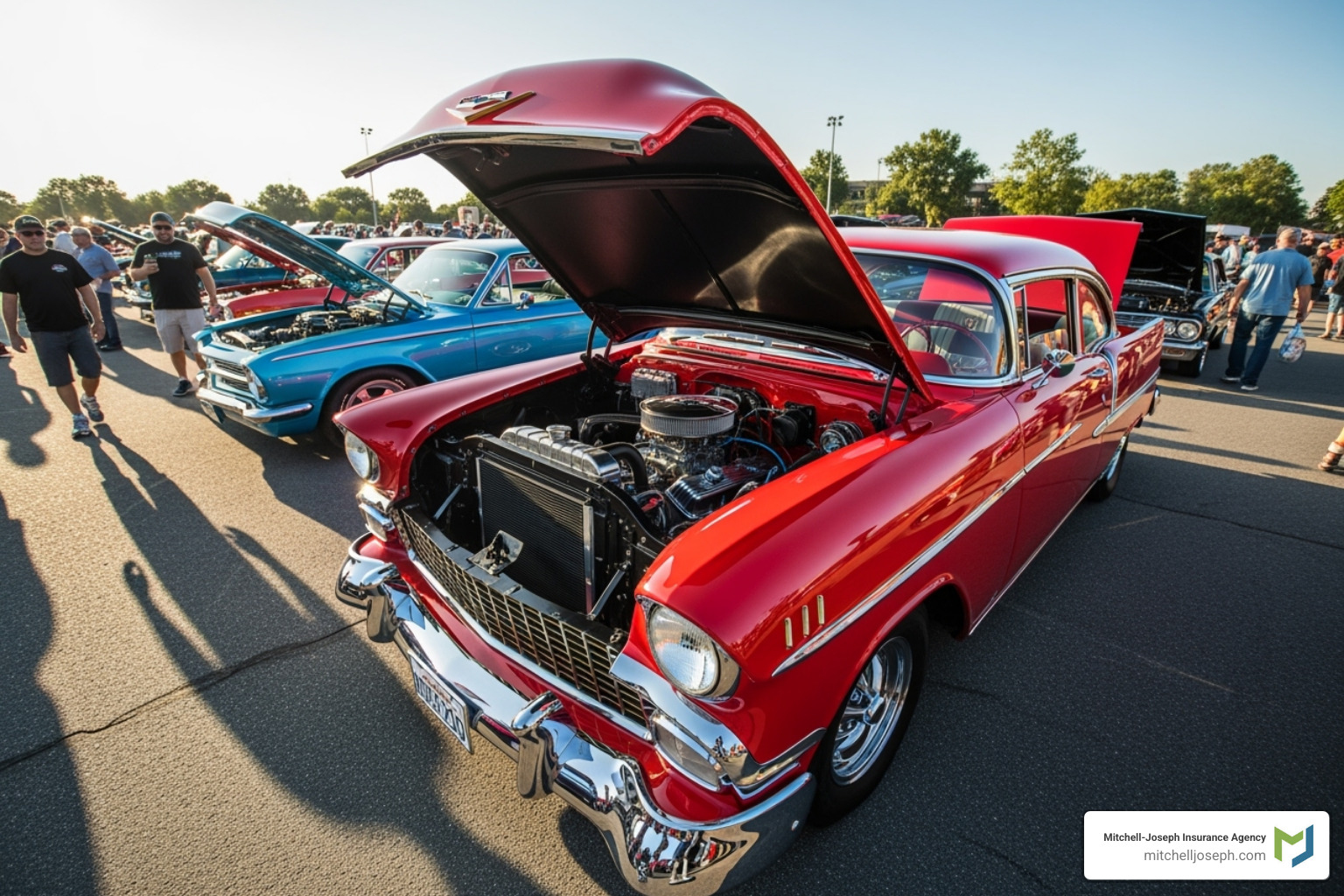
Key things to review:
- Core protections (liability, collision, comprehensive)
- Agreed Value wording
- Deductible options
- Endorsements that add or exclude certain risks
For an overview of how we handle specialty vehicles, visit More info about Recreational Vehicle Insurance.
Essential Coverage Options to Compare
- Agreed Value – guarantees the full insured amount after a total loss.
- Liability Protection – bodily injury & property damage.
- Collision – repairs damage if you hit another vehicle or object.
- Comprehensive – protects against theft, vandalism, weather, fire, animals.
- Uninsured/Underinsured Motorist – pays when the at-fault driver can’t.
- MedPay/PIP – covers medical bills for you and passengers.
Specialized Features Worth Considering
Classic policies can be custom far beyond standard auto coverage. Popular add-ons include:
- Spare Parts Coverage – protects valuable components stored in your garage.
- Restoration Coverage – increases the agreed value as the project progresses.
- Roadside Assistance & Flatbed Towing – ensures your pride and joy is handled properly.
- Trip Interruption – reimburses hotels and meals if a breakdown strands you far from home.
- Auto Show & Event Coverage – extends protection while the vehicle is on display.
- Cherished Salvage – lets you keep the car even after a total-loss payout.
Every carrier packages these extras differently, so a side-by-side comparison is the surest way to find the features that matter most to you.
Decoding the Costs: How to Get the Best Value
Here’s some truly great news for classic car enthusiasts: insuring your beloved vintage vehicle is generally much more affordable than covering your everyday ride! We’ve found that a typical classic car insurance policy often costs just between $200 and $600 a year. That’s a huge difference – in fact, it can be 40% to 50% cheaper than insuring your daily driver. Why the big savings? It’s all thanks to the limited use and the careful, loving ownership that goes along with these special vehicles.
However, even within classic car insurance, costs can vary a bit. The exact premium you’ll pay depends on a few key factors. For instance, the vehicle’s agreed value plays a role; naturally, a higher-valued car will have a slightly higher premium to protect that investment. Your driving history is another big one – a clean record, free of accidents or tickets, is your best friend for keeping rates low.
Where and how your classic is stored also matters. Insurers love to see your car tucked away safely in a locked, private garage or a secure storage unit. This significantly reduces the risk of theft or damage. Plus, your mileage plan makes a difference; choosing a lower annual mileage cap, if you only drive your classic occasionally, will almost always lead to lower costs. And finally, your location can influence rates. For our friends in Honeoye Falls, Pittsford, Rochester, and the lovely Finger Lakes communities, we know the local factors inside and out that help shape your rates. For an even deeper dive into what influences your auto insurance costs, be sure to check out our guide on More info about Factors That Determine Your Auto Insurance Premium.
Actionable Tips for Saving Money
When you’re doing your Classic car insurance comparison, getting the right policy at the best possible price is always a top priority. We love helping our clients save money without ever skimping on the essential coverage your prized possession deserves. Here are some smart tips we share that can help you keep more cash in your pocket:

First off, consider bundling policies. Many insurers offer sweet discounts when you combine your classic car insurance with other policies, like your homeowners insurance or even your daily driver’s auto insurance. This can really add up! Some policies even offer a diminishing deductible – imagine reducing your deductible by up to $500 just for being accident-free for five years. That’s a nice reward for safe driving!
If you’re lucky enough to have more than one classic, you’re in for a treat with multi-car discounts. Insuring several classic vehicles under the same policy often brings down the per-vehicle cost. And speaking of community, if you’re a member of a classic car club or association, definitely ask about car club membership discounts. Many insurers offer special rates to members of recognized automotive clubs. It truly pays to be part of the enthusiast community!
While less common for truly vintage models, it’s worth asking about safety feature discounts. If your classic happens to have certain modern safety features, like an anti-theft device or GPS tracking, you might qualify for a small discount. Also, think about raising your deductible. Choosing a higher deductible means you’d pay a bit more out-of-pocket if you had a claim, but it can significantly lower your annual premium. We’ve seen options ranging from $0 to $10,000, so there’s plenty of flexibility to find a comfortable amount for you.
And, of course, if your classic truly only comes out for those very special occasions, choosing a lower mileage plan will almost certainly reduce your premium. The less you drive it, the lower the risk in the insurer’s eyes. Last but certainly not least, maintaining a clean driving record is absolutely foundational. A record free of at-fault accidents or serious violations for the past several years is one of the biggest factors in securing the lowest possible rates.
By using these smart tips and partnering with our experienced agents here at Mitchell-Joseph Insurance Agency, you’re in great hands. We have access to competitive quotes from 24 different insurance companies, which means we can help you find excellent coverage that perfectly fits your budget. For more insights into finding affordable auto insurance, especially for our neighbors in the Rochester NY area, explore More info about Cheap Auto Insurance Rochester NY.
Frequently Asked Questions about Classic Car Insurance
We understand that classic car insurance can raise a lot of questions. It’s a special world for special cars! Here are some of the most common inquiries we receive, answered to help you steer your options with confidence.
How many miles can you drive a classic car per year?
This is one of the most frequently asked questions, and it’s a really important one for your Classic car insurance comparison. The answer actually varies quite a bit depending on the specific policy and the insurance company. Why? Because most classic car insurance providers define a classic car as primarily for pleasure use, meaning it’s not racking up tons of miles on daily commutes.
While some companies cap classic car mileage at 7,500 miles annually, others offer different tiers to suit your driving style. You might find policies with mileage limits of 5,000 miles, perfect if your classic is mostly a garage queen brought out for special occasions. Or, if you love to tour, there might be higher options like 10,000 miles. Interestingly, some specialized policies even boast unlimited mileage options, provided the vehicle is still used for hobby purposes and not as a daily driver. The key here is that these mileage plans are always tied to the understanding that the vehicle is not your primary mode of transportation. It’s for “hobby use” restrictions like car shows, club events, and those glorious occasional pleasure drives.
When discussing your policy with us, we’ll chat about how often you truly plan to drive your classic. This helps us pick a mileage plan that realistically matches your driving habits, ensuring you’re covered perfectly without overpaying for miles you won’t use.
Can you insure a classic car for daily driving?
Generally, the short answer is no, you cannot insure a classic car under a specialized classic car insurance policy if you intend to use it as your daily driver or for regular commuting. These special policies are specifically designed for non-daily driven vehicles. They assume a much lower risk profile because your prized possession is stored securely and driven sparingly. This is precisely why classic car policies are so much more affordable!
If you plan to use your classic car for everyday transportation – like driving to work every day, running all your errands, or as your only vehicle – you will typically need to insure it under a standard auto policy instead. While this is certainly possible, please keep a few things in mind. A standard policy will value your car based on Actual Cash Value (ACV), meaning its worth will depreciate over time. This is a stark contrast to the wonderful “Agreed Value” of classic policies. Plus, a standard policy will likely cost significantly more than a specialized classic policy, as it doesn’t account for the careful usage and secure storage typical of classic car owners.
Even those higher mileage allowances (like the 10,000 miles per year we mentioned earlier) come with the clear understanding that the vehicle is not for routine, daily commuting. It’s for more frequent “hobby use.” So, if your vintage beauty is going to be your main ride, a standard policy is the way to go.
What is the difference between “Agreed Value” and “Stated Value”?
Understanding the distinction between “Agreed Value” and “Stated Value” is absolutely critical when insuring a classic car. This difference directly impacts how much you’ll receive in the unfortunate event of a total loss, so let’s make sure it’s crystal clear.
First, there’s Agreed Value. This is truly the gold standard for classic car insurance. With an Agreed Value policy, you and the insurer agree on your car’s specific value at the very start of the policy. This specific amount is then guaranteed. In the event of a covered total loss – meaning your classic is severely damaged or stolen – you will receive that full, agreed-upon amount (minus any applicable deductible). The best part? There is no depreciation applied. This gives you complete peace of mind, knowing exactly what your payout will be, protecting your precious investment. Many of our partners offer this kind of coverage, sometimes even calling it “Guaranteed Value” – it’s the same wonderful concept, just a different brand name.
Then, there’s Stated Value. This type of policy generally offers less protection and can be quite misleading. With a Stated Value policy, you declare a value for your car, but it’s important to understand that this amount is not a guarantee. In the event of a total loss, the insurer will pay the lesser of the stated amount or the actual cash value (ACV) of the vehicle at the time of the loss. This means the insurer can still factor in depreciation and pay you less than the “stated” amount if they determine the ACV is lower. It’s a hybrid approach that provides less certainty and protection compared to the superior Agreed Value.
For most classic car owners, especially when doing a Classic car insurance comparison, we strongly recommend an Agreed Value policy. It truly ensures your cherished possession is fully protected for what it’s worth. For more answers to common auto insurance questions, you can visit our More info about Auto Insurance FAQs.
Finding the Perfect Policy for Your Prized Possession
So, we’ve taken quite a journey together, exploring the ins and outs of classic car insurance. It’s clear by now that protecting your cherished classic is a whole different ballgame than insuring your everyday ride. These special vehicles—with their history, their appreciating value, and the sheer joy they bring—deserve truly specialized coverage.
Think about it: Agreed Value coverage is your peace of mind, guaranteeing your investment is fully protected. Then there are those fantastic specialized features, like covering your priceless spare parts or ensuring your restoration project is insured every step of the way. This kind of dedicated care is simply custom-made for the enthusiast’s world.
Navigating the nuances of Classic car insurance comparison can feel a bit like tuning a vintage engine – it takes a keen eye and a steady hand. But the value of specialized coverage is truly undeniable! It’s not just about protecting the money you’ve invested; it’s about safeguarding the sentimental stories, the historical significance, and the sheer passion your vehicle represents. Without this specific protection, you risk both significant financial loss and a whole lot of heartache if something unexpected happens.
And that’s precisely where expert guidance becomes your trusted co-pilot. Here at Mitchell-Joseph Insurance Agency, we’re not just an agency; we’re an independent, family-owned business deeply rooted right here in the communities of Honeoye Falls, Pittsford, and the surrounding Finger Lakes region of New York. With over 200 years of combined experience, our team brings unparalleled knowledge and a genuine dedication to serving folks just like you.
We don’t just offer insurance policies; we offer truly personalized service. We take the time to really understand your unique vehicle, your driving habits, and any specific concerns you might have. And because we have access to competitive quotes from 24 different insurance companies, we can truly ensure you get custom coverage that perfectly aligns with your needs and your budget. We’re here to help you protect your passion, ensuring your vintage wheels are covered with modern deals!
Whether you’re looking to insure a single treasured classic or an entire collection, we invite you to experience the Mitchell-Joseph difference. Learn More info about our auto insurance services or simply Contact Us today. Let us help you keep your automotive legacy cruising safely for years to come.

