Introduction to the World of Camper Vans
A class b rv, or camper van, is a compact motorhome built on a standard van chassis like a Ram ProMaster, Ford Transit, or Mercedes-Benz Sprinter. It combines the mobility of a van with essential living amenities, including a kitchen, bathroom, and sleeping area.
Quick Facts About Class B RVs:
- Size: 16-22 feet, fitting in standard parking spaces.
- Sleeping Capacity: Typically 2-4 people.
- Price Range: $60,000-$150,000+ for new models.
- Fuel Efficiency: Better MPG than larger RVs.
- Best For: Couples, solo travelers, and weekend trips.
The class b rv market is booming, as these “mighty minis” offer a perfect balance of adventure and practicality. Unlike larger Class A or C motorhomes, Class B RVs look like regular vans but are packed with everything needed for life on the road. You can park them almost anywhere, steer tight roads, and still enjoy the comforts of home.
These camper vans represent a lifestyle choice that prioritizes freedom and mobility. I’m Jeffrey Joseph, owner of Mitchell-Joseph Insurance Agency. Since 1999, I’ve helped RV enthusiasts across upstate New York protect their investments. My team understands the specialized insurance coverage a class b rv requires, from proper valuation to on-road liability.
The Ultimate Guide to the Class B RV Lifestyle
What is a Class B RV and How Does It Compare?
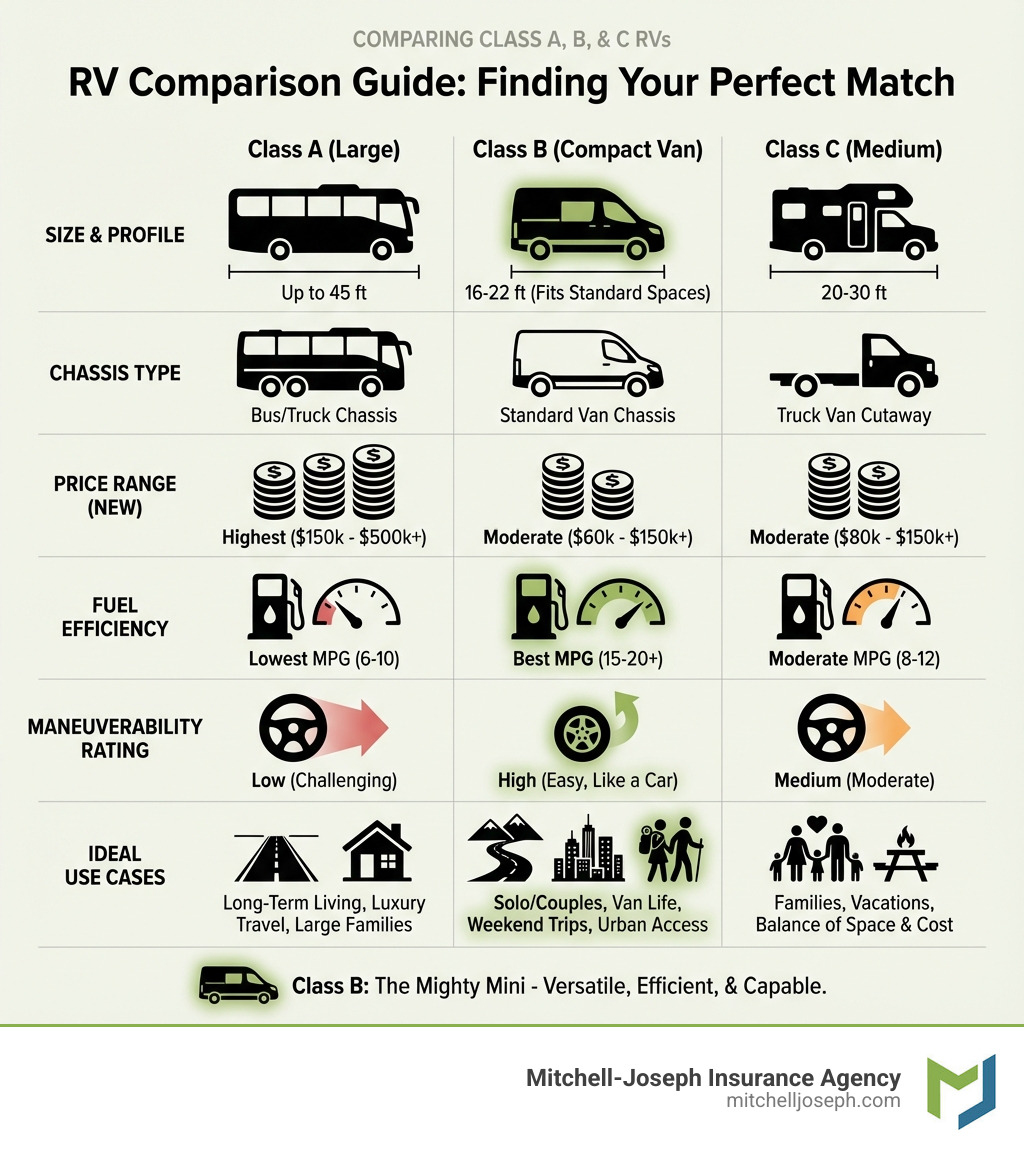
A class b rv, or camper van, is a compact motorhome built on a standard van chassis. Its key feature is the seamless integration of the cab and living space, allowing you to move from the driver’s seat to the kitchen without stepping outside. To understand its place in the market, it’s helpful to compare it with the other RV classes.
- Class A Motorhomes: The largest type, built on a bus or truck chassis (20-45+ feet). They offer maximum living space and luxury, ideal for full-time living or large groups.
- Class C Motorhomes: A mid-sized option (20-30 feet) built on a cutaway van chassis with a distinctive cab-over bunk. They balance space and maneuverability, making them popular with families.
- Class B Motorhomes: The smallest motorized RVs (16-22 feet), prized for their agility, fuel efficiency, and ease of driving. They are perfect for couples, solo travelers, and weekend adventurers.
Here’s a quick comparison:
| Feature | Class A Motorhome | Class B Motorhome | Class C Motorhome |
|---|---|---|---|
| Size | 20-45+ feet | 16-22 feet | 20-30 feet |
| Chassis | Bus or Commercial Truck | Standard Van (e.g., Sprinter, ProMaster, Transit) | Cutaway Van with Cab-Over Bunk |
| Price Range | $75,000 – $500,000+ | $60,000 – $200,000+ | $60,000 – $150,000+ |
| Best For | Full-time living, large groups, luxury travel | Couples, solo travelers, weekend trips, urban exploring | Families, extended trips, mid-range comfort |
The unique appeal of a class b rv is its ability to fit in a standard parking space, making it practical for exploring cities or navigating the scenic, winding roads of New York state. For more details on RV classes, you can explore guides like What Are The Different RV Classes?.
The Pros and Cons: Is a Camper Van Right for You?
A class b rv offers a unique travel experience, but it’s important to weigh its advantages and disadvantages.
Advantages of Choosing a Class B RV
- Best Maneuverability: Handling much like a large van, they are easy to drive, park, and steer through city streets or on tight mountain roads.
- Superior Fuel Efficiency: Their smaller size and weight result in better gas mileage compared to Class A and C motorhomes, saving money on long trips.
- Ease of Parking and Access: Most Class B RVs fit in standard parking spaces and garages, providing access to smaller campsites and urban areas off-limits to larger rigs.
- Stealth Camping Potential: Their van-like appearance allows for more discreet camping in certain areas (always check local regulations).
- Lower Operating Costs: Maintenance can often be handled by standard auto mechanics, and costs for storage and insurance are generally lower.
Disadvantages and Limitations of Class B RVs
- Limited Living Space: The compact footprint means less interior room. While designs are efficient, they are best suited for one or two people, with four being a tight squeeze.
- Smaller Storage Capacity: You’ll have significantly less storage than in larger RVs, requiring minimalist packing and organization.
- Lower Towing Capacity: While some can tow up to 5,000 pounds, their capacity is generally less than larger motorhomes.
- Higher Price Per Square Foot: The complex engineering required to fit amenities into a small space can make them as expensive as some larger Class C models.
Is a Camper Van Right for You?
A class b rv is ideal for solo travelers and couples who prioritize flexibility and ease of driving over spacious living quarters. If you value the journey and agile exploration, a Class B might be your perfect match. Learn more about their pros and cons at Class B.
A Look Inside: Features, Amenities, and Popular Models
Modern class b rvs are marvels of efficient design, packing numerous features into a compact space.

Common Amenities and Innovative Features
- Galley Kitchens: Typically include a sink, two-burner stove, microwave, and a compact refrigerator.
- Wet or Dry Baths: A wet bath combines the toilet and shower in one waterproof area to save space, while some larger models may have a small dry bath with a separate shower.
- Convertible Furniture: Sofas that convert to beds and power-lift beds are common space-saving solutions.
- Pop-Top Roofs: Some models feature a pop-top roof to add a second sleeping area, expanding capacity to four people.
- Off-Grid Capabilities: Many vans are equipped for boondocking with solar panels, advanced lithium-ion battery systems, and inverters to power appliances off-grid.
- All-Season Comfort: Features like diesel-powered heating systems and robust insulation make them suitable for year-round travel.
Popular Chassis and Models
The chassis is the foundation of a class b rv, with the most popular being:
- Ram ProMaster: Known for its front-wheel drive and spacious interior.
- Ford Transit: Offers a comfortable ride with available all-wheel-drive (AWD).
- Mercedes-Benz Sprinter: The basis for many luxury and adventure models, known for its powerful diesel engine, safety features, and AWD options.
Popular class b rv models include the Winnebago Travato, the adventure-focused Winnebago Revel, the family-friendly Winnebago Solis, and the luxurious Airstream Interstate series. Each offers a different take on compact, mobile living.
The Financial Side: Price, Maintenance, and Lifespan of a Class B RV
Understanding the full financial picture is key before investing in a class b rv.
Typical Price Range
- New Class B RVs: Prices generally range from $100,000 to over $200,000, with some entry-level models starting around $60,000. The high cost reflects the complex engineering and luxury components packed into a small vehicle.
- Used Class B RVs: The used market offers more affordable options, typically from $70,000 to $150,000 for well-maintained recent models. Always get a professional inspection and check the maintenance history and mileage.
Maintenance Requirements
Maintenance involves both the vehicle chassis and the RV house systems.
- Chassis Maintenance: This is similar to a standard van and includes regular oil changes, tire care, brake inspections, and fluid checks. Follow the manufacturer’s recommended service schedule.
- House Systems Maintenance: This covers all living amenities. Regularly flush water tanks, inspect seals to prevent leaks, and maintain appliances. In colder climates like upstate New York, winterizing the plumbing system by draining water and adding RV antifreeze is crucial to prevent damage.
Drivetrain Reliability and Lifespan
The mechanical reliability of a class b rv is tied to its chassis. With proper care, a camper van can last 200,000 miles or more. Consistent maintenance is the most important factor in ensuring a long lifespan for your RV. For more insights, you can refer to resources like RVs can last up to 200,000 miles.
The Buying Process: Key Considerations and Insurance
Purchasing a class b rv requires careful thought about your needs, budget, and how you’ll protect your investment.
Key Purchasing Factors
- Intended Use: How will you travel? Solo, as a couple, or with family? For weekends or long-term? Your answer will guide your choice.
- Floor Plan: Consider layouts for sleeping, cooking, and relaxing. Test them out in person if possible.
- New vs. Used: New RVs offer warranties and the latest features but depreciate quickly. Used RVs are more affordable but require thorough inspection.
- Chassis Type: Test drive different chassis (Ram, Ford, Mercedes) to see which driving experience you prefer.
Financing and Insurance
Financing an RV is similar to a car loan, though terms can be longer. Shop around for the best rates.
More importantly, insuring a class b rv requires a specialized policy that’s different from standard auto insurance. At Mitchell-Joseph Insurance Agency, we help clients in communities like Honeoye Falls, Rochester, and Victor, NY, find the right coverage. Key considerations include:
- Liability, Comprehensive, and Collision: Protects you, your vehicle, and others in case of an accident, theft, or other damage.
- Personal Effects Coverage: Insures your belongings inside the RV.
- Roadside Assistance: Specialized assistance for RVs is essential.
- Full-Timer Coverage: If the RV is your primary residence, you’ll need a policy similar to homeowner’s insurance.
Our team can help you compare quotes and build a custom policy. Explore our RV Insurance Coverage Options and get an idea of what to expect with our RV Insurance Cost Guide.
Embracing the Lifestyle: Van Life, Boondocking, and Best Uses
The class b rv is the quintessential vehicle for the ‘van life’ movement, which prioritizes freedom, minimalism, and mobility. This trend has pushed manufacturers to create more versatile designs with robust off-grid capabilities.
Boondocking and Off-Grid Living
Boondocking—camping without hookups—is where Class B RVs excel. Their compact size allows access to remote locations that larger rigs can’t reach. Success depends on key features:
- Power Systems: Solar panels and lithium battery banks are crucial for powering lights, refrigerators, and electronics without a generator or shore power.
- Water Management: Smaller water tanks require conservation. Smart travelers take quick showers and minimize water use.
- Efficient Heating: Propane or diesel heaters provide warmth without draining batteries.
Compared to larger motorhomes, class b rvs also have a lower environmental impact due to better fuel efficiency.
Tips for First-Time Buyers
- Rent Before You Buy: Experience the lifestyle to see if it’s right for you.
- Research Thoroughly: Compare different models to find one that meets your specific needs.
- Learn Your Systems: Understand how your RV’s electrical, water, and propane systems work before your first trip.
- Pack Smart: With limited space, minimalist packing is essential.
Conclusion: Is a Camper Van Your Ticket to Adventure?
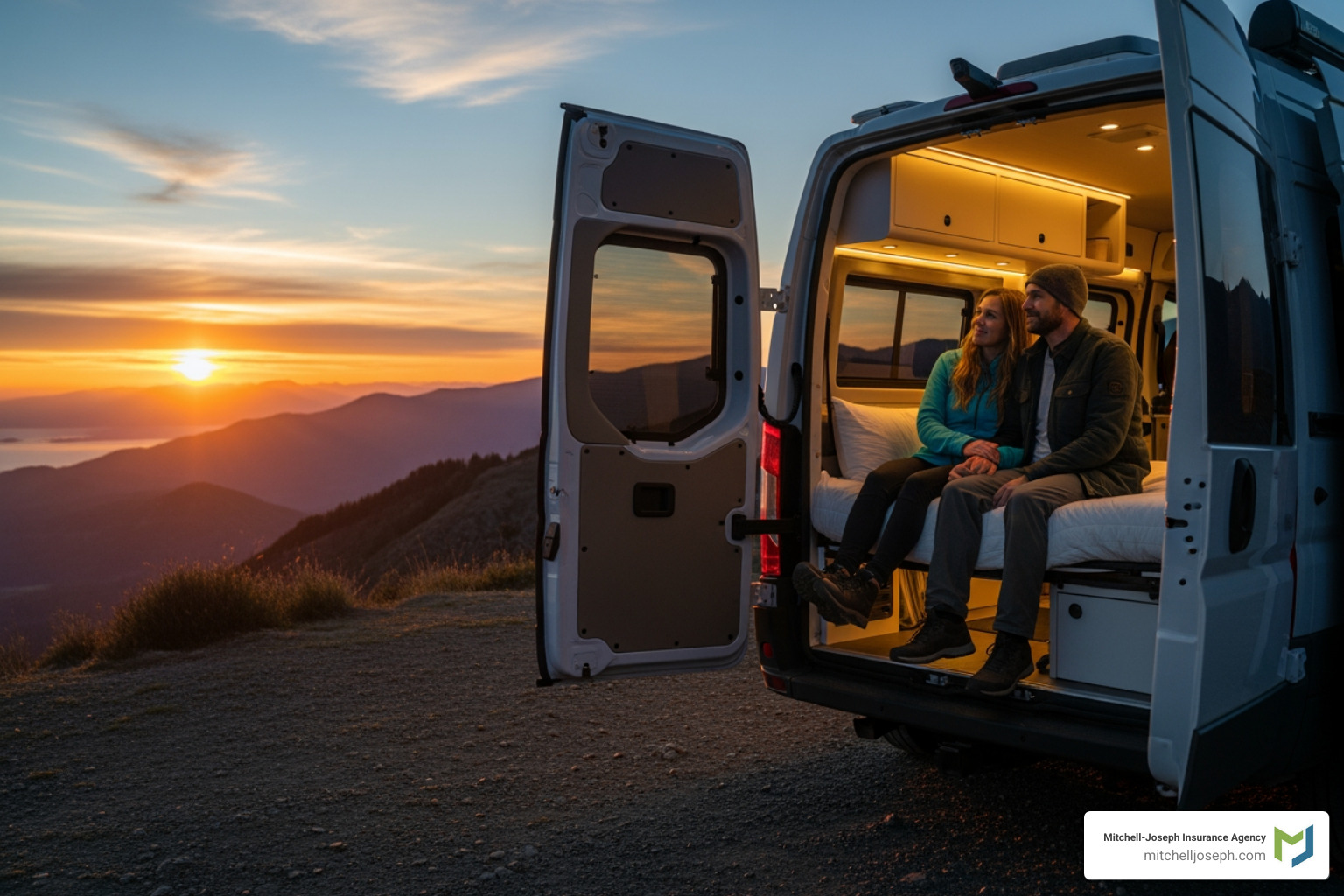
The class b rv offers an unparalleled blend of versatility, freedom, and efficiency. Its maneuverability and self-contained amenities open up a world of possibilities, from city exploring to remote boondocking, that larger RVs can’t match. While they have limitations in space, their advantages in fuel efficiency, ease of parking, and off-grid capabilities make them a top choice for many adventurers.
Whether a camper van is your ticket to adventure depends on your travel style. If you crave spontaneity and value a minimalist, mobile lifestyle, a class b rv could be your perfect companion for exploring the open road.
As you start on this journey, protecting your investment is crucial. At Mitchell-Joseph Insurance Agency, we specialize in finding the right coverage for your camper van. We proudly serve communities across upstate New York, including Honeoye Falls, Pittsford, Naples, Rushville, Avon, Bloomfield, Bristol, Canadice, Canandaigua, Cohocton, Fishers, Gorham, Honeoye, Ionia, Lima, Mendon, Middlesex, Potter, Rochester, Rush, South Bristol, Stanley, Victor, Wayland, and West Bloomfield. Explore our options for Affordable Recreational Vehicles and let us help you get the right protection for your journey.