

Why Every Photographer Needs Gear Protection
Camera insurance protects your photography equipment from theft, damage, and loss. Whether you’re a weekend hobbyist or a full-time professional, your camera gear represents a significant investment that standard homeowners insurance may not fully cover.
Here’s what camera insurance covers:
- Camera bodies (DSLRs, mirrorless, point-and-shoot)
- Lenses and filters
- Lighting equipment and tripods
- Accessories like memory cards, batteries, and chargers
- Laptops used for photo editing
- Theft from home, vehicle, or while traveling
- Accidental damage from drops or spills
- Fire and water damage
The moment you start making money from photography – even selling a few prints – your gear may be classified as “commercial equipment.” This means your homeowners policy could deny coverage when you need it most. As one photographer finded: “My home contents insurance has decided that they will no longer cover my photography equipment because I now make money from photography.”
Camera insurance costs range from $55 per year for basic coverage up to $650+ annually for comprehensive professional policies. The peace of mind knowing your $5,000+ investment is protected makes this a smart financial decision for any photographer.
I’m Jeffrey Joseph, and I’ve helped photographers across the Finger Lakes region secure proper camera insurance coverage for over two decades. My team at Mitchell-Joseph Insurance Agency understands that your camera gear isn’t just equipment – it’s your creative lifeline that deserves specialized protection.

Your Comprehensive Guide to Camera Insurance
Photography isn’t just about capturing moments – it’s about protecting the tools that make those moments possible. Whether you’re snapping family portraits on weekends or running a full-time wedding photography business, your camera insurance needs go far beyond what most people realize.
What’s Covered? From Camera Bodies to Accessories
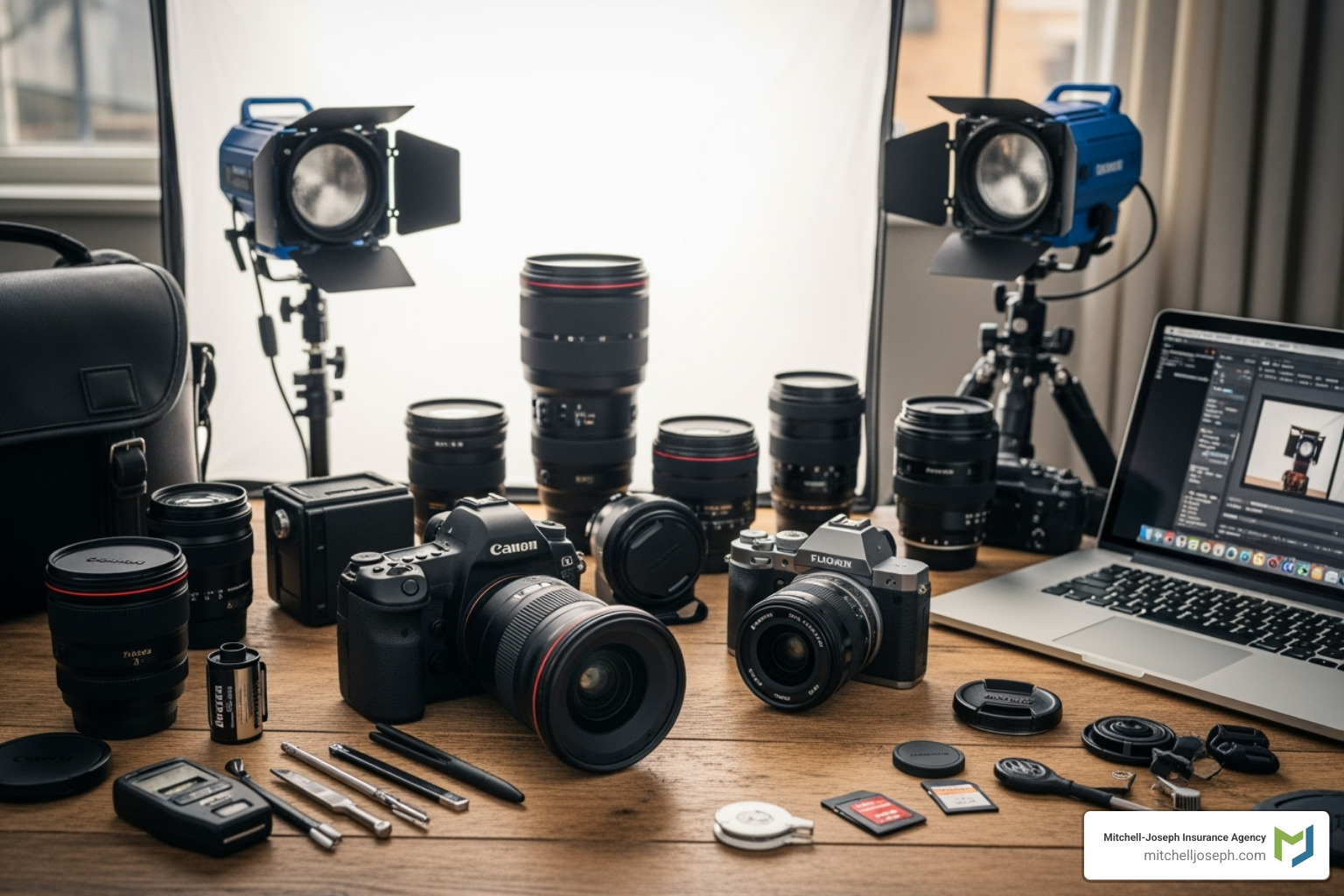
Comprehensive camera insurance protects your entire creative toolkit, which includes more than you might expect.
- Cameras: Your DSLR, mirrorless, point-and-shoot, and action cameras are the heart of your coverage.
- Lenses: Often the most valuable part of your kit, all your lenses are protected.
- Lighting Equipment: Studio strobes, speedlights, light stands, and modifiers are covered. These items are fragile and expensive to replace.
- Computers: Laptops and desktops used for your photography business can be included, preventing a loss from shutting down your operations.
- Drones: Specialized policies cover drones, which are typically excluded from homeowners insurance due to high risk.
- Accessories: Memory cards, batteries, tripods, and other accessories add up, and they’re covered too.
Many policies also include newly acquired equipment coverage (usually for 30 days) and can even protect your digital image library. The most common claims involve accidental damage (drops and spills), theft, fire and water damage, and loss or damage during travel.
Why Your Homeowners Policy Isn’t Enough
Many photographers are unpleasantly surprised to learn their homeowners policy won’t cover their gear once they start earning money.
The commercial equipment exclusion is the main issue. The moment you’re paid for photography, your gear becomes “commercial equipment” in your insurer’s eyes, which standard homeowners policies don’t cover. I’ve seen countless photographers denied claims because they sold a few prints, a heartbreaking and avoidable situation.
Off-premises limitations are another problem. Homeowners policies offer very limited coverage for items away from your home. That expensive lens stolen from your car during a shoot? Probably not covered.
Coverage limits on homeowners policies are often too low for a full photography kit, leaving you with a massive gap even if a claim is approved.
Filing a claim on your home insurance can also increase your premiums and involves higher deductibles. It’s better to have specialized coverage for your gear.
For more details about insurance coverage options, check out our insurance coverage page.
Understanding the Cost of Camera Insurance
The cost of camera insurance depends on several key factors:
- Equipment Value: The total replacement cost of your gear is the biggest driver of your premium.
- Coverage Limits: Higher total and per-item limits will increase the cost.
- Deductibles: Choosing a higher deductible (what you pay out-of-pocket) will lower your annual premium. Deductibles often start around $250-$350.
- Type of Photography: A studio photographer faces different risks than a traveling wedding photographer.
- Location: Local crime rates and disaster risks influence pricing.
- Claims History: A history of claims can increase your rates.
Based on our experience, basic coverage for hobbyists starts around $55 per year for up to $5,000 in gear. Standard coverage for semi-professionals typically runs $200-$400 annually for $10,000-$25,000 in equipment. Professional policies with liability coverage start around $650 per year. We work with 24 different insurance companies to find the best combination of coverage and price for your unique needs.
Choosing the Right Policy: Key Features to Look For
Focus on these key features to select the right camera insurance policy:
- Replacement Cost Coverage: This is non-negotiable. It pays to replace your gear with new, equivalent items without deducting for depreciation, unlike “actual cash value” coverage.
- General Liability Insurance: Essential for professionals, this protects you from “slip-and-fall” lawsuits if a client is injured or you damage property at a venue.
- Professional Liability Coverage: Also known as Errors & Omissions, this covers you if a client sues for negligence, such as corrupted wedding photos. Many professional organizations, like the Professional Photographers of America (PPA), emphasize the importance of this coverage.
- Rented Equipment Coverage: If you frequently rent gear, ensure your policy covers it, as many basic policies don’t.
- Worldwide Coverage: Crucial for travel, but check the time limits (e.g., 30-90 days) and any country exclusions.
- Policy Customization: Look for insurers who can bundle other coverages like office contents or library stock protection.
Working with an independent agency like ours means we shop multiple companies to find the best rates and explain complex terms, ensuring you get the right protection.
Filing a Claim and Understanding Your Camera Insurance Exclusions

Knowing the claims process and policy exclusions is vital.
To file a claim:
- Secure the scene and your remaining equipment.
- File a police report immediately for theft or vandalism; you’ll need the report number.
- Contact your insurer as soon as possible.
- Document everything: Take photos of the damage and create a detailed list of lost/damaged items with serial numbers and receipts.
- Cooperate with the insurance adjuster.
Be aware of common exclusions to avoid surprises:
- Unattended Vehicle Theft: Many policies have strict rules about leaving gear in a car, often requiring signs of forced entry.
- Wear and Tear: Insurance covers sudden, accidental events, not equipment aging.
- Mechanical Breakdown: Internal faults are usually not covered, but damage from external events (like a drop) is.
- Gross Negligence: Leaving gear unattended in public can void your coverage.
- Territorial & Time Limitations: Worldwide coverage isn’t unlimited; check trip duration limits and excluded countries.
- Unscheduled Equipment: High-value items may need to be listed individually (“scheduled”) to be fully covered.
We walk clients through their specific policy to ensure they understand what is and isn’t covered.
Protecting Your Passion and Profession
Your camera gear is the bridge between your creative vision and the world, representing both your art and a significant financial investment.

Standard homeowners insurance often fails photographers. The moment you earn money, your gear may be considered “commercial equipment,” leaving you unprotected. Specialized camera insurance is the solution. It’s custom-built for photographers, covering theft, accidental damage, and even liability. This peace of mind allows you to focus on creating instead of worrying.
For professionals, this coverage is critical. It helps you replace gear quickly, cover rental costs, and avoid lost income and disappointed clients. It understands that your equipment travels with you and faces unique risks, offering features like worldwide coverage and protection for new gear.
Here at Mitchell-Joseph Insurance Agency, we’ve helped photographers across the Finger Lakes region for decades. As an independent, family-owned business with over 200 years of combined experience, we leverage our relationships with 24 insurance companies to find you the perfect fit.
Don’t let one accident threaten your passion. Let us help you find coverage that protects your investment and your creative future.

