

Why Insurance for New Home Buyers is Essential
Insurance for new home buyers is a critical step that protects your investment from unexpected disasters and satisfies your mortgage lender’s requirements. While most lenders require it, homeowners insurance is more than a box to check—it’s a safety net for your home and belongings.
The home-buying process can be overwhelming, with confusing terms like mortgage insurance (PMI) and home warranties. It’s also vital to know that standard policies exclude perils like floods and earthquakes, and that your home’s age, location, and even your credit score can impact your premium.
At Mitchell-Joseph Insurance Agency, we’ve helped countless first-time buyers in the Finger Lakes Region steer this process since 1999. We’re here to ensure you get the right coverage that fits your needs and budget.
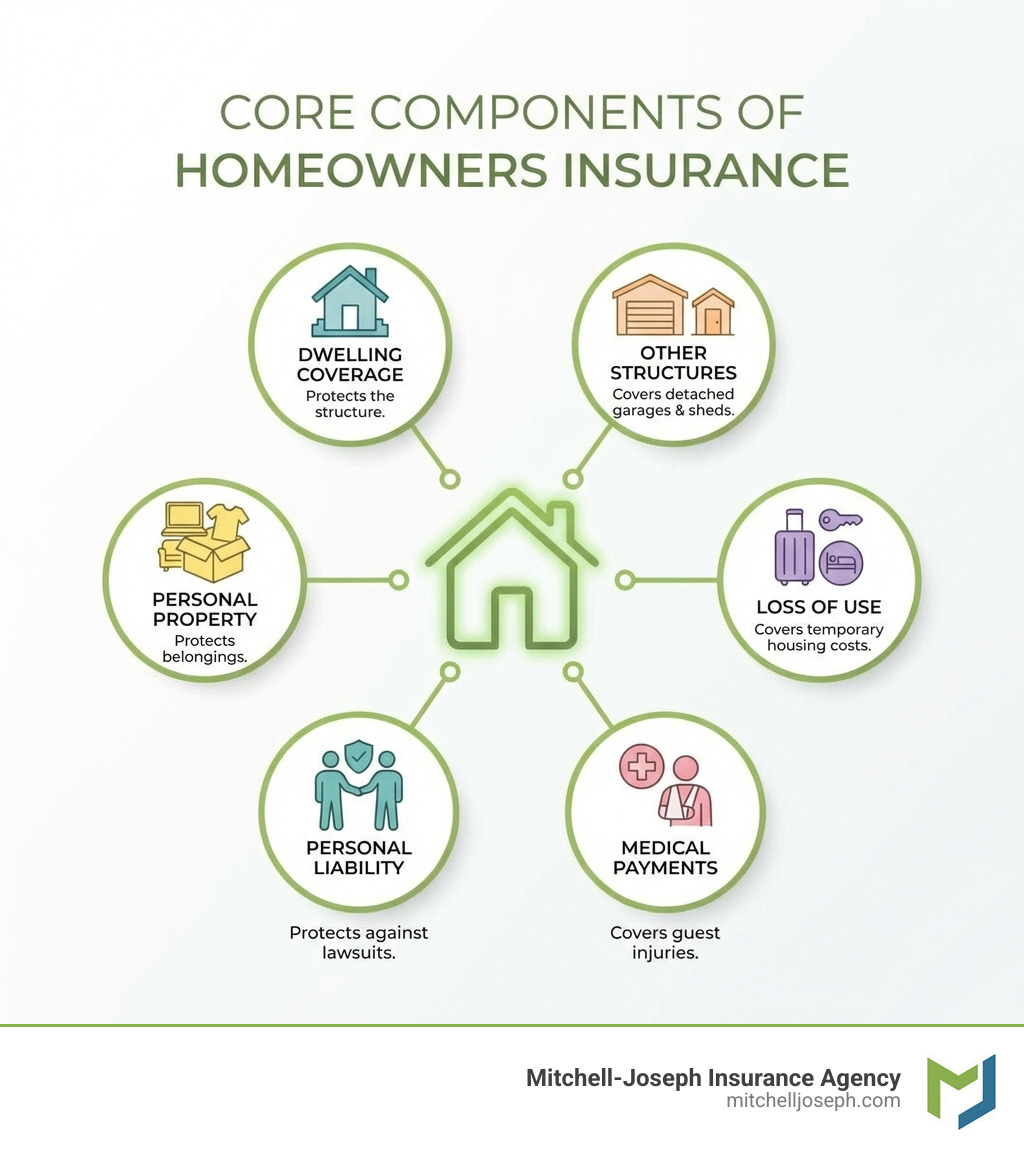
Essential Coverage for New Home Buyers:
- Dwelling Coverage – Covers the structure of your home.
- Personal Property Coverage – Protects your belongings.
- Liability Coverage – Protects you if someone is injured on your property.
- Additional Living Expenses – Covers temporary housing if your home is uninhabitable.
- Other Structures – Covers detached garages, sheds, and fences.
- Medical Payments – Covers minor medical bills for guests.
Simple insurance for new home buyers glossary:
- property insurance rochester ny
- independent auto and home insurance agents rochester ny
- rochester ny insurance agencies
A Guide to Insurance for New Home Buyers
Decoding the Basics: What is Homeowners Insurance?
Homeowners insurance is a policy that financially protects your home and belongings from risks, or “perils.” It also provides liability coverage if someone is injured on your property. A standard policy typically includes:
- Dwelling Coverage: Protects the physical structure of your home.
- Other Structures Coverage: Covers detached structures like garages or sheds.
- Personal Property Coverage: Protects your belongings, like furniture and electronics.
- Loss of Use: Helps pay for temporary housing and living expenses if your home is uninhabitable after a covered loss.
- Personal Liability Coverage: Protects you financially if you’re found legally responsible for injury or damage to others.
- Medical Payments Coverage: Pays for minor medical expenses for guests injured on your property, regardless of fault.

What is the difference between homeowners insurance and mortgage insurance?
This is a common point of confusion. Homeowners insurance protects you and your property. Mortgage Insurance (PMI) protects your lender if you default on your loan. You pay for PMI, but it benefits the lender.
What is a home warranty and how does it differ from home insurance?
They serve different purposes. Home insurance covers damage from sudden, unexpected events like fire or theft. A home warranty covers the repair or replacement of appliances and home systems (like an HVAC or water heater) due to normal wear and tear.
What are the different types of homeowners insurance policies?
Policies are designated by HO numbers. The most common are:
- HO-3 (Special Form): This is the standard policy. It covers your home’s structure for all risks except those specifically excluded (like floods). Your personal property is covered only for a list of “named perils.”
- HO-5 (Comprehensive Form): This offers the broadest protection, covering both your home’s structure and your personal property for all risks unless they are specifically excluded.
For more details, see our guide on Home Insurance Coverage Types.
What about condo or renters insurance?
- Condo Insurance (HO-6): Covers the interior of your unit (“walls-in”), your belongings, and liability. The building’s exterior is covered by the condo association’s master policy.
- Renters Insurance (HO-4): Covers your personal belongings and liability when you rent. Maintaining a renters policy can protect your down payment savings and may lead to better homeowners insurance rates later.
Understanding Your Coverage and Exclusions
Knowing what your policy does and doesn’t cover is crucial.
What perils are typically covered?
Standard policies generally cover perils like fire, wind, hail, theft, vandalism, falling objects, and the weight of ice and snow.
What perils are typically excluded?
Common exclusions include flood, earthquake, war, neglect, and sewer backup (though you can often add coverage for this with an endorsement).
How can I get flood or earthquake insurance?
You must purchase separate policies for these risks. Most flood insurance is provided through the National Flood Insurance Program (NFIP), which you can get through an agent. Earthquake insurance is available from private insurers as an add-on or separate policy. Learn more with our resources on Homeowners Insurance and Flood Insurance.
How do I determine the right coverage limits?
- Dwelling Coverage: This should be based on the cost to rebuild your home, not its market value. We can help you estimate this replacement cost.
- Personal Property Coverage: This is usually a percentage of your dwelling coverage (e.g., 50-70%). Create a home inventory to ensure you have enough coverage, especially for high-value items like jewelry, which may need to be scheduled separately.
An extended replacement cost endorsement is a valuable add-on that provides an extra buffer (e.g., 25-50%) on top of your dwelling limit in case rebuilding costs surge after a disaster.
| Feature | HO-3 (Special Form) | HO-5 (Comprehensive Form) |
|---|---|---|
| Dwelling Coverage | “All-risk” (covers all perils unless excluded) | “All-risk” (covers all perils unless excluded) |
| Personal Property Coverage | “Named perils” (only covers listed perils) | “All-risk” (covers all perils unless excluded) |
| Primary Benefit | Broad coverage for dwelling, common for most homeowners | Broadest coverage for both dwelling and personal property |
The Smart Buyer’s Checklist for Getting insurance for new home buyers
Use this checklist to make informed decisions during the home-buying process.
What should I look for during a home inspection related to insurance?
The home inspection is vital for insurance purposes. Pay close attention to:
- Roof: Age and condition are major factors. An old roof can mean higher premiums or difficulty getting coverage.
- Plumbing and Electrical: Outdated systems (knob-and-tube wiring, galvanized pipes) increase the risk of fire or water damage.
- Underground Oil Tanks: Many insurers will not cover homes with an active underground oil tank due to leak risks.
What is a loss history report (e.g., C.L.U.E. report)?
A C.L.U.E. report shows insurance claims filed on a property in the last seven years. It can reveal past issues like water damage or frequent claims, which may signal higher risk and affect your insurance costs. You can request one from LexisNexis via their Comprehensive Loss Underwriting Exchange page.
What information do I need to get a homeowners insurance quote?
To get an accurate quote, you’ll need the property address, year built, square footage, construction materials, and details on safety features like smoke detectors and security systems.
How does homeowners insurance affect mortgage approval?
Lenders require proof of homeowners insurance before finalizing your loan to protect their investment. Without a policy in place at closing, your mortgage will not be approved.
What are the implications of having a swimming pool or other special features on my homeowners insurance?
Features like swimming pools, trampolines, and certain dog breeds increase your liability risk and will likely raise your premium. You may need higher liability limits or even a separate umbrella liability policy for additional protection. Disclose all such features to your agent to ensure you’re properly covered.
How to Manage Costs and Save on insurance for new home buyers

Finding affordable insurance for new home buyers without sacrificing protection is key.
What factors influence the cost of homeowners insurance?
Many factors determine your premium, including the home’s age, construction materials, and location (proximity to a fire department, crime rates). Your personal claims history and credit rating also play a role.
What is a homeowners insurance deductible, and how does it affect premiums?
A deductible is the amount you pay out-of-pocket on a claim before insurance kicks in. A higher deductible means a lower premium, while a lower deductible means a higher premium. Choose a deductible you are comfortable paying.
What is the role of an escrow account in paying for homeowners insurance?
Most lenders require an escrow account. A portion of your monthly mortgage payment goes into this account, and your lender uses the funds to pay your annual insurance premium on your behalf. This simplifies payments and ensures your policy doesn’t lapse.
What are common homeowners insurance discounts?
Ask your agent about all available discounts, including:
- Bundling (Multi-Policy): The biggest saver. Combine your home and auto insurance with one company.
- Protective Devices: For having smoke detectors, burglar alarms, and sprinkler systems.
- Claim-Free History: For not filing claims for several years.
- New Home or Renovation: For newly built homes or recent updates to plumbing, electrical, or roofing.
- Pay-in-Full: For paying your annual premium at once instead of in installments.
As an independent agency, we shop among 24 different companies to find you the best bundling opportunities and discounts. For more information, visit our Homeowners Insurance Discounts page.
Your Partner in Protecting Your New Home
Buying your first home is an exhilarating journey. As we’ve explored, securing the right insurance for new home buyers is a fundamental step toward protecting your investment and ensuring peace of mind.
Key Takeaways for New Home Buyers:
- Homeowners insurance protects you, while mortgage insurance (PMI) protects your lender.
- Understand your policy type (e.g., HO-3 vs. HO-5) and its exclusions, like flood and earthquake.
- Do your due diligence with a home inspection and a C.L.U.E. loss history report.
- Insure your home for its full replacement cost, not its market value.
- Manage costs by choosing an appropriate deductible and asking about discounts like bundling home and auto.
Your home in the Finger Lakes Region is a reflection of your hard work. At Mitchell-Joseph Insurance Agency, we are committed to being your trusted partner. With access to quotes from 24 insurance companies, we offer the expertise and personalized guidance you need to make an informed decision. We’ll help you steer the complexities and tailor an insurance for new home buyers policy that fits your needs and budget.
Don’t let the excitement of a new home overshadow the importance of protection. Let us help you secure the long-term protection your new home deserves.

