

Why Every Business Needs Insurance Protection
A business insurance policy is your financial safety net when accidents, lawsuits, or disasters strike your company. Whether you’re running a small consulting firm from your home office or managing a retail store in downtown Rochester, the right insurance coverage protects your business assets, covers legal expenses, and keeps your doors open when the unexpected happens.
Quick Answer for Business Owners:
- General Liability – Covers customer injuries and property damage claims
- Commercial Property – Protects your building, equipment, and inventory
- Workers’ Compensation – Required by law in most states for businesses with employees
- Business Owner’s Policy (BOP) – Bundles liability and property coverage at a discount
- Professional Liability – Covers errors, omissions, and negligence in services provided
The average small business pays between $500-$3,500 annually for a Business Owner’s Policy, with general liability starting around $30 per month. Most businesses need multiple types of coverage, but a BOP often provides the best value by combining essential protections into one package.
Running a business without proper insurance is like driving without a seatbelt – you might be fine until that one moment when you really need protection. One slip-and-fall lawsuit or equipment fire could cost tens of thousands of dollars, potentially forcing you to close your doors permanently.
I’m Jeffrey Joseph, and I’ve been helping Finger Lakes region business owners steer insurance decisions since 1999 at Mitchell-Joseph Insurance Agency. Over the past 25 years, I’ve seen how the right business insurance policy can mean the difference between a minor setback and a business-ending catastrophe.

Business insurance policy terms at a glance:
Search Intent & What You’ll Learn
This comprehensive guide covers everything you need to know about business insurance policies. We’ll explain essential coverages, premium calculations, and customization options. Whether you’re a startup in Canandaigua or an established business in Victor, you’ll learn how to protect your company without overpaying for unnecessary coverage.
Understanding a Business Insurance Policy

A business insurance policy is a legal contract between you and an insurance company. You pay regular premiums, and they promise to cover specific financial risks that could hurt your business. It’s like having a financial bodyguard that steps in when things go wrong.
The system is built around “duty of care.” As a business owner, you have a legal responsibility to keep your workplace reasonably safe for customers, employees, and visitors. When someone gets hurt on your property or your business operations cause damage to others, that’s where insurance becomes essential.
Business insurance works differently than personal insurance. It covers commercial activities, offers higher liability limits, and protects against specialized risks that your homeowner’s policy would never touch. Plus, federal and state regulations come into play – most states require workers’ compensation insurance once you hire employees.
What Is a Business Insurance Policy?
A business insurance policy is a detailed promise written in legal language. The insurance company promises to pay for specific types of losses, and you promise to pay your premiums on time.
The policy spells out exactly what’s covered, what’s not covered, how much you’ll pay out of pocket (your deductible), and the maximum the insurance company will pay for each type of claim.
Business insurance primarily provides third-party protection. This means it covers damages you cause to other people or their property. If a customer trips over a loose floorboard in your office and breaks their wrist, your general liability coverage pays for their medical bills and any lawsuit that follows.
Why Businesses Need Insurance Policies
One lawsuit or major accident can destroy years of hard work. I’ve seen small businesses forced to close because they couldn’t afford to pay a single large claim. The average bodily injury claim can easily hit $50,000, and some reach into the millions.
Many clients, landlords, and lenders won’t do business with you without proof of insurance. They want to see that Certificate of Insurance before they’ll sign a contract or lease.
If you have employees, workers’ compensation insurance is legally required in most states. This protects both you and your workers when someone gets hurt on the job.
General vs. Professional Liability
General liability covers third-party bodily injury and property damage caused by your business operations. This includes customers who slip and fall on your premises, employees who accidentally damage a client’s property, and products that cause injury to consumers.
Professional liability (also called Errors & Omissions) covers claims arising from the professional services you provide. This includes mistakes in your work that cause financial loss to clients, failure to deliver services as promised, and negligent advice that leads to client damages.
Many businesses need both types of coverage. A general liability policy handles the everyday risks of operating a business, while professional liability protects against claims related to your expertise and services.
According to scientific research on Business Owner Policy, understanding these distinctions is crucial for choosing the right coverage mix for your specific business needs.
Essential Coverages & Policy Types

Building the right business insurance policy is like putting together a puzzle – each piece of coverage fits with the others to create complete protection. The challenge is knowing which pieces you actually need for your specific business.
General liability protects against customer injuries and property damage claims. Commercial property covers your building, equipment, and inventory. Workers’ compensation is required by law once you have employees. Cyber liability has become essential as more businesses go digital. Professional liability covers mistakes in your services, while business interruption replaces lost income when disasters force you to close.
Business Owner’s Policy (BOP) – A Smart Starting Point
A Business Owner’s Policy offers the best value for most small businesses by bundling general liability and commercial property coverage into one package. Instead of juggling two separate policies, you get streamlined coverage that typically costs 10-15% less than buying each piece individually.
A BOP automatically includes business interruption coverage that replaces lost income when covered disasters shut you down. If a kitchen fire forces your restaurant to close for repairs, the BOP covers your ongoing expenses and lost profits during the closure.
Eligibility requirements are straightforward. Most insurers want businesses with annual revenue under $5 million and fewer than 50 employees. The key is having low-risk operations that fit standard underwriting guidelines.
The real benefit of a BOP is customization. You can add cyber liability coverage, increase your equipment limits, or include coverage for outdoor signs.
Average annual premiums run about $1,687 for a standard BOP, though your actual cost depends on your industry, location, and coverage limits.
Our Business Owners Policy page walks through BOP options in detail.
Industry-Specific Add-Ons
Every industry has unique risks that standard policies don’t fully address. Contractors need tools and equipment coverage and completed operations liability. Landlords need loss of rental income coverage. IT consultants need technology errors and omissions coverage. Photographers need equipment coverage and negative and digital media protection.
We’ve helped numerous contractors customize their coverage over the years. Our Business Insurance for Contractors page explains the specific protections construction professionals need most.
Common Exclusions & Limitations
Flood and earthquake damage require separate policies in most cases. Professional errors fall outside general liability coverage. Auto accidents require commercial auto coverage. Employee injuries need workers’ compensation coverage. Cyber attacks typically need separate cyber liability coverage. Pollution cleanup costs require environmental liability coverage.
The key is working with an experienced agent who spots potential gaps before problems arise.
Costs, Premium Calculation & Savings
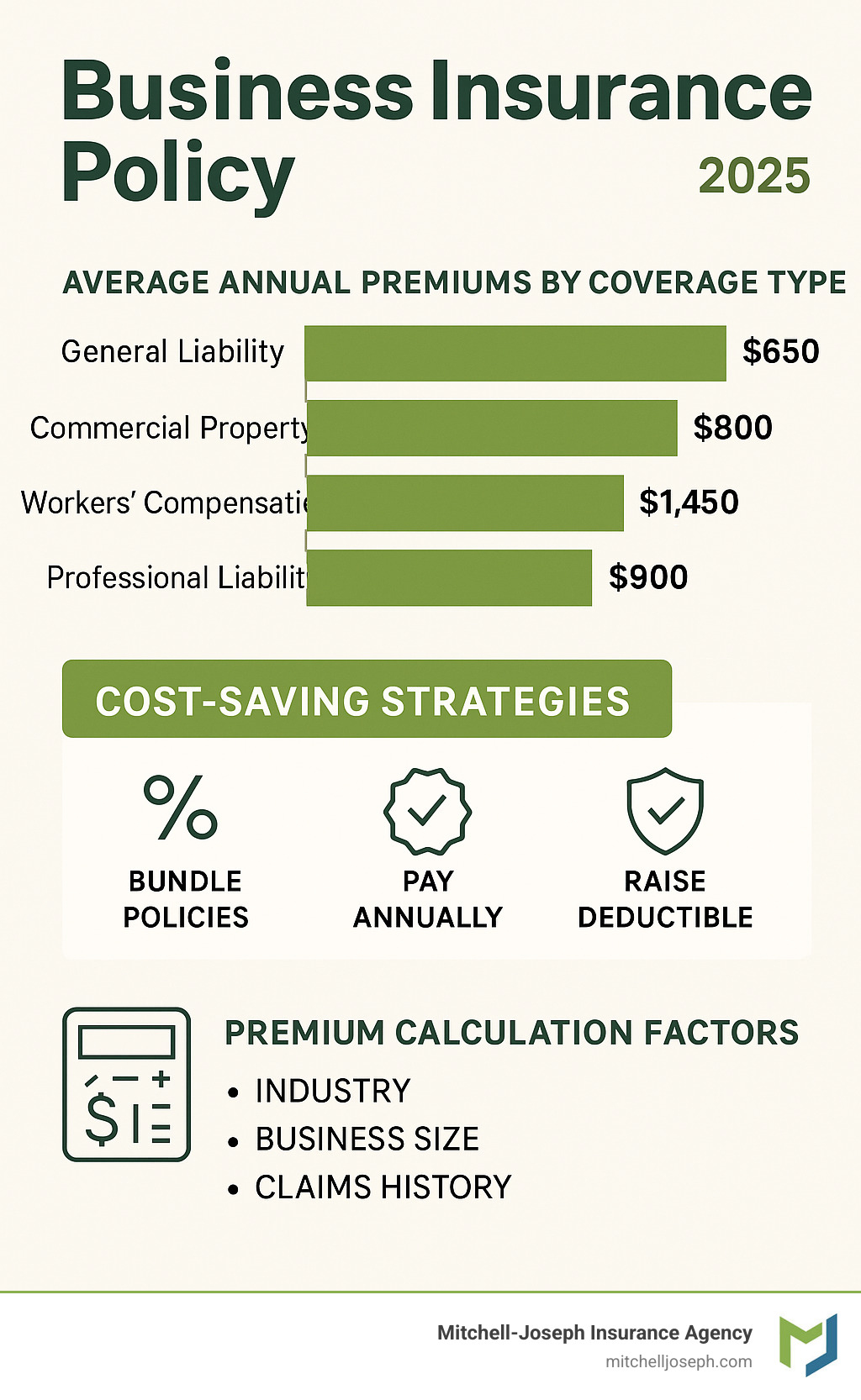
Business insurance costs vary widely. A small consulting firm might pay $500 a year, while a construction company could pay $5,000 or more. It depends on your specific risks, location, and coverage needs.
Here’s what most businesses can expect to pay annually:
| Coverage Type | Average Annual Premium | Monthly Cost |
|---|---|---|
| General Liability | $810 | $68 |
| Business Owner’s Policy | $1,687 | $141 |
| Workers’ Compensation | $1,032 | $86 |
| Professional Liability | $744 | $62 |
| Commercial Auto | $1,200-$2,400 | $100-$200 |
Factors That Influence Business Insurance Costs
Industry risk level is the biggest factor. A roofer faces different dangers than a bookkeeper, so they pay different rates. Employee count and payroll directly impact costs, especially for workers’ compensation. Building value and contents matter for property coverage. Coverage limits affect pricing – higher limits cost more. Location affects pricing based on crime rates, weather, and legal environments. Your claims history and credit scores also influence rates.
How Premiums Are Calculated
Insurance companies use classification codes based on your specific business operations. Experience modification compares your claims history to similar businesses. Rating territories reflect local conditions. Coverage selections and underwriting factors like financial stability also influence pricing.
Money-Saving Tips
Bundling policies with one carrier often provides discounts up to 10%. Choosing higher deductibles can significantly reduce premiums. Paying annually eliminates installment fees. Implementing safety programs can earn substantial discounts. Maintaining good credit helps keep premiums lower. Shopping around is essential because rates vary significantly between companies. Reviewing coverage annually ensures you’re not paying for unnecessary protection.
At Mitchell-Joseph Insurance Agency, we work with 24 different carriers to find you the best combination of coverage and price.
Buying, Customizing & Maintaining Your Business Insurance Policy

Getting the right business insurance policy starts with honestly assessing your risks. Walk through your business and imagine what could go wrong. This risk assessment becomes your roadmap for choosing coverage.
You’ll have three main options: Online platforms offer convenience but limited guidance. Captive agents work for one company and know their products well. Independent agents like us work with multiple carriers to find the best combination of coverage and price.
How to Purchase a Business Insurance Policy
Shopping for a business insurance policy starts with gathering information: business license, recent tax returns, and operational details. The quote process typically takes a few days to a week.
Comparison shopping is crucial, but don’t just look at price. Consider deductibles, coverage limits, and exclusions. Pay attention to the financial strength of the insurance company too.
When ready to buy, most policies require payment before coverage begins. You’ll receive a Certificate of Insurance that proves coverage – keep copies handy since clients and landlords often request them.
Our Business Insurance Agents Near Me page can help you connect with local expertise.
Customizing Coverage to Fit Your Needs
Policy endorsements customize your coverage for specific risks. Cyber liability coverage has become essential for almost every business. Equipment breakdown coverage protects when essential equipment fails. Business interruption coverage goes beyond basic policies to cover additional expenses like temporary relocation costs.
Filing a Claim & Keeping Coverage Current
Prompt notification is crucial – most policies require reporting claims within 30 days. Document everything from the moment an incident occurs. Your insurance company will assign a claims adjuster to investigate your claim.
Annual policy reviews are essential. Your business changes throughout the year, and your policy should reflect your current situation. Don’t wait for renewal time to update coverage.
Frequently Asked Questions About Business Insurance
Do I Need Business Insurance If I’m an LLC?
While an LLC creates a legal barrier between your business and personal assets, it has significant gaps in protection. Professional liability claims can still reach through your LLC structure. Business assets like equipment and inventory remain completely exposed in lawsuits.
A business insurance policy covers what your LLC status cannot. Third-party injuries, property damage claims, professional errors, cyber attacks, and business interruption losses all require insurance protection.
Are There Federal or State Insurance Requirements?
Workers’ compensation is required in most states once you have employees. The penalties for not having required workers’ comp can be severe – thousands of dollars in fines plus personal liability for workplace injuries.
Industry-specific requirements add complexity. Commercial vehicles need commercial auto coverage. Licensed professionals often must carry specific liability insurance to maintain their licenses.
Does a Business Insurance Policy Cover Home-Based or Online Businesses?
Homeowner’s insurance policies typically exclude business-related claims entirely. If a client visits your home office and gets injured, your homeowner’s policy might deny the claim because it was business-related.
Online businesses face unique challenges: data breaches, website downtime, or defective products shipped to customers. None of these scenarios are covered by standard homeowner’s policies.
Coverage options exist for every type of home-based business, from simple endorsements to separate business policies. Cyber liability coverage has become essential for online businesses.
Conclusion & Next Steps

Think of your business insurance policy as the foundation that lets you sleep peacefully at night. When you know your business is properly protected, you can focus on serving customers and growing your company instead of worrying about what could go wrong.
Most businesses start with a Business Owner’s Policy because it bundles essential protections at a reasonable price. From there, you can add specialized coverage based on your unique risks.
The numbers tell the story: Most small businesses can get comprehensive coverage for $1,000 to $3,000 annually. That’s less than many business owners spend on office supplies, yet it protects everything you’ve worked to build.
At Mitchell-Joseph Insurance Agency, we’ve been helping Finger Lakes region businesses steer these decisions since 1999. Our 200 years of combined experience means we’ve seen almost every type of business challenge you can imagine.
Here’s what makes us different: As an independent agency, we work with 24 different carriers to find you the best combination of coverage and price. We’re not here to sell you the most expensive policy— we’re here to find the right protection for your specific situation.
Your next step is simple: Take an honest look at your business and ask yourself what would happen if disaster struck tomorrow. Could you afford to rebuild from a fire? Handle a lawsuit? Replace stolen equipment?
Getting started is easier than you think. We’ll walk you through a risk assessment, explain your options in plain English, and provide quotes that fit your budget. Our Business Insurance Quotes NY page makes it simple to request a personalized quote.
Don’t wait until it’s too late. Every day you operate without proper insurance is a day you’re gambling with your business’s future. We serve businesses throughout Rochester, Canandaigua, Victor, Pittsford, and the entire Finger Lakes region.
Reach out today for a free consultation. We’ll review your current coverage, identify potential gaps, and show you how to get comprehensive protection without breaking your budget. Your business isn’t just your livelihood—it’s your legacy. Let’s make sure it’s properly protected.

