

Why Business Insurance for Startups is More Than Just Protection
Business insurance for startups is essential coverage protecting new companies from lawsuits, property damage, cyber attacks, and other costs that could force them out of business. Here’s what every entrepreneur needs to know:
Essential startup insurance types:
- General Liability – Covers third-party injuries and property damage ($42/month average)
- Professional Liability (E&O) – Protects against service errors and negligence ($61/month average)
- Cyber Liability – Covers data breaches and cyber attacks ($1,500-$4,800 annually)
- Directors & Officers (D&O) – Shields leadership from management lawsuits ($9,000-$30,000 annually)
- Workers’ Compensation – Required by law in most states for employees ($45/month average)
Why startups need insurance:
- Financial protection from costly claims
- Legal compliance
- Attracting investors and top talent
- Building client trust and credibility
The numbers tell a stark story. A single data breach can cost startups between $1 million to $50 million, while employment lawsuits average $100,000 to $100 million. Even defending against false claims can drain precious resources.
Startups face the same risks as established companies but with fewer resources to handle unexpected events. As one insurance expert noted, “Companies should fail for the right reasons”—not because they couldn’t afford to defend a lawsuit or recover from a cyber attack.
I’m Jeffrey Joseph of Mitchell-Joseph Insurance Agency. Since 1999, I’ve helped countless startups across the Finger Lakes region secure the right business insurance for startups for long-term success.
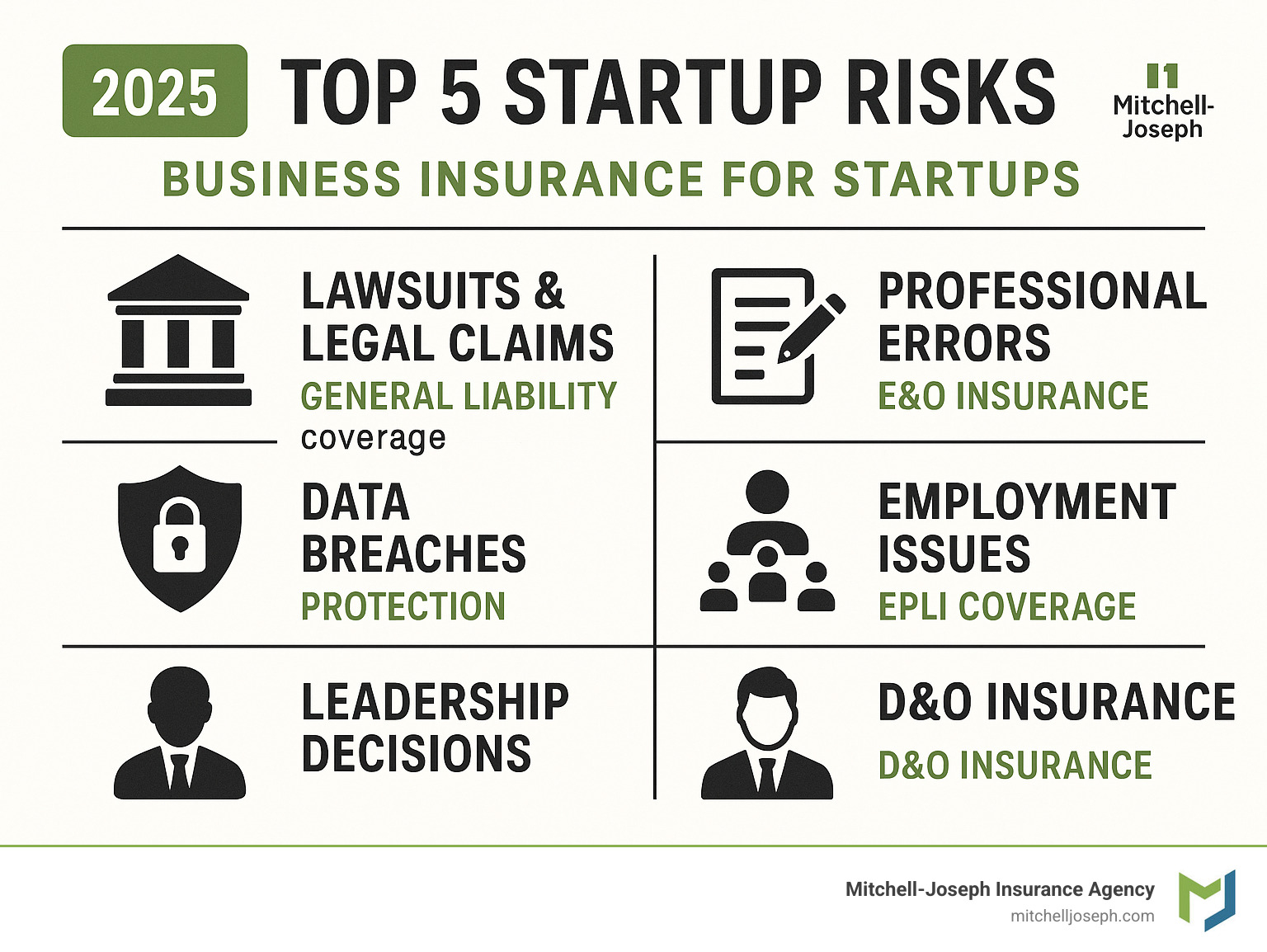
Business insurance for startups terms simplified:
Why Your Startup Can’t Afford to Ignore Business Insurance
Starting a new venture is exhilarating, but in the rush of fresh ideas and big dreams, it’s easy to overlook a critical detail: business insurance for startups. Ignoring insurance is one of the riskiest moves a new company can make. It’s not just a formality; it’s about protecting your dream, your hard work, and your future.
Think of business insurance for startups as your company’s shield. It protects you from unexpected costs like accidents, natural disasters, and lawsuits. Without it, you’d be paying for these potentially huge expenses out-of-pocket. Beyond just protecting your finances, the right insurance offers smart advantages that help you grow.
For example, some insurance policies are required by law. Plus, proper coverage boosts your credibility. Many investors, banks, landlords, and potential clients will ask for proof of insurance before working with you. It shows them you’re a serious, responsible business.
Trying to land a big client or attract top talent? Full coverage, especially Directors & Officers (D&O) insurance, makes a huge difference. It signals that you’re prepared for challenges and are protecting your company and your team, making your startup more appealing to partners and employees. As a smart investment, insurance transfers risk away from your business, letting you focus on innovation and growth.
Protecting what you’re building with insurance made for unique risks is a smart business move. For more helpful information, The U.S. Small Business Administration (SBA) offers helpful information and you can also explore The Importance of Business Insurance on our website.
The High Cost of Unforeseen Events
The financial problems caused by unexpected events can be huge for a startup, easily derailing even the most promising new companies. Even small issues can quickly turn into expensive legal battles.
Consider these facts:
- A data breach for a startup can cost anywhere from $1 million to over $50 million.
- An intellectual property lawsuit could set you back $500,000 to $50 million or more.
- A discrimination lawsuit can range from $50,000 to $20 million.
- Business interruption can cost between $30,000 and $50 million, meaning you’re losing money while still paying bills.
- Employment lawsuits are common, costing anywhere from $100,000 to $100 million. Over five years, almost 40% of U.S. companies face an employment-related lawsuit. Defending and settling claims can cost over $50,000 each time.

A real-world example, the Ski shoe startup Pakems shuts down after CEO’s ouster and lawsuit, highlights the massive financial and reputational damage a lawsuit can cause. Even if you’ve done nothing wrong, proving your innocence in court is expensive. As one expert noted, “No founder wants to use their fundraising dollars to pay out of pocket for these types of claims.” Business insurance for startups moves this financial risk away from you, letting you focus on building your business.
Legally Required Insurance Policies
While many types of business insurance for startups are smart choices, some are legal requirements. Ignoring them can lead to big fines, penalties, and business closure.
At the federal level, if your startup has employees, you usually need:
- Workers’ Compensation insurance: A must-have in almost every U.S. state for businesses with employees. It covers medical bills and lost wages for employees who get hurt or sick at work.
- Unemployment insurance: Provides temporary income to workers who lose their jobs through no fault of their own.
- Disability insurance: Required in some states, it provides income for employees who can’t work due to a non-work-related illness or injury.
Specific requirements vary greatly by state. What’s required in Honeoye Falls, NY, might be different elsewhere. For example, New York has specific rules for Workers’ Compensation and Disability Benefits Law (DBL) coverage.
To ensure your startup is compliant, we suggest talking to a legal expert or your state’s Department of Labor. You can Contact your state’s Department of Labor for specific advice. For common questions, see our Business Insurance FAQs. We’re here to help you steer these requirements.
Essential Types of Business Insurance for Startups
Now that you know why business insurance for startups is vital, let’s cover the ‘what.’ While every business is unique, certain policies form the bedrock of a solid protection plan, guarding against risks from everyday mishaps to major legal challenges.
We’ll break these down into key areas, addressing risks like third-party claims, professional negligence, data security, management liability, and employee injuries.

Foundational Coverage for Day-to-Day Operations
These policies are your first line of defense, covering common risks associated with physical locations and basic operations.
-
General Liability Insurance: This is your shield for “oops” moments, protecting your business from claims of bodily injury, property damage, libel, or slander. If a client slips in your office or your team damages property at a client’s site, this policy covers it. Landlords and clients often require it. The average monthly cost for General Liability insurance for startups is around $42, making it an affordable foundation. Learn more about General Liability Insurance.
-
Commercial Property Insurance: This coverage protects your physical assets: your office, computers, inventory, and other business property. It guards them against perils like fire, theft, and vandalism. Even if you rent, your landlord’s policy won’t cover your belongings, making this policy valuable for ensuring you can replace vital assets quickly.
-
Business Owner’s Policy (BOP): For many low-risk startups, a BOP is a great choice. It bundles General Liability and Commercial Property insurance into one convenient, affordable package. It’s like a combo meal for your insurance needs, offering broad protection against common risks. Explore the benefits of a Business Owners Policy (BOP).
Protecting Your Services and Data
In today’s digital economy, your advice, software, and data are valuable and vulnerable. These policies protect your intellectual products and digital presence.
-
Errors & Omissions (E&O) / Professional Liability Insurance: If your startup provides professional advice or services, this policy is non-negotiable. Also known as professional liability, E&O protects you from claims of negligence, errors, or omissions. If a software bug causes a client to lose money, E&O would cover your legal defense and potential settlements. For high-growth startups, the annual cost can range from $4,000 to $15,000. This is vital for tech startups and consultants. We have specialized knowledge in Business Insurance for Software Developers.
-
Cyber Liability Insurance: In an age where data is currency, protecting it is paramount. Cyber Liability Insurance helps your startup recover from data breaches and cyberattacks. It covers costs like notifying customers, forensic analysis, credit monitoring, and legal fees. With a potential data breach costing startups $1 million to $50 million+, this policy is a must for any business handling sensitive information. The average annual cost for high-growth startups is between $1,500 and $4,800. Protect your digital assets with Cyber Liability Insurance.
Shielding Your Leadership and Team
As your startup grows, these policies protect your leadership and help ensure a compliant work environment.
-
Directors & Officers (D&O) Insurance: This policy is critical for protecting the personal assets of your company’s directors and officers from lawsuits alleging wrongful acts in their management capacity. Claims can come from investors, employees, or customers. Many venture capital firms insist on a D&O policy before financing. It also helps attract top talent to your board. The average annual cost for high-growth startups is $9,000-$30,000, with Public D&O reaching $50,000-$100,000.
-
Employment Practices Liability (EPLI): As soon as you hire your first employee, you’re exposed to employment-related risks. EPLI protects your business from claims like wrongful termination, discrimination, or sexual harassment. Given that nearly 40% of US companies face an employment lawsuit over five years, this coverage is crucial for any startup with a team.
-
Workers’ Compensation Insurance: As mentioned, this is legally mandated in most states for businesses with employees. It covers medical expenses and lost wages for employees injured on the job. For high-growth startups, the average annual cost is $1,000-$2,500, or around $45 per month. It’s vital for protecting both your employees and your business.
-
Fiduciary Liability Insurance: If your startup offers employee benefits plans like a 401k, Fiduciary Liability insurance is essential. It protects your business and plan managers from claims of mismanagement or negligence. The average annual cost for high-growth startups is $500–$2,500.
Navigating the Costs and Acquisition of Business Insurance for Startups
Once you know what insurance you need, the next questions are: “How much does it cost?” and “How do I get it?” For a startup, every dollar counts. We’ll break down the costs and process for getting business insurance for startups that fits your budget.

Getting the right coverage at a fair price isn’t as complicated as it might seem. With the right guidance, you can protect your startup without breaking the bank. When you’re ready, we’re here to help you Get Business Insurance Quotes that make sense for your business.
How Much Does Business Insurance for Startups Cost?
Business insurance for startups costs vary dramatically based on your company’s industry and operations. A remote tech startup will pay far less than a manufacturing company with heavy equipment.
The good news is many essential policies are affordable. Workers’ Compensation averages just $45 per month, while General Liability runs about $42 monthly. Errors & Omissions insurance typically costs around $61 per month.
Specialized coverage for high-growth startups is more substantial. Directors & Officers insurance ranges from $9,000 to $30,000 annually, while Cyber Liability coverage runs $1,500 to $4,800 per year. Public D&O insurance for companies planning to go public can reach $50,000 to $100,000 annually.
| Policy Type | Average Annual Cost (High-Growth Startups) | Average Monthly Cost (General Startups) |
|---|---|---|
| Workers Compensation | $1,000 – $2,500 | $45 |
| Business Owner’s Policy (BOP) | $500 – $3,000 | (Bundled) |
| Errors and Omissions (E&O) | $4,000 – $15,000 | $61 |
| Cyber Liability | $1,500 – $4,800 | (Included in E&O bundle for Tech E&O) |
| Directors and Officers (D&O) | $9,000 – $30,000 | (Varies widely) |
| Fiduciary Liability | $500 – $2,500 | (Varies widely) |
| Foreign Package | $2,500 – $7,500 | (N/A) |
| Commercial Crime | $1,500 – $3,500 | (N/A) |
| Public Directors and Officers | $50,000 – $100,000 | (N/A) |
| General Liability | (Often part of BOP) | $42 |
What drives these prices? Your industry type, company size, and location all play a huge role. Coverage limits and deductibles also give you control over costs; higher deductibles can lower your payments. Your claims history will impact future rates, though new companies may start with slightly higher premiums until they build a clean track record. Need a custom estimate? Try our Cyber Insurance Cost Calculator for a quick assessment.
How to Save Money on Your Premiums
You don’t have to choose between good coverage and reasonable costs. Smart strategies can significantly reduce your business insurance for startups premiums.
Bundling policies is a big money-saver. A Business Owner’s Policy (BOP) combines General Liability and Commercial Property insurance at a discount. Tech startups can often get “Tech E&O” packages that bundle professional liability with cyber coverage.
Choosing higher deductibles can slash your premiums if you have cash reserves to cover smaller claims yourself.
Strong risk management practices are rewarded by insurers. Implement solid cybersecurity measures, create clear employee safety and HR policies, and maintain your workspace. Fewer claims lead to better rates over time.
Shopping around makes a real difference. We work with 24 different insurance companies to compare rates and find the best value for your specific needs.
Annual policy reviews ensure you aren’t paying for coverage you’ve outgrown or missing protection for new risks.
How to Acquire Coverage
Getting business insurance for startups doesn’t have to be overwhelming. Here’s a straightforward approach.
Start by assessing your risks. Do you meet clients in person, store customer data, or have employees? Understanding what could go wrong helps you focus on the right coverage.
Find a reputable licensed agent who understands startups. As an independent agency, we work with 24 providers to find coverage that fits your business and budget. With over 200 years of combined experience in the Finger Lakes region, we know how to match startups with the right protection. Learn more at Find Business Insurance Agents.
Compare your options. We’ll present multiple quotes and explain the differences in coverage, not just price.
Review policy details before signing. We’ll walk you through limits, deductibles, and exclusions so you know what you’re getting. We can also provide Certificates of Insurance for clients or landlords.
Plan for annual reassessments as your business grows. New employees, products, or funding rounds change your risk profile. We’ll help you adjust your coverage accordingly. You can also Research an insurance company via the NAIC to verify their financial stability.
Scaling Your Shield: How Insurance Needs Evolve with Growth
Your business insurance for startups needs evolve with your company. The coverage that protected you at launch may not be enough after a big investment, hiring a team, or launching a new product. As your startup levels up, your insurance shield must grow stronger to match new challenges.
As your startup grows, raises money, or expands, your risk profile shifts. Regularly checking and updating your insurance is a smart move for any growing business. To learn more about your current policy, you can check out Understanding Your Business Insurance Policy. It’s all about making sure your shield grows with your business!
Insurance Milestones for a Growing Startup
Here’s how your insurance needs typically change as your startup hits key growth milestones:
First Employee: Hiring your first employee means you’ll almost certainly need Workers’ Compensation insurance, a legal requirement in most states like New York. It covers employees if they get hurt or sick on the job. It’s also wise to add Employment Practices Liability (EPLI) to protect against claims like wrongful termination or discrimination.
Operations Begin or Expand: When you move beyond a home office to a physical space or buy significant equipment, a Business Owner’s Policy (BOP) becomes key. It bundles General Liability and Commercial Property insurance for solid protection.
Providing Services or Products: Once you’re serving customers, Errors and Omissions (E&O) / Professional Liability insurance is crucial. It guards you against claims of mistakes or poor performance in your services, which is vital for tech companies and consultants.
Handling Data: As your startup collects customer data or payment details, Cyber Liability Insurance is a must. It helps you recover from data breaches and cyberattacks, protecting both your business and your customers.
Seed Funding: When you secure seed funding, especially from venture capital firms, Directors and Officers (D&O) insurance is almost always a requirement. Investors want to ensure leadership is protected from lawsuits related to management decisions.
Series A Funding: As your team grows and you hit Series A, you might offer more employee benefits like 401ks. This is when Fiduciary Liability insurance becomes vital, protecting your business and plan managers from claims of mismanagement.
Going Global: If your startup expands with international operations or sales, explore Foreign Package insurance. This covers the unique risks of doing business outside your home country.
Series B Funding: With larger funding rounds and more complex finances, Commercial Crime insurance becomes a smart move. It protects your business from losses due to employee theft, fraud, and other criminal acts.
Going Public: If your startup is aiming for an IPO, you’ll need extensive coverage, including higher limits and broader protection from Public Directors and Officers (D&O) insurance, which is customized for public companies.
By anticipating these milestones and updating your business insurance for startups, you ensure your protection keeps pace with your company’s growth.
Conclusion
The startup journey is an exciting trip, but it’s also full of unexpected twists. As we’ve explored, business insurance for startups isn’t just another item on your to-do list; it’s a smart, strategic decision.
The right insurance is your startup’s shield, protecting you from costly surprises like lawsuits, data breaches, or property damage. It’s also a partner in growth, helping you stay legally compliant, attract investors, build client trust, and draw in top talent. By transferring major risks, insurance frees you to focus on what you do best: innovating, growing, and serving your customers.
At Mitchell-Joseph Insurance Agency, we build relationships, not just sell policies. We offer personal service and competitive quotes from our network of 24 different insurance companies. You’ll find us in Honeoye Falls, NY, with offices in Pittsford and Naples, proudly serving our neighbors in communities like Avon, Canandaigua, Cohocton, Fishers, Gorham, Honeoye, Ionia, Lima, Mendon, Middlesex, Potter, Rochester, Rush, South Bristol, Stanley, Victor, Wayland, and West Bloomfield. With over 200 years of combined experience, we understand the unique challenges and opportunities startups face in the Finger Lakes region and beyond.
Don’t let unforeseen bumps in the road derail your entrepreneurial dream. Let us help you design a comprehensive insurance shield that grows with your startup. We’re here to ensure your venture can thrive securely, no matter what tomorrow brings.
For more information on how we can help protect your venture, explore our Comprehensive Business Insurance Coverage.

