Protecting Your Investment: Why Landlords Need Business Insurance
Business insurance for landlords is specialized coverage designed to protect property owners who rent out residential or commercial spaces from financial losses and liability. Unlike standard homeowners insurance, these policies address the unique risks landlords face when renting property to others.
Quick Guide to Business Insurance for Landlords:
| Type of Coverage | What It Protects | Typical Cost Range |
|---|---|---|
| Buildings Insurance | Physical structure, fixtures, fittings | From $800-$1,200 annually |
| Property Owners’ Liability | Legal costs if someone is injured on property | Up to $2,000,000 coverage |
| Loss of Rent | Income if property becomes uninhabitable | Up to 12 months of rental income |
| Contents Insurance | Landlord-owned furnishings and appliances | Optional add-on from $150+ |
| Legal Expenses | Legal costs for tenant disputes | Optional add-on from $100+ |
Whether you own a single rental property or manage multiple units, having appropriate insurance protection is essential. The risks of property damage, liability claims, and loss of rental income can quickly devastate an unprotected investment. Most mortgage lenders actually require specialized landlord coverage before tenants can move in.
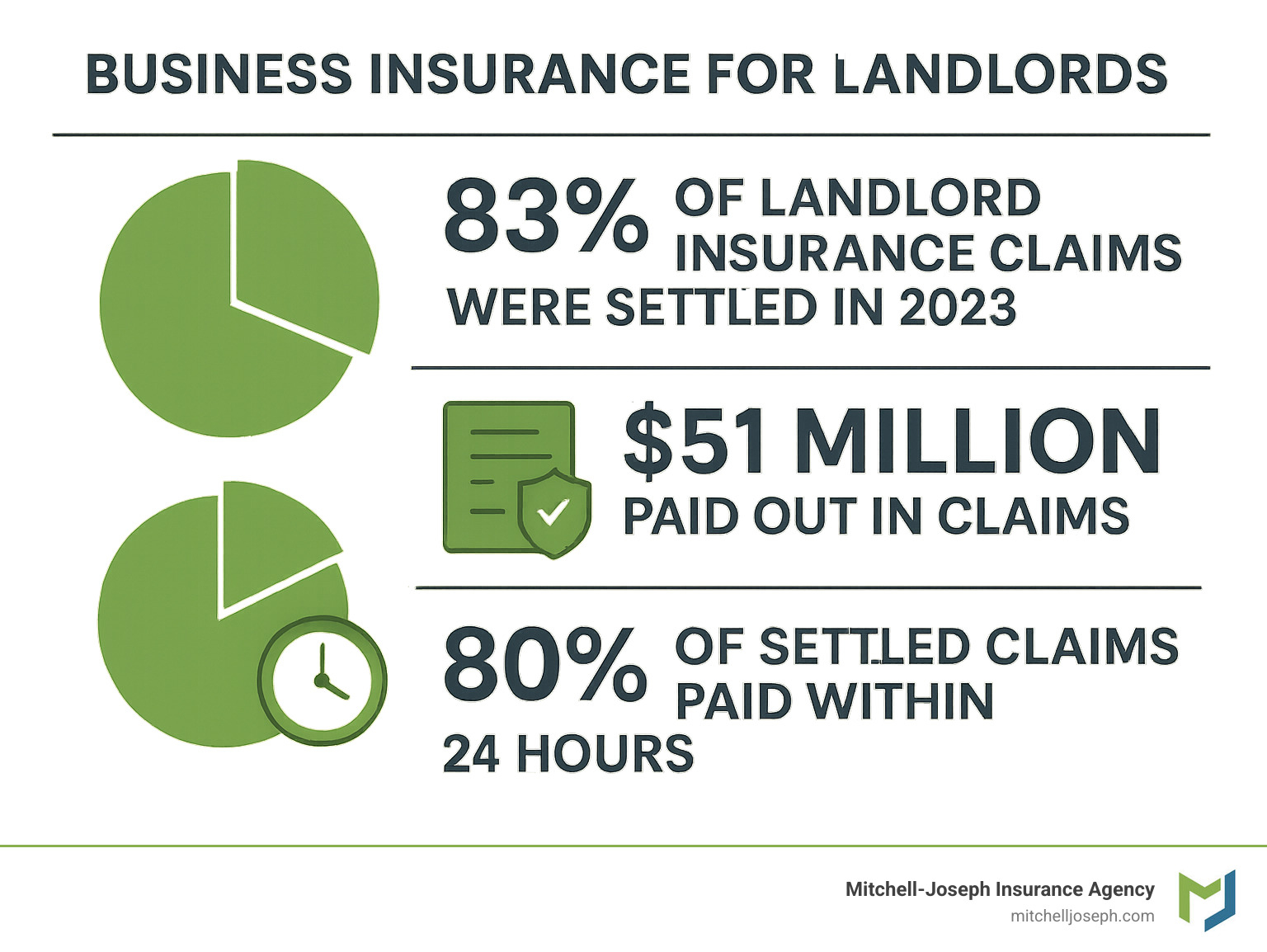
The financial impact of a single incident can be substantial. Consider that in 2023 alone, insurance companies paid out $51 million in landlord insurance claims, with 83% of claims being settled and 80% of those paid within 24 hours.
I’m Jeffrey Joseph, and at Mitchell-Joseph Insurance Agency, I’ve helped hundreds of property owners across the Finger Lakes region find the right business insurance for landlords to protect their investments since 1999. Our personalized approach ensures you get coverage custom to your specific property needs without paying for unnecessary extras.

Business insurance for landlords definitions:
– Importance of business insurance
– Business insurance for IT consultants
– business insurance faq
Business Insurance for Landlords 101

When you hand over your property keys to tenants, your insurance needs shift dramatically. That regular homeowners policy sitting in your filing cabinet? It simply wasn’t built for the rental property world you’ve now entered. This is where business insurance for landlords becomes your financial safety net.
What is Business Insurance for Landlords?
Think of business insurance for landlords as a specialized shield designed specifically for property owners who rent to others. For residential rentals, you’ll hear it called landlord insurance or rental property insurance, while commercial rental properties often fall under “lessors risk” policies.
“Landlord insurance bridges the critical gap between homeowners insurance and commercial property coverage,” explains Stephen Miller, our senior commercial lines agent at Mitchell-Joseph Insurance Agency. “It’s custom specifically to address what happens when you hand over keys to tenants.”
These policies typically protect your building structure, shield you from liability claims, replace lost rental income, cover legal headaches from tenant disputes, and protect any appliances or furniture you’ve provided. If you have a buy-to-let mortgage, your lender will almost certainly require this specialized coverage.
Why Do Landlords Need It?
The landlord journey comes with risks that go well beyond what your standard homeowners policy covers. Here’s why business insurance for landlords isn’t optional if you’re serious about protecting your investment:
Your rental property faces constant physical threats – from kitchen fires spreading between units (we recently handled a $120,000 claim from exactly this scenario) to burst pipes during winter vacancies. And let’s face it – tenants simply don’t treat property with the same care as owners.
“If someone gets hurt on your property, there’s a fair chance you’ll get slapped with a lawsuit,” our claims specialist often reminds clients. Liability protection becomes your financial lifeline in these situations.
What happens if a covered disaster makes your property uninhabitable for months? Loss of rent coverage ensures mortgage payments don’t come out of your personal savings. Plus, landlord insurance premiums are typically tax-deductible as a legitimate business expense – a nice bonus for your bottom line.
Business Insurance for Landlords vs Home Insurance
Many first-time landlords make a dangerous assumption: that their homeowners policy will cover their rental property. The differences are significant and could leave you financially exposed:
| Coverage Area | Homeowners Insurance | Landlord Insurance |
|---|---|---|
| Property Occupancy | Owner-occupied | Tenant-occupied |
| Liability Coverage | Personal liability | Business/commercial liability |
| Contents Coverage | All personal belongings | Only landlord-owned items |
| Loss of Use | Additional living expenses | Lost rental income |
| Tenant Damage | Not covered | Can be covered |
| Vacancy Rules | Strict limitations | More flexible |
| Premium Cost | Generally lower | Typically 15-30% higher |
While landlord policies typically cost 15-30% more than standard homeowners insurance, the specialized protection is well worth it. Using the wrong policy type can lead to denied claims when you need coverage most – something we’ve unfortunately seen happen to unprepared landlords.
Key Risks a Policy Covers
A solid business insurance for landlords policy protects against the most common threats to your investment. This includes fire and smoke damage that can devastate a structure, weather-related problems from storms to lightning strikes, water damage from plumbing failures, and theft or vandalism that can occur between tenancies.
It also covers those dreaded liability situations when someone is injured on your property, replaces lost rent if disasters make your units temporarily uninhabitable, and helps with legal expenses during tenant disputes or eviction proceedings.
One of our Canandaigua clients experienced this when pipes burst during a vacant period between tenants. Their policy covered not just the $45,000 in water damage repairs but also six months of lost rental income while contractors restored the property. Without proper coverage, that financial hit could have ended their landlord journey entirely.
Is Business Insurance for Landlords Legally Required?
While no federal law specifically mandates landlord insurance, several practical realities make it essentially required:
Your mortgage lender will almost certainly demand it. Many localities require proof of insurance for rental licensing programs. For commercial rental properties, liability coverage is often mandated by state laws or municipal codes. And if you’re renting out a condo, your association likely requires specialized landlord coverage.
Even where not legally required, the latest guidelines from the FCA emphasize the importance of appropriate insurance coverage for rental property owners. Operating without proper protection puts your entire investment at risk – a gamble that simply doesn’t make financial sense when affordable coverage options exist.
At Mitchell-Joseph Insurance Agency, we’ve helped hundreds of local landlords find the right balance of protection and affordability. We understand the Finger Lakes rental market and can guide you through the specific coverage options that make sense for your property type and tenant situation.
Coverage Map: Buildings to Rent Guarantee
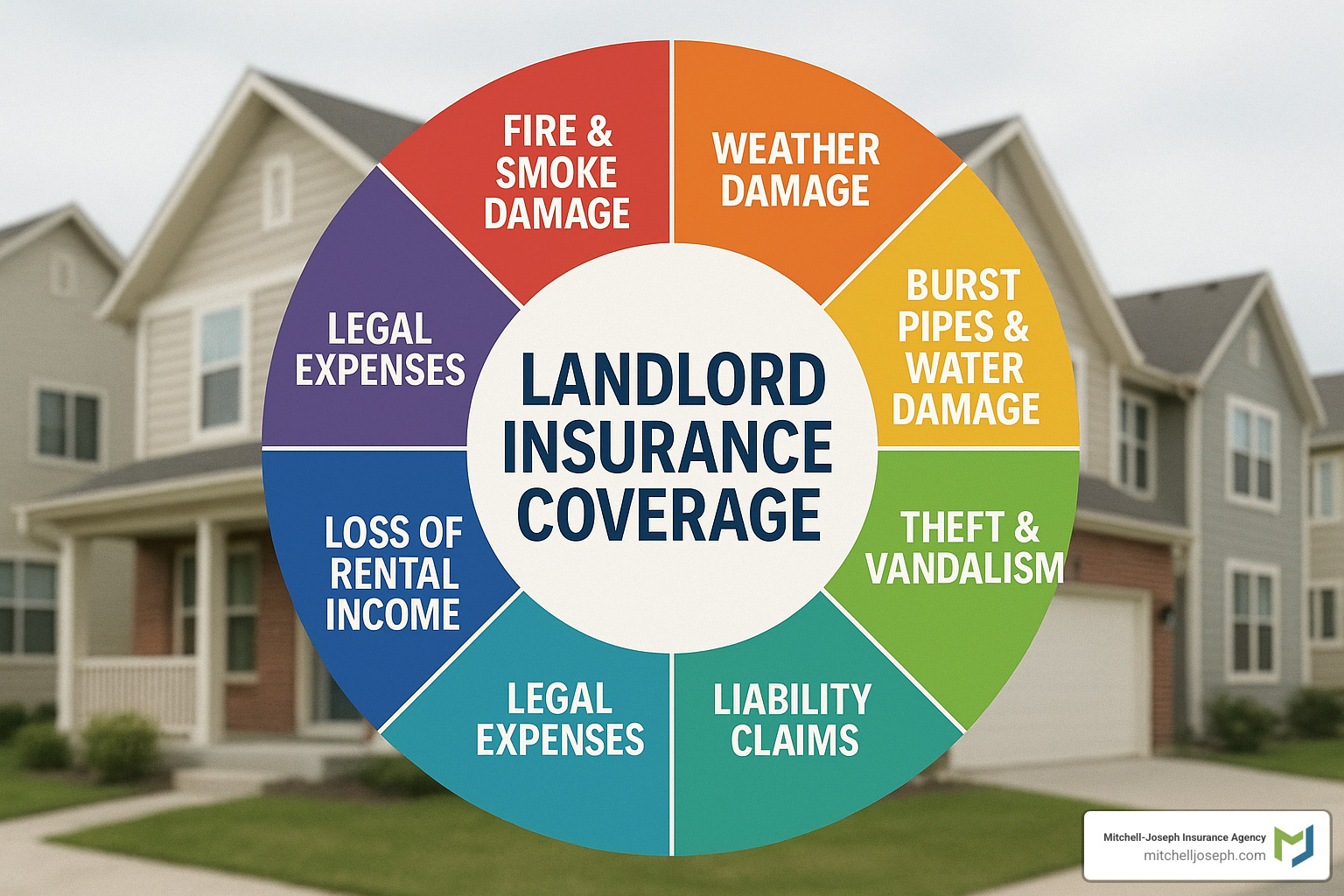
When you’re protecting your rental investment, understanding your coverage options is like having a good map before a journey. Let’s walk through each part of business insurance for landlords to help you build protection that truly fits your property.
Buildings & Contents Cover
Think of buildings insurance as the foundation of your landlord policy. It protects the actual structure of your rental—the walls, roof, floors, and anything permanently attached—against risks like fire damage, storms, and vandalism.
When we sit down with landlords at Mitchell-Joseph, we always emphasize getting your rebuild value right. This isn’t the market value or purchase price, but what it would actually cost to rebuild from scratch. We’ve seen too many landlords left short after a disaster because they underestimated this figure.
“One of our clients in Honeoye Falls had their property severely damaged by a fallen tree last winter,” shares Jeffrey Joseph. “Thankfully, we’d recently updated their rebuild valuation, so they were fully covered for the $175,000 in repairs.”
Your buildings coverage also includes fixtures and fittings—those kitchen cabinets, built-in appliances, and bathroom fixtures that come with the property. Many policies now include code upgrade coverage too, which pays for those sometimes costly upgrades to meet current building codes after a loss.
For landlords offering furnished properties, contents insurance is essential. This covers the items you own inside the rental: furniture, appliances, curtains, and carpets (if not considered part of the building). Even in a basically furnished apartment, replacing everything after a fire could easily run $10,000-$15,000.
If your rental sits near Canandaigua Lake or other flood-prone areas, standard policies won’t cover flood damage. That’s why we recommend our specialized Flood Insurance for Landlords to fill this critical gap.
Property Owners’ & Landlord Liability
I often tell my clients that liability coverage might be the most important part of their business insurance for landlords. Why? Because one lawsuit can wipe out not just your rental income but potentially your personal assets too.
Your property owners’ liability protects you when someone—a tenant, visitor, or even someone just passing by—gets hurt on your property. Most policies offer at least $1 million in coverage, though we often recommend $2 million or more for additional peace of mind.
This coverage handles not just the settlement amount but also your legal defense costs. Even if a lawsuit against you gets dismissed, the legal fees alone can be substantial. Many policies also include medical payments coverage that can handle smaller claims (typically up to $5,000) without litigation.
“Last year, a tenant’s visitor slipped on ice outside one of our client’s rentals in Victor,” recalls Sarah Mitchell from our team. “The resulting claim paid $32,000 for medical expenses, lost wages, and pain and suffering. Without proper liability coverage, that would have come straight from our client’s pocket.”
For commercial landlords, liability works a bit differently. The responsibility typically splits between tenant-caused incidents inside the unit and landlord-responsible common areas. We always recommend having tenants name you as an additional insured on their liability policy for extra protection.
Loss of Rent / Rental Income Protection
Picture this: a pipe bursts while your tenants are away for the weekend. By the time it’s finded, there’s significant water damage throughout the property. Your tenants need to move out while repairs happen, and suddenly your rental income stops for months.
This is where loss of rent coverage (sometimes called rental income protection) becomes invaluable. It replaces your lost income while the property is being repaired after a covered loss, typically for up to 12 months.
“This coverage saved one of our landlords in Naples from financial disaster,” Jeffrey Joseph shares. “After a kitchen fire made their fourplex uninhabitable for five months, this coverage replaced over $25,000 in lost rental income—money they needed to keep up with mortgage payments.”
For commercial property owners, similar protection is available through business interruption coverage. You can learn more about this essential protection in our guide on Business Interruption Insurance NY.
Accidental & Malicious Damage
Standard policies cover damage from specific perils like fire or storms, but what about when your tenant accidentally puts a foot through the ceiling while retrieving holiday decorations from the attic? Or worse, what if an angry tenant intentionally damages your property?
Accidental damage coverage steps in for those unintentional mishaps—the spilled wine on carpeting, the moving company that scratches up your hallway walls, or the overflowing bathtub that damages the ceiling below.
Malicious damage coverage handles the more troubling scenarios: intentional damage like punched holes in walls, broken fixtures, or graffiti. While tenant security deposits might cover minor damage, significant incidents often far exceed what a deposit would cover.
These coverages are particularly valuable for student rentals or properties in higher-risk areas. One of our landlords with properties near the college found this coverage paid for itself many times over during just one particularly rowdy academic year.
Optional Add-Ons to Level Up Protection
Beyond the basics, several optional coverages can significantly strengthen your business insurance for landlords policy:
Legal expenses coverage is worth its weight in gold when tenant disputes arise. It covers costs for evictions, property damage recovery, and even tax investigations. With court costs and attorney fees rising, this can save thousands in unexpected expenses.
Home emergency coverage provides that 24/7 safety net for sudden emergencies—boiler breakdowns in winter, plumbing leaks, electrical failures. It typically covers both the emergency callout and temporary repairs, preventing small problems from becoming major disasters.
Rent guarantee insurance has become increasingly popular since the pandemic. It covers unpaid rent if tenants default, typically for 6-12 months. With eviction moratoriums still fresh in landlords’ memories, this peace of mind is well worth the premium for many property owners.
For landlords with substantial assets, umbrella insurance provides additional liability coverage beyond your standard policy limits. Other valuable options include cyber insurance (if you store tenant data electronically), terrorism coverage (especially for commercial properties), and specialized endorsements like sewer backup coverage or green building upgrade options.
“The right coverage mix is as individual as your property,” explains Thomas Mitchell. “Landlords near Canandaigua Lake might prioritize water backup coverage, while those with student rentals often focus on malicious damage protection. That’s why we take the time to understand each client’s specific situation before making recommendations.”
Pricing, Quotes, Claims & Compliance

How Much Does Business Insurance for Landlords Cost?
Good news for property owners – business insurance for landlords is often more affordable than you might expect. At Mitchell-Joseph, we see basic policies starting around $30-40 monthly for a typical single-family rental, with most of our clients paying between $800-$1,500 annually.
Your premium isn’t pulled from thin air, though. Several factors influence what you’ll pay:
Location matters tremendously – properties near Canandaigua Lake might need additional flood coverage, while rentals in areas with higher crime rates typically cost more to insure. The size and value of your property play obvious roles too – a four-unit building naturally costs more to insure than a single-family home.
Your coverage choices significantly impact your premium. Higher liability limits and additional protections like rent guarantee coverage will increase costs, while choosing a higher deductible can lower your monthly payment (though you’ll pay more out-of-pocket when filing a claim).
“Many landlords are surprised to learn how much their personal claims history affects their rates,” says Jeffrey Joseph. “A clean record can save you 15-20% compared to someone with multiple recent claims.”
Property features can work in your favor too. Modern wiring, updated plumbing, security systems, and fire sprinklers often qualify for discounts. Meanwhile, renting to students or offering short-term vacation rentals typically increases premiums due to higher turnover and risk.
One money-saving tip we often share: If you own multiple properties, ask about multi-property discounts. Our clients routinely save up to 25% on additional properties when bundling them under one policy.
For an accurate quote custom to your specific situation, I’d recommend checking out our Business Insurance Quotes NY service where we’ll compare options from 24 different insurance companies.
Getting a Quote: Information You’ll Need
When you’re ready to get a quote for business insurance for landlords, having certain information ready will make the process smooth and ensure your quote is accurate.
First, we’ll need the nuts and bolts about your property – address, year built, square footage, number of units, construction type (frame, brick, etc.), and roof details. If you’ve updated major systems like electrical, plumbing or heating, those dates are important too since newer systems generally mean lower premiums.
Security features can significantly reduce your rates, so we’ll ask about smoke detectors, fire extinguishers, security systems, deadbolts, and sprinklers. “One client in Pittsford saved nearly $300 annually just by documenting their recently installed security system,” notes our agent Sarah.
Your tenant situation matters too – are you renting long-term or short-term? What screening process do you use? Do you allow pets? These details help insurers assess risk levels.
We’ll also discuss your coverage preferences – desired liability limits, optional coverages, and deductible comfort level. And of course, we’ll need to know about any previous claims on the property or your personal claims history as a landlord.
Don’t worry if you don’t have every detail at your fingertips. Our team at Mitchell-Joseph can help guide you through the process, and we’ll compare quotes from two dozen insurance companies to find your best match.
How Claims Work – Step by Step
No landlord wants to file a claim, but understanding the process beforehand can make a stressful situation much more manageable. Here’s what happens when you need to use your business insurance for landlords:
When disaster strikes – whether it’s a kitchen fire, burst pipe, or storm damage – your first priority is preventing further damage. Turn off water for leaks, board up broken windows, or secure the property after a break-in. Your policy actually requires these reasonable steps to prevent additional damage.
Document everything before cleanup begins. “The photos you take in those first moments are often the most important evidence for your claim,” explains our claims specialist Thomas. “I’ve seen claims doubled in value simply because the landlord had thorough documentation.”
Contact your insurer promptly – most policies require notification within 24-72 hours. At Mitchell-Joseph, we offer 24/7 claims reporting because we know disasters don’t wait for business hours.
Once reported, a claims adjuster will reach out, typically within 1-2 business days. For significant damage, they’ll schedule an inspection to assess the situation firsthand. After evaluation, you’ll receive a damage estimate and claim approval amount.
With approval in hand, repairs can begin. Some insurers pay contractors directly, while others reimburse you after work is complete. Industry data shows 80% of settled landlord insurance claims are paid within 24 hours of approval, allowing repairs to start quickly.
Throughout the process, keep all receipts for emergency repairs and document all communications. This paper trail proves invaluable if any questions arise during the settlement.
Unoccupied Property & Change of Tenancy Rules
The fine print in your business insurance for landlords policy includes specific requirements for vacant properties and tenant changes that can make or break your coverage.
Most policies provide normal coverage when a property is temporarily vacant for 30-60 days (the exact timeframe varies by insurer). Beyond that window, things get tricky. You must notify your insurance provider about the vacancy and follow specific requirements that typically include weekly property inspections, maintaining minimum heating during winter (or completely draining water systems), and securing all entrances with deadbolts and window locks.
“I remember a client in Victor who had a pipe burst in their vacant rental,” Jeffrey Joseph recalls. “The insurer denied the $22,000 claim because they hadn’t notified the company the property had been empty for four months. Don’t make that costly mistake.”
For properties that will remain vacant for extended periods – perhaps during major renovations or while looking for a buyer – specialized vacant property insurance might be necessary.
When tenants change, you should inform your insurance provider, update your tenant screening records, and review coverage limits if the new tenant will use the property differently. These simple steps ensure your coverage remains valid during transitions.
Landlord vs Tenant Insurance Obligations
Understanding where your insurance responsibility ends and your tenant’s begins prevents costly coverage gaps and disputes.
As a landlord, your business insurance for landlords covers the building structure, permanently installed fixtures and fittings, common areas, and any appliances or furnishings you own. Your policy protects your investment in the physical property and shields you from liability claims related to the building and common areas.
Your tenants are responsible for insuring their personal belongings, obtaining liability coverage for damage they cause, and securing additional living expenses coverage in case they need temporary accommodations.
We strongly recommend requiring tenants to provide proof of renters insurance as part of your lease agreement. This simple requirement costs tenants just $15-20 monthly in most cases but dramatically reduces your liability exposure. Many landlord-tenant disputes stem from confusion about whose insurance covers what – clear lease language prevents these misunderstandings.
For commercial properties, there’s an additional consideration. “Always require commercial tenants to name you as an additional insured on their liability policy,” advises our commercial lines specialist. “This provides crucial protection if someone is injured inside their leased space.”
Insurance requirements should be clearly outlined in your lease agreement – this documentation becomes invaluable if disputes arise later.
Frequently Asked Questions about Business Insurance for Landlords

Do I need landlord insurance if my property is a condo?
If you’re renting out your condo, you absolutely need landlord insurance – though it works a bit differently than for a single-family home. While your condo association’s master policy typically handles the building structure and common areas, there’s still a significant gap in protection that only a proper landlord policy can fill.
“Condo landlords often think they’re fully covered by the association’s policy, but that’s a dangerous assumption,” explains our agent Sarah Mitchell. “Your landlord policy needs to cover unit improvements, your liability as a landlord, potential rental income loss, and any furnishings you own.”
The good news? These policies generally cost less than those for single-family homes since you’re not insuring the entire building structure. However, I always recommend my clients carefully review their condo association’s master policy first. Understanding exactly what that policy covers helps us identify the gaps your landlord policy needs to address. This custom approach ensures you’re neither underinsured nor paying for duplicate coverage.
What’s NOT covered by standard policies?
Even the most comprehensive business insurance for landlords has limitations, and understanding these gaps can prevent unpleasant surprises when you file a claim.
Normal wear and tear is perhaps the most common exclusion I discuss with clients. Insurance is designed for sudden, unexpected events – not the gradual deterioration that happens to every property over time. That faded carpet or slowly deteriorating roof? Those are maintenance costs, not insurance claims.
Your tenant’s personal belongings are another significant exclusion. I’ve had landlords call after a fire or burst pipe, concerned about their tenants’ damaged possessions. Unfortunately, standard landlord policies only cover your building and your contents – tenants need their own renters insurance for their belongings.
“Many landlords are shocked to learn that flood damage isn’t covered under standard policies,” notes my colleague Jeffrey Joseph. “For properties in flood-prone areas around Canandaigua Lake or other waterways, separate flood insurance isn’t optional – it’s essential protection.”
Other common exclusions include pest infestations (those bed bug remediation costs come out of pocket), intentional damage you cause, routine maintenance, damage from illegal activities on the premises, and liability from professional advice you provide.
The key takeaway? Know what your policy excludes so you can either purchase additional coverage where available or budget appropriately for these potential expenses.
How can I be sure I have the right level of coverage?
Finding that sweet spot of adequate coverage without overpaying requires regular attention and adjustment. In my 20+ years helping landlords with insurance, I’ve found that many property owners set their coverage once and forget it – sometimes with devastating consequences.
Professional property valuations every 3-5 years are essential. Construction costs have skyrocketed in recent years, and many policies haven’t kept pace. I recall a client in Pittsford who faced a $45,000 gap after a fire because they hadn’t updated their policy following a major renovation. Now, we proactively contact clients when building permits are pulled for major work to ensure their coverage grows with their investment.
Annual policy reviews are equally important, especially after property improvements or changes in rental arrangements. These reviews don’t take long but can prevent major coverage shortfalls.
Replacement cost coverage is something I strongly recommend to my landlord clients. It pays to replace damaged items at current prices rather than depreciated values, which can make a substantial difference in claim payouts.
Liability limits should be set based on your total assets, not just the rental property value. A serious injury on your property could put everything you own at risk if your coverage is insufficient.
Insurance is about protecting your financial future. As one of my clients wisely put it: “The right coverage lets me sleep at night knowing one bad event won’t wipe out years of investment.”
For more answers to common landlord insurance questions, our Business Insurance FAQ page covers dozens of additional scenarios.
Conclusion
When it comes down to it, business insurance for landlords isn’t just another expense—it’s your safety net in a world where the unexpected happens all too often. Throughout this guide, we’ve walked through the essentials of protecting your rental property investments, from the foundations of buildings coverage to the peace of mind that comes with liability protection.
Think of landlord insurance as your silent business partner—one that’s there when pipes burst at 2 AM or when a tenant’s guest slips on your walkway. The right coverage means you can focus on growing your rental business rather than lying awake worrying about what might go wrong next.
Your standard homeowners policy simply wasn’t built for the rental business. The moment you hand those keys to a tenant, your insurance needs fundamentally change. Your property faces different risks, your liability exposure increases, and your income stream needs protection that only specialized landlord coverage can provide.
What makes a truly solid landlord policy? It starts with robust buildings insurance that accounts for today’s construction costs, not what you paid years ago. Add in comprehensive liability protection that safeguards your assets if someone gets hurt on your property. Then ensure your rental income is protected if disaster strikes and your tenants need to move out during repairs.
For complete protection, consider those valuable add-ons we discussed—legal expenses coverage for tenant disputes, home emergency services for those middle-of-the-night crises, and rent guarantee insurance for when tenants can’t or won’t pay. The small additional premium often pays for itself the first time you need to use these services.
At Mitchell-Joseph Insurance Agency, we’ve seen how the right business insurance for landlords has saved our clients from financial disaster. With over two centuries of combined experience among our team and relationships with 24 different insurance providers, we’re uniquely positioned to find you coverage that fits both your properties and your budget.
Being local to the Finger Lakes region means we understand the specific challenges landlords face here—from seasonal weather concerns to local building codes and tenant demographics. Whether your properties are in Canandaigua, Victor, Naples, or anywhere throughout Ontario County, we speak your language and know your neighborhood.
Don’t wait for a claim to find gaps in your coverage. The worst time to learn about your policy limitations is after something goes wrong. Contact our team today for a friendly, no-pressure review of your current landlord coverage. We’ll help you spot potential vulnerabilities before they become expensive problems.
For personalized assistance with your landlord insurance needs or to get competitive Business Insurance Quotes NY, reach out to our team. We’re here to help you protect what you’ve worked so hard to build.
Want to learn more about comprehensive business protection beyond just your rental properties? Visit our main Business Insurance page for the full picture of how we can help safeguard all aspects of your business ventures.