

Why Business Insurance for Franchises Is Your First Line of Defense
Business insurance for franchises protects franchise owners from unique risks while meeting franchisor requirements. Here’s what every franchise owner needs to know:
Essential Coverage Types:
– General Liability – Covers customer injuries and property damage ($42/month average)
– Business Owner’s Policy (BOP) – Bundles liability and property coverage at a discount
– Workers’ Compensation – Required by law in most states ($45/month average)
– Commercial Auto – Protects business vehicles and hired/non-owned coverage
– Cyber Liability – Covers data breaches and digital threats
– Professional Liability/E&O – Protects against service errors ($61/month average)
Why It Matters: 43% of small businesses face lawsuit threats, and franchise agreements typically mandate specific insurance requirements. Without proper coverage, you risk losing your franchise license and facing personal liability.
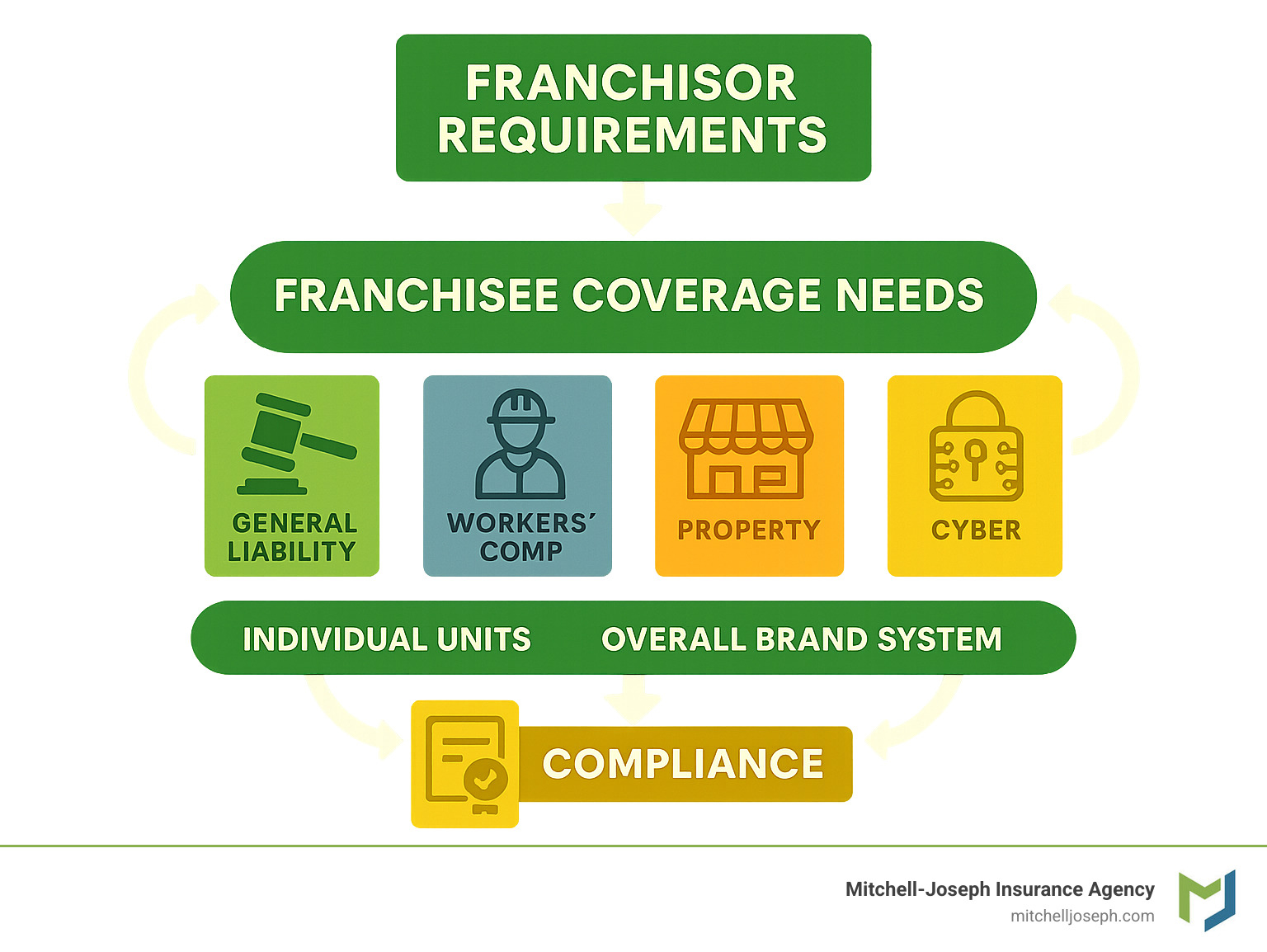
Running a franchise means protecting an entire brand system. One incident at your location can impact every other franchisee in the network. Unlike independent businesses, franchises face dual responsibility – satisfying franchisor requirements and protecting against everyday business risks.
The good news? Franchise insurance doesn’t have to be overwhelming. Most coverage can be bundled into cost-effective packages, and many insurers offer specialized programs for franchise operations.
I’m Jeffrey Joseph, helping business owners steer insurance complexities since 1999 at Mitchell-Joseph Insurance Agency. My experience shows that the right coverage strategy can mean the difference between a minor setback and a business-ending catastrophe.
Business insurance for franchises terms you need:
– business insurance agents near me
– business insurance for contractors
Understanding Business Insurance for Franchises
When you buy into a franchise, you’re joining a family where what affects one member impacts everyone else. That’s why business insurance for franchises exists as its own specialized category.
Franchisors face vicarious liability – they can be held legally responsible for incidents at your location. If a customer is injured at your store, they might sue both you and the parent company. This shared risk is why franchise agreements are strict about insurance requirements.
Brand protection becomes everyone’s responsibility. One bad incident can damage the reputation of thousands of franchisees. Your Franchise Disclosure Document (FDD) requires specific coverage – miss these requirements, and you could lose your franchise license entirely.
More info about importance of coverage
What Is Franchise Business Insurance?
Franchise business insurance combines multiple policies to protect your specific situation. Most franchise insurance starts with a Business Owner’s Policy (BOP), bundling general liability and property coverage into one package.
General liability covers everyday risks like customer injuries, while property insurance protects equipment, inventory, and your physical location. The goal is comprehensive protection that satisfies franchisor requirements and your own need for financial security.
Why It Matters to Every Unit in the System
43% of businesses face lawsuits – in franchising, legal troubles spread quickly. Reputational damage moves at lightning speed, and business interruption takes on special meaning when you depend on centralized systems.
The interconnected nature means protecting your location helps protect everyone else in the network – it’s a team effort where everyone benefits from proper coverage.
Core Coverage Every Franchise Needs
Business insurance for franchises starts with essential policies that form your protection foundation. After helping countless franchise owners throughout New York, I’ve seen which coverages make the difference between minor setbacks and business-threatening crises.
General liability insurance protects against customer injuries and property damage. Slip-and-fall accidents account for 30% of franchise claims. A Business Owner’s Policy (BOP) bundles general liability with property coverage at a 15-20% discount.
Workers’ compensation covers medical bills and lost wages for work-related injuries while protecting you from lawsuits. Property insurance protects specialized equipment and inventory. Commercial auto coverage becomes essential when business vehicles are involved.
Employment Practices Liability Insurance (EPLI) protects against discrimination and harassment claims. Cyber liability insurance has shifted from optional to essential – data breaches can cost small businesses around $200,000.
Business Owner’s Policy (BOP) Benefits
A BOP provides comprehensive coverage at basic pricing. Instead of managing multiple policies, you have one policy addressing most franchise requirements with less paperwork and better protection against coverage gaps.
Equipment breakdown coverage often comes included, protecting point-of-sale systems and specialized equipment. Business income coverage pays ongoing expenses during covered interruptions – the difference between temporary setback and permanent closure.
Workers’ Compensation Essentials
Workers’ compensation provides guaranteed medical care and wage replacement for workplace injuries while protecting you from most workplace injury lawsuits. State laws vary, but most require coverage once you hire your first employee.
Premiums depend on payroll and job classification codes. Safety programs and clean claims history can qualify you for substantial discounts.
Scientific research on workplace injuries
Additional Must-Have Policies for High-Risk Sectors
Liquor liability insurance is essential for franchises serving alcohol. Product liability coverage protects against contamination or defective products. Professional E&O insurance covers service-based franchises against negligence claims.
Commercial umbrella insurance provides extra protection when standard limits aren’t enough. Mechanical breakdown coverage fills gaps that standard property policies exclude.
Cost & Premium Factors: What Should You Budget?
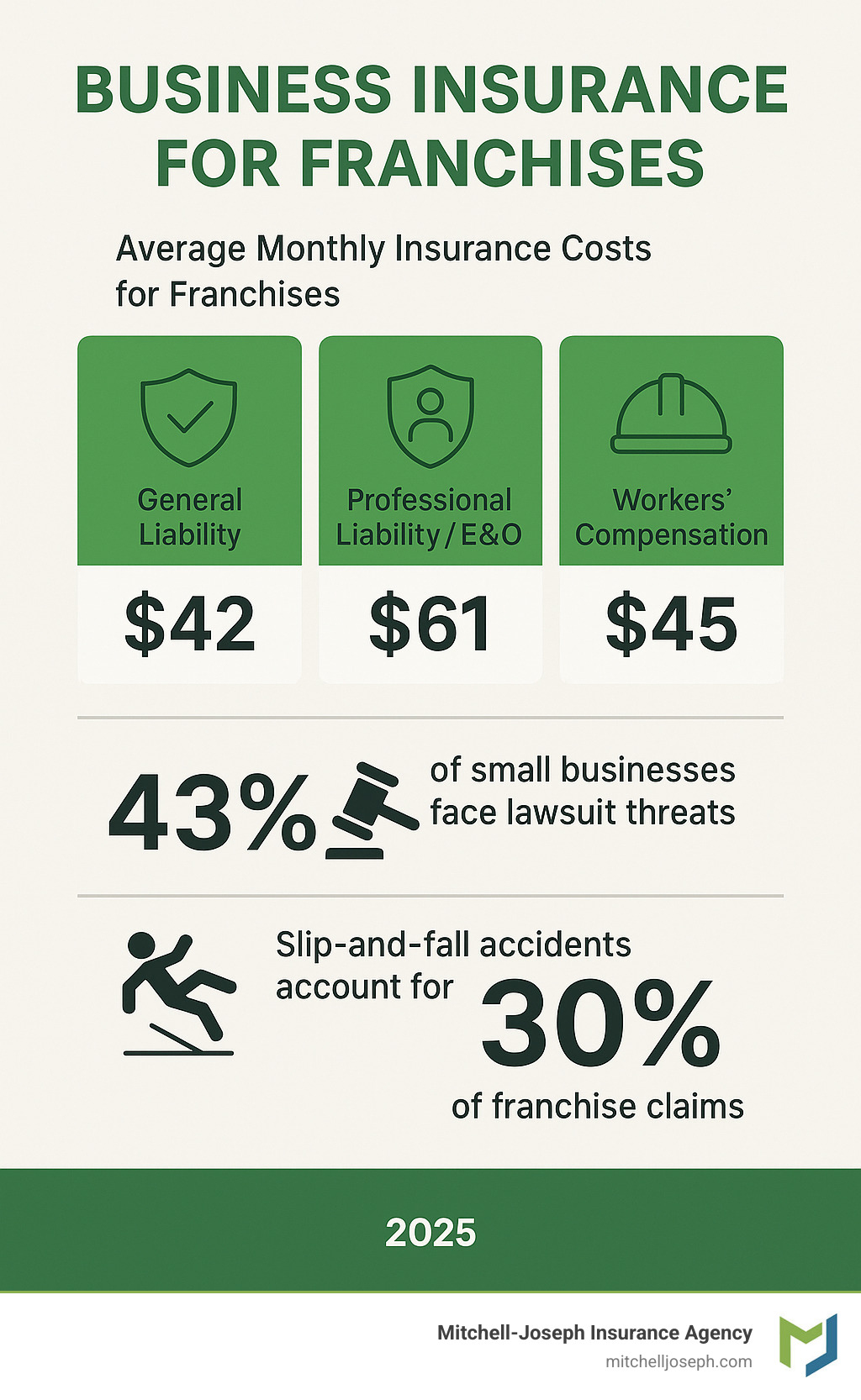
Business insurance for franchises typically costs $42 monthly for general liability, $61 for professional liability, and $45 for workers’ compensation. However, actual costs vary significantly based on your franchise type and risk factors.
Revenue and payroll drive most premium costs. Location matters – Manhattan costs more than rural areas. Claims history affects rates like your driving record affects auto insurance. Deductible choices balance monthly premiums against out-of-pocket costs.
| Risk Level | Monthly Premium Range | Typical Franchise Types |
|---|---|---|
| Low Risk | $150-300 | Office services, consulting |
| Mid Risk | $300-600 | Retail, personal services |
| High Risk | $600-1,200+ | Restaurants, construction, automotive |
Factors That Influence Business Insurance for Franchises
Industry classification sits at the top. Restaurant franchises face different risks than retail or professional services. Employee count affects multiple coverage areas. Safety programs can reduce premiums up to 25%.
Building age and condition impact property rates. Credit scores now factor into commercial pricing. Market cycles affect everyone during hard and soft markets.
How to Save Money Without Sacrificing Coverage
Bundling policies often delivers 10-25% savings. Strategic deductible increases can cut premiums 15-20%. Risk management programs show insurers you’re serious about prevention.
Group programs through franchise systems provide significant savings. Working with independent agents who represent multiple carriers ensures competitive pricing.
Navigating Franchise Agreements, Compliance & Certificates
Franchise agreements create legally binding insurance obligations spelled out in your Franchise Disclosure Document (FDD). General liability minimums typically range from $1-2 million, and you must show proof that the franchisor is covered as an additional insured.
Your commercial lease adds another layer of requirements. Certificate of Insurance (COI) processes prove compliance – most franchisors want annual certificates plus immediate notification of changes. Penalties for non-compliance can include franchise termination.
How Franchise Agreements Shape Insurance Obligations
Minimum liability limits usually fall between $1-5 million depending on industry. Approved carrier requirements ensure financial security – franchisors typically require AM Best ratings of A- or better.
Audit rights give franchisors permission to check compliance. Indemnification clauses require you to protect the franchisor from claims related to your operations.
Certificates of Insurance: Your Compliance Passport
A Certificate of Insurance proves you have required coverage. This one-page document summarizes policy types, limits, dates, and shows proper protection for franchisors and landlords.
Most certificates can be issued within 24 hours with digital delivery. Verification processes vary – some franchisors file certificates away, others verify directly with insurers.
Maintaining Compliance Year-Round
Annual policy reviews ensure coverage keeps pace with business changes. Mid-term endorsements handle changes between renewals. Digital tracking tools help busy franchise owners maintain compliance status.
Automated franchisor monitoring provides early warning of potential lapses, giving you time to fix issues before they become violations.
Specialized Policies, Risk Management & Advanced Strategies
Modern franchises need more than basic coverage. Cyber liability insurance tops the must-have list – data breaches cost small businesses around $200,000 on average. Employment Practices Liability Insurance (EPLI) protects against rising employment-related claims.
Centralized insurance programs represent the future – franchise systems negotiating master policies often save individual franchisees 15-30%. AI-powered policy audits revolutionize compliance management through automated coverage reviews.
Industry-Specific Add-Ons for Food, Retail, Fitness
Food service franchises need food contamination insurance and spoilage coverage for refrigeration failures. Equipment breakdown coverage becomes critical when operations depend on specialized equipment.
Retail franchises face theft from multiple directions. Crime insurance covers employee dishonesty while point-of-sale system coverage protects against technology failures.
Fitness franchises need professional liability coverage for trainers and equipment malfunction coverage for exercise equipment injuries.
Building a Franchise-Wide Risk Management Program
Safety training programs typically reduce claims 20-30%. Loss data aggregation across franchise systems provides powerful insights for risk management and insurance negotiations.
Quarterly reviews identify emerging risks before they become problems. Technology platforms support automated monitoring, incident reporting, and compliance tracking.
Frequently Asked Questions about Business Insurance for Franchises
After helping hundreds of franchise owners, the same concerns come up repeatedly. The biggest worries? “Am I paying too much?” and “Will this actually protect me when something goes wrong?”
How Much Does Business Insurance for Franchises Cost Per Year?
Business insurance for franchises typically runs $3,000-$15,000 annually. A neighborhood coffee shop might pay $2,000-$5,000 yearly, while a busy restaurant with 20 employees could face $10,000-$25,000 or more.
Cost drivers include industry classification, revenue, payroll size, location, and claims history. We work with 24 insurance companies to find the best combination of coverage and price for your specific franchise requirements.
Can Franchise Insurance Cover Legal Disputes or Government Penalties?
Employment Practices Liability Insurance covers discrimination claims, harassment allegations, and wrongful termination lawsuits, often including regulatory fines. Professional liability insurance protects service-based franchises against error claims.
Even failed claims can cost $100,000+ in legal defense – most policies cover these costs. However, intentional wrongdoing and criminal behavior won’t be covered. Cyber policies increasingly include regulatory fine coverage for data breaches.
How Often Should Policies Be Reviewed or Updated?
Annual reviews at renewal are non-negotiable – this ensures coverage matches your current operation. Don’t wait if your business changes significantly – opening locations, buying equipment, or doubling staff trigger immediate policy reviews.
Mid-term changes process quickly – most carriers add coverage within 24-48 hours. Franchise agreement updates also require coverage updates to maintain compliance.
Conclusion
When you invest in a franchise, business insurance for franchises becomes your safety net, protecting both your investment and the brand’s reputation. With 43% of small businesses facing lawsuit threats, proper coverage isn’t optional – it’s the foundation that lets you focus on growth.
The insurance landscape can feel overwhelming, but it doesn’t have to be complicated with the right guidance. Your needs will evolve as your franchise grows, and regular reviews ensure coverage keeps pace with success.
At Mitchell-Joseph Insurance Agency, we’ve spent over 200 years of combined experience helping franchise owners throughout Rochester, Canandaigua, Victor, Pittsford, and Western New York. As an independent agency with 24 insurance companies in our network, we shop around to find coverage that fits your budget and franchise requirements.
Your franchise represents your dreams and financial future. Protecting that investment with comprehensive, compliant insurance coverage ensures those dreams become reality.

