

Why Contractors in Rochester Need Comprehensive Business Protection
Business insurance for contractors protects your construction company from lawsuits, property damage, and workplace injuries that could otherwise bankrupt your operation. Here’s what Rochester contractors typically need:
Essential Coverage Types:
– General Liability – Covers client injuries and property damage ($67/month average)
– Workers’ Compensation – Required by NY law for employees ($329/month average)
– Commercial Auto – Protects work vehicles and equipment ($267/month average)
– Tools & Equipment – Covers theft and damage (only 22% of stolen equipment recovered)
– Professional Liability – Protects against workmanship claims
– Surety Bonds – Often required for licensing and large projects
Rochester’s construction industry faces unique challenges. From harsh winter weather damaging equipment to slip-and-fall accidents on icy job sites, contractors here deal with risks that can quickly spiral into expensive lawsuits.
More than 40% of small businesses experience a claim within 10 years, and with 2.4 million workers receiving emergency treatment for work-related injuries in 2019, the numbers show why coverage isn’t optional – it’s essential for survival.
Whether you’re an electrician working downtown or a general contractor building in the suburbs, having the right business insurance for contractors means the difference between a minor setback and losing everything you’ve built.
I’m Jeffrey Joseph, and I’ve been helping contractors secure comprehensive business insurance for contractors coverage since 1999 at Mitchell-Joseph Insurance Agency. Our team understands the specific risks facing Rochester-area contractors and works with multiple carriers to find you the best protection at competitive rates.

Why Rochester Contractors Need Robust Coverage
Working as a contractor in Rochester means dealing with risks that could shut down your business overnight. The construction industry has one of the highest injury rates of any profession, and when you add Rochester’s harsh winters and tight urban job sites, those risks multiply quickly.
The numbers tell a sobering story. Scientific research on work-related injuries shows that construction workers face significantly higher injury rates than most other professions. In 2019 alone, 2.4 million workers received emergency treatment for work-related injuries. For contractors, this isn’t just a statistic – it’s a daily reality that can lead to expensive lawsuits and insurance claims.
Rochester’s unique climate creates additional challenges. Those beautiful snowy winters we’re known for? They turn job sites into slip-and-fall hazards. Ice-covered surfaces, frozen equipment, and reduced visibility create conditions where accidents happen more frequently.
Property damage is another major concern in our area’s dense neighborhoods. When you’re working on older homes with tight lot lines, one mistake with equipment can damage a client’s property or even their neighbor’s. What starts as a small nick in siding can escalate into thousands of dollars in repairs and legal fees.
Tool and equipment theft hits Rochester contractors hard. With only 22% of stolen equipment ever recovered, losing your tools can mean losing your livelihood. Many contractors don’t realize how vulnerable they are until it’s too late.
Your reputation as a professional depends on how you handle problems when they arise. Clients want to work with contractors who have proper business insurance for contractors coverage because it shows you’re serious about your business and prepared to take responsibility if something goes wrong.
New York & Monroe County Requirements
New York State doesn’t mess around when it comes to contractor insurance requirements. If you’re operating without the right coverage, you’re not just risking your business – you’re breaking the law.
Workers’ compensation is mandatory for almost every contractor with employees. New York takes this requirement seriously, and getting caught without coverage can result in hefty fines and legal trouble. Even if you think you don’t need it, it’s worth checking with an expert because the rules can be tricky.
Commercial auto insurance requirements in New York include minimum liability limits that might surprise you. You need at least $25,000 for bodily injury per person, $50,000 per accident for bodily injury, and $10,000 for property damage. But honestly, these minimums aren’t nearly enough protection for most contractors.
Many city licensing requirements in Monroe County require proof of general liability insurance before they’ll issue your contractor license. Each municipality has different requirements, so what works in Rochester might not be enough for work in Brighton or Greece.
OSHA compliance isn’t technically insurance, but it affects your rates and claims. Insurance companies love contractors who follow safety protocols because it means fewer accidents and lower payouts.
Common Lawsuits and Claims
After helping contractors for over two decades, we’ve seen the same types of claims pop up again and again. Understanding these common scenarios can help you protect your business.
Trip-and-fall accidents are probably the most frequent claims we handle. A homeowner trips over an extension cord, a passerby slips on sawdust, or someone catches their foot on a loose board. Even minor injuries can lead to medical bills and lost wage claims that reach tens of thousands of dollars.
Faulty workmanship claims can be devastating, especially for specialized trades. A small plumbing error that causes water damage behind a wall, or an electrical issue that damages expensive appliances – these situations require professional liability coverage that many contractors don’t realize they need.
Environmental damage might sound like something only big companies worry about, but it happens to small contractors too. Hit a water main while digging, accidentally damage a neighbor’s septic system, or cause a small fuel spill from equipment – the cleanup costs and fines can be enormous.
The good news? With proper business insurance for contractors coverage, these situations become manageable business expenses instead of business-ending disasters.
Business Insurance for Contractors – Core Policies & Protections
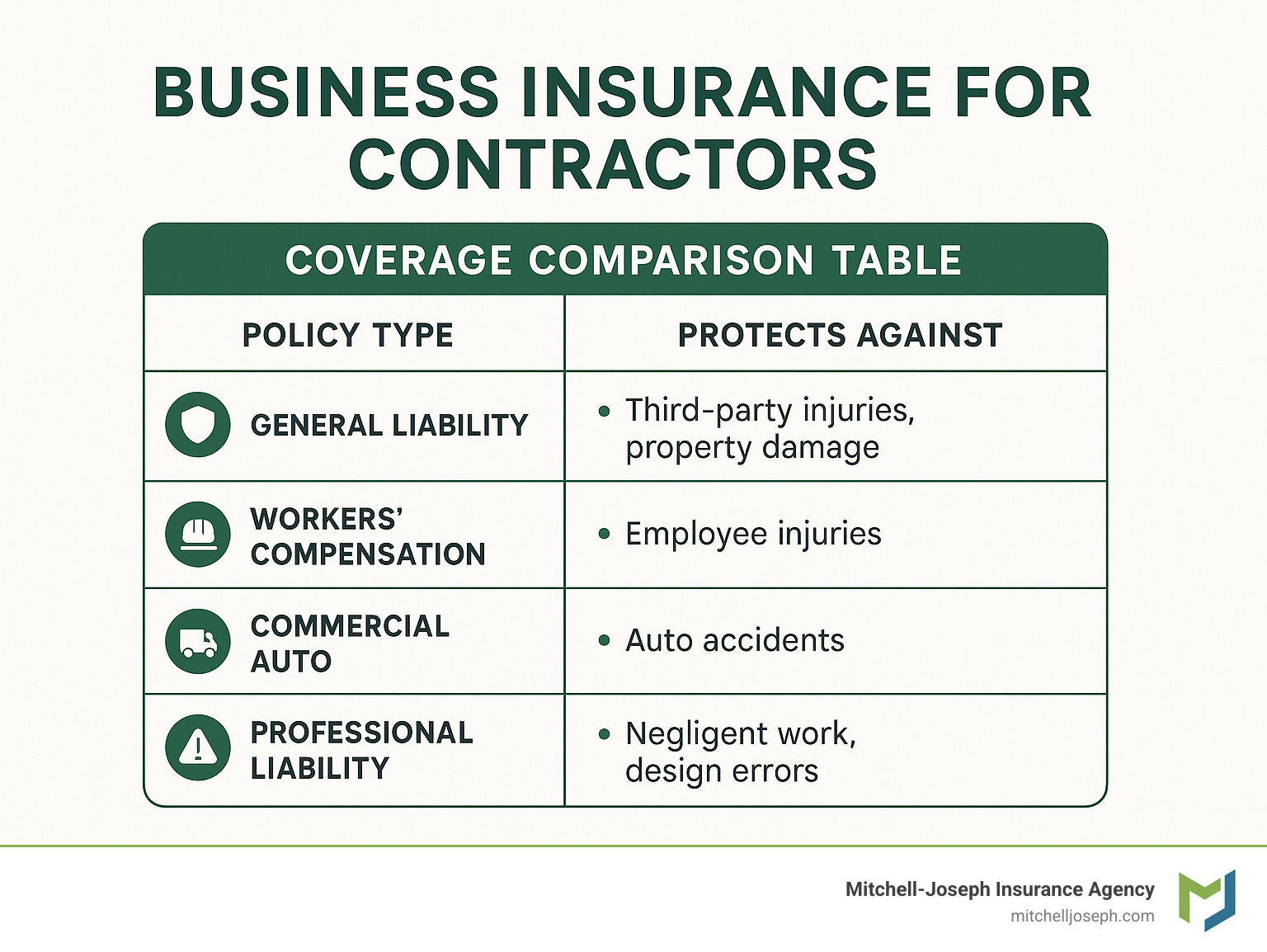
Business insurance for contractors works like a safety net made of several different layers. Each type of coverage protects against specific risks, and together they create comprehensive protection for your contracting business.
Think of it this way: general liability protects you from accidents involving other people, workers’ compensation covers your employees, commercial auto handles vehicle-related incidents, and professional liability protects against workmanship claims. When these coverages work together, they create a shield around your business that keeps one bad day from becoming a financial disaster.
The average Rochester contractor pays around $115 monthly for general liability, $329 for workers’ compensation, and $267 for commercial auto coverage. While these numbers might seem high, consider that a single lawsuit could cost tens of thousands of dollars without protection.
Essential Coverage #1: General Liability in Business Insurance for Contractors
General liability insurance is the cornerstone of business insurance for contractors. This coverage steps in when someone who doesn’t work for you gets hurt on your job site, or when you accidentally damage someone else’s property while working.
Here’s what makes general liability so important: it covers medical expenses when clients or visitors get injured, legal defense costs if someone sues you, and property damage you cause while working. The coverage also includes completed operations protection, which is crucial because it protects you even after you’ve finished a job.
Let’s say you’re installing new kitchen cabinets and accidentally crack the client’s granite countertop. Without general liability insurance, you’d have to pay for a replacement countertop out of your own pocket – potentially costing thousands. With coverage, your insurance handles the claim.
The completed operations aspect is especially valuable for contractors. If a deck you built three years ago has a structural failure that injures someone, this coverage protects you even though the work was completed long ago. Most contractors don’t realize they can be held responsible for their work years after completion.
At Mitchell-Joseph Insurance Agency, we’ve seen too many contractors learn about coverage gaps the hard way. Our General Liability Insurance for Businesses resource explains exactly what’s covered and what exclusions to watch for.
Business Owner’s Policy (BOP) Bundle
A Business Owner’s Policy bundles general liability, commercial property, and business income coverage into one package. For many contractors, this approach saves money compared to buying separate policies while ensuring nothing falls through the cracks.
The beauty of a BOP is that it covers your business property whether it’s at your shop, on a job site, or in your truck. If a fire damages your storage building and destroys $15,000 worth of tools, the property portion of your BOP helps replace them.
Business income protection is the hidden gem in a BOP. When a covered loss prevents you from working, this coverage replaces lost income and pays ongoing expenses like rent and equipment loans. Imagine if that same fire forces you to shut down for three weeks while rebuilding – business income coverage keeps money flowing when you can’t work.
The bundled approach also means one policy, one renewal date, and often one lower premium than buying coverages separately. Our Business Owners Policy page shows how bundling can save contractors both money and hassle.
Workers’ Compensation Basics
Workers’ compensation is required by New York law for any business with employees. Even if you only have one part-time helper, you likely need coverage. The good news is that workers’ comp protects both you and your workers.
When an employee gets hurt on the job, workers’ compensation covers their medical expenses, provides partial wage replacement during recovery, and pays for rehabilitation if needed. In tragic cases, it provides death benefits to families.
Here’s the protection for you as the business owner: workers’ compensation generally prevents injured employees from suing you. The insurance handles everything, including legal costs if disputes arise. Without this protection, an injured employee could sue you personally for damages.
Sole proprietors have an interesting choice in New York. You’re not required to carry workers’ comp for yourself, but many contractors choose to buy coverage anyway. Regular health insurance often excludes work-related injuries, leaving you vulnerable to medical bills from on-the-job accidents.
Commercial Auto & Inland Marine
Personal auto insurance doesn’t cover business use, which means you’re driving without protection every time you head to a job site. Commercial auto insurance fills this gap by covering liability for business-related accidents, physical damage to work vehicles, and equipment permanently attached to your trucks.
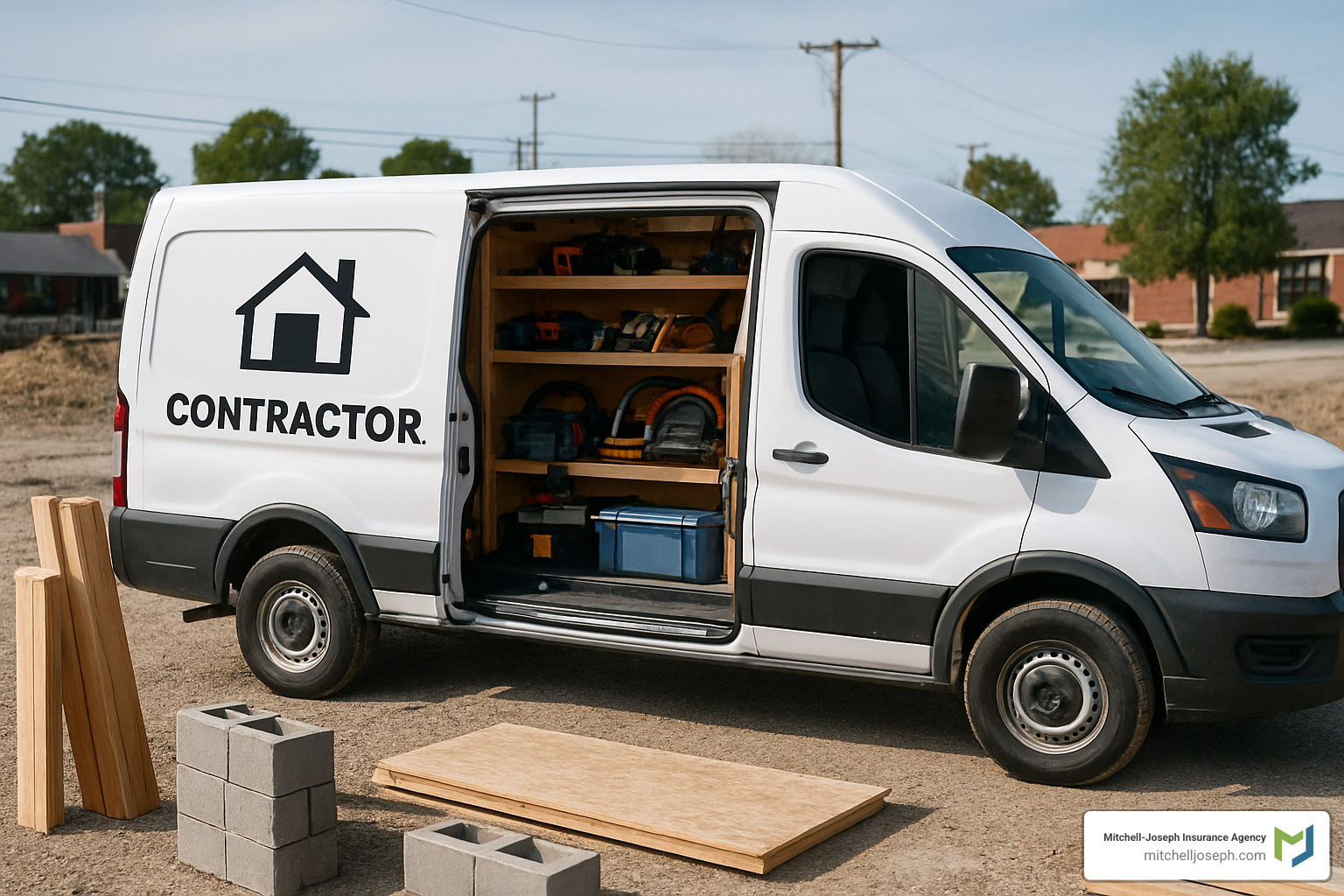
Inland marine coverage has a confusing name, but it’s essential for contractors. This coverage protects your tools and equipment while they’re in transit, at job sites, or in temporary storage. Given that research shows only 22% of stolen equipment is ever recovered, this protection is crucial for contractors with valuable tools.
The coverage follows your tools wherever they go. Whether they’re stolen from your truck overnight, damaged in an accident, or vandalized at a job site, inland marine coverage helps replace them. It typically covers theft, vandalism, and accidental damage to your tools and equipment.
Beyond the Basics: Specialty Add-ons in Business Insurance for Contractors
Some contractors need additional coverages based on their specific work. Professional liability insurance protects against claims that your work was faulty or didn’t meet specifications. This coverage is essential for contractors who design as well as build.
Builder’s risk insurance covers buildings under construction. If you’re constructing or renovating structures, this protects the work in progress against fire, theft, vandalism, and weather damage. It’s like property insurance for buildings that aren’t finished yet.
Pollution liability coverage handles cleanup costs if you accidentally cause environmental contamination. This might seem unnecessary, but even small contractors can face huge cleanup bills if they accidentally damage underground utilities or contaminate soil.
Cyber liability insurance protects against data breaches and cyber attacks. Even small contractors store client information, financial data, and business records that hackers might target. The coverage helps with notification costs, credit monitoring, and legal expenses.
Surety bonds guarantee your work performance. Many public projects and some private clients require bonds before awarding contracts. These aren’t technically insurance, but they’re often required alongside your insurance coverage.
Costs, Quotes & Certificates of Insurance
Let’s talk money – because understanding what you’ll actually pay for business insurance for contractors helps you budget properly and avoid getting ripped off.
Nationally, small businesses pay around $67 monthly for general liability coverage. But here’s the reality check: Rochester contractors typically pay more due to New York’s higher litigation costs and stricter regulations.
Here’s what we’re seeing for Rochester area contractors:
– General Liability: $115/month average
– Workers’ Compensation: $329/month average
– Commercial Auto: $267/month average
These are averages. Your electrician buddy might pay less while your roofing contractor friend pays more – it all depends on your specific trade and risk factors.
The good news? We work with 24 different insurance companies, so we can shop around to find you the best rates. No single carrier has the lowest prices for every type of contractor.
Need a certificate of insurance fast? Here’s how we make it happen: Contact us with your project details and coverage requirements, then we’ll prepare your quote and policy documents. Once you review and approve your coverage selections and make your first payment, you can download your certificate immediately.
Many contractors need certificates quickly for bidding purposes, and we’ve streamlined this process so you’re not scrambling at the last minute.
Scientific research on equipment theft shows that equipment theft costs contractors millions annually, with only 22% of stolen tools ever recovered. This reality makes proper coverage even more critical for protecting your investment.
For detailed pricing custom to your specific situation, check out our Business Insurance Quotes NY page.
How Insurers Calculate Your Rate
Insurance companies aren’t just throwing darts at a board to determine your premium. They’re looking at specific factors that predict how likely you are to file a claim.
Your trade classification matters most. Roofers pay significantly more than painters because, frankly, working on roofs is more dangerous. Each trade has a specific classification code that directly impacts your pricing.
Payroll and revenue tell insurers about your business size. More employees mean higher workers’ comp exposure, while higher revenue suggests larger projects with potentially bigger claims.
Your claims history follows you around like a credit score. Previous claims will increase your rates, but maintaining a clean record for 3-5 years can qualify you for substantial discounts.
Project size and type also factor in. Building a small deck carries different risks than constructing a multi-story commercial building. Some insurers specialize in certain project types and offer better rates accordingly.
Experience and safety programs can work in your favor. Contractors who invest in formal safety training and maintain experienced crews often qualify for better rates because they’re simply less likely to have claims.
Saving Money Without Cutting Coverage
Nobody wants to overpay for insurance, but cutting essential coverage to save a few bucks is like removing the brakes from your truck to improve gas mileage – it’s not going to end well.
Bundling multiple policies with one carrier often saves 10-25% on premiums. When you combine your general liability, commercial auto, and property coverage, insurers reward that loyalty with meaningful discounts.
Increasing your deductible from $500 to $2,500 can significantly reduce your monthly premiums. Just make sure you can comfortably afford that higher out-of-pocket cost if something happens.
Safety programs aren’t just good for your workers – they’re good for your wallet. Implementing formal safety training and documentation can qualify you for workers’ comp discounts that add up over time.
Annual policy reviews are crucial because your business evolves. Maybe you stopped doing roofing work and focus on interior renovations now. Or perhaps you’ve added employees and need to adjust your coverage. Regular reviews ensure you’re not paying for coverage you no longer need while making sure you’re protected for what you actually do.
At Mitchell-Joseph Insurance Agency, we’ve been helping contractors steer these decisions since 1999. Our job is finding you the right coverage at the right price – not selling you the most expensive policy possible.
Managing Risk & Filing Claims Smoothly
Prevention is always better than filing claims. Proactive risk management protects your workers, reduces insurance costs, and demonstrates professionalism to clients.

Essential Risk Management Practices:
– Daily safety meetings and hazard identification
– Proper tool maintenance and storage
– Written safety procedures for common tasks
– Regular vehicle maintenance and driver training
– Thorough contract reviews before signing
The construction industry has unique safety challenges. Weather conditions, working at heights, power tools, and heavy equipment all create potential hazards. A comprehensive safety program addresses these risks systematically.
Proactive Risk Management Tips
Tool Security: With only 22% of stolen equipment recovered, preventing theft is crucial. Use locked storage, GPS tracking on expensive equipment, and never leave tools unattended in vehicles overnight.
Driver Training: Commercial auto claims can be expensive. Regular driver training, vehicle maintenance, and clear policies about personal use of company vehicles reduce accident risk.
Subcontractor Agreements: Always require subcontractors to carry their own insurance and name you as additional insured. Get certificates before work begins and verify coverage is current.
Contract Review: Many problems start with poorly written contracts. Have contracts reviewed by an attorney and ensure insurance requirements are clearly defined.
Step-by-Step Claims Process
When accidents happen, how you handle the claim affects the outcome:
1. Immediate Response:
– Ensure everyone’s safety first
– Call emergency services if needed
– Notify your insurance company within 24 hours
2. Document Everything:
– Take photos of the scene, damage, and injuries
– Get contact information from witnesses
– Write down exactly what happened while it’s fresh
3. Temporary Repairs:
– Make temporary repairs to prevent further damage
– Save receipts – these are often covered
– Don’t admit fault or discuss details with anyone except your insurer
4. Work with the Adjuster:
– Provide requested documentation promptly
– Be honest and factual in all communications
– Ask questions if you don’t understand something
5. Settlement:
– Review settlement offers carefully
– Understand what’s covered and what isn’t
– Keep records of all claim-related expenses
Frequently Asked Questions about Contractors Insurance
After helping Rochester contractors with business insurance for contractors for over two decades, we’ve heard just about every question you can imagine. Here are the ones that come up most often in our conversations:
Do subcontractors need their own policies?
This is probably the question we get asked most, and the answer is absolutely yes. Your general liability policy won’t cover the subcontractors you hire – they need their own coverage.
Think of it this way: if your electrician accidentally causes a fire while working on your project, you want their insurance to handle the claim, not yours. Without proper coverage, you could end up paying for their mistakes.
We always tell our contractor clients to require subcontractors to carry insurance limits equal to or higher than yours and to name you as additional insured on their policy. Don’t let anyone start work without seeing a current certificate of insurance first.
This isn’t just about protecting yourself from liability – it also ensures their workers are covered if someone gets hurt. New York takes workers’ compensation seriously, and you don’t want to get caught in the middle if an uninsured sub’s employee files a claim.
How fast can I get proof of insurance for a bid?
We know how bidding works – sometimes you need that certificate of insurance yesterday. The good news is we can often provide certificates the same day your policy becomes effective.
For really urgent situations, we can sometimes bind coverage and issue certificates within just a few hours. We’ve had contractors call us in the morning needing coverage for an afternoon bid meeting, and we’ve made it happen.
To speed things up, have your business information ready – legal name, address, and type of work you do. Also know what coverage limits the client requires, and be prepared to make your first payment right away to activate the policy.
Many of our contractor clients keep a current certificate on file with us and just update it as needed for specific projects. It’s a smart way to avoid last-minute scrambling.
Will my policy cover work in surrounding counties?
Most business insurance for contractors policies cover work anywhere in New York State, so you’re typically fine working in surrounding counties like Wayne, Ontario, or Livingston.
Many policies even extend coverage to other states where you occasionally work. But here’s the key word: occasionally. If you’re regularly working in Pennsylvania or Ohio, you may need additional coverage or policy modifications.
Always check with us before taking on out-of-state projects to make sure you’re properly covered. Different states have different requirements, and the last thing you want is to find you’re not covered after something goes wrong.
We’ve seen contractors get excited about a big project in another state, only to realize their current policy doesn’t provide adequate coverage. A quick call to us can save you from that headache.
Conclusion
Getting the right business insurance for contractors is one of the smartest investments you’ll make for your Rochester contracting business. It’s not just about meeting legal requirements or satisfying demanding clients – it’s about protecting everything you’ve worked so hard to build.
Think about it this way: you wouldn’t show up to a job site without your tools, right? Insurance is just another essential tool in your business toolkit. The difference is that this tool protects you from the unexpected disasters that could otherwise wipe out years of hard work in a single afternoon.
At Mitchell-Joseph Insurance Agency, we’ve been helping contractors steer these waters since 1999. Our family-owned, independent agency gives us something the big national companies can’t offer – we actually care about your success. With access to 24 different insurance carriers and over 200 years of combined experience on our team, we know how to find coverage that fits both your needs and your budget.
We understand that every contractor’s situation is unique. The risks facing a residential electrician are different from those of a commercial roofer. That’s why we take the time to understand your specific business before recommending coverage. No cookie-cutter policies or high-pressure sales tactics – just honest advice from people who understand the construction industry.
Here’s what makes us different: We explain everything in plain English, we’re here when you need to file a claim, and we treat your business like it matters – because it does. Whether you’re a one-person operation just getting started or you’ve been building in Rochester for decades, we’ll help you find the right protection.
Don’t wait for an accident to find gaps in your coverage. We’ve seen too many good contractors face financial hardship because they thought they were covered when they weren’t. A quick conversation with our team can save you from that nightmare scenario.
Ready to protect your business? Contact us today for a comprehensive review of your insurance needs. We proudly serve contractors throughout Rochester, Honeoye Falls, Pittsford, Victor, Canandaigua, and the surrounding areas.
Visit our business insurance coverage page to learn more, or give us a call for a free, no-obligation quote. We’ll help you build the confidence that comes with knowing you’re properly protected.
Your contracting business works hard every day. Your insurance should work just as hard for you. Let’s make sure it does.

