

Business insurance FAQ is here to shed light on a crucial, yet often complex, topic for small business owners: understanding how to protect your business from unexpected financial losses. As an entrepreneur, the stakes are high, and navigating business insurance can be daunting. Here are some quick insights to help you get started:
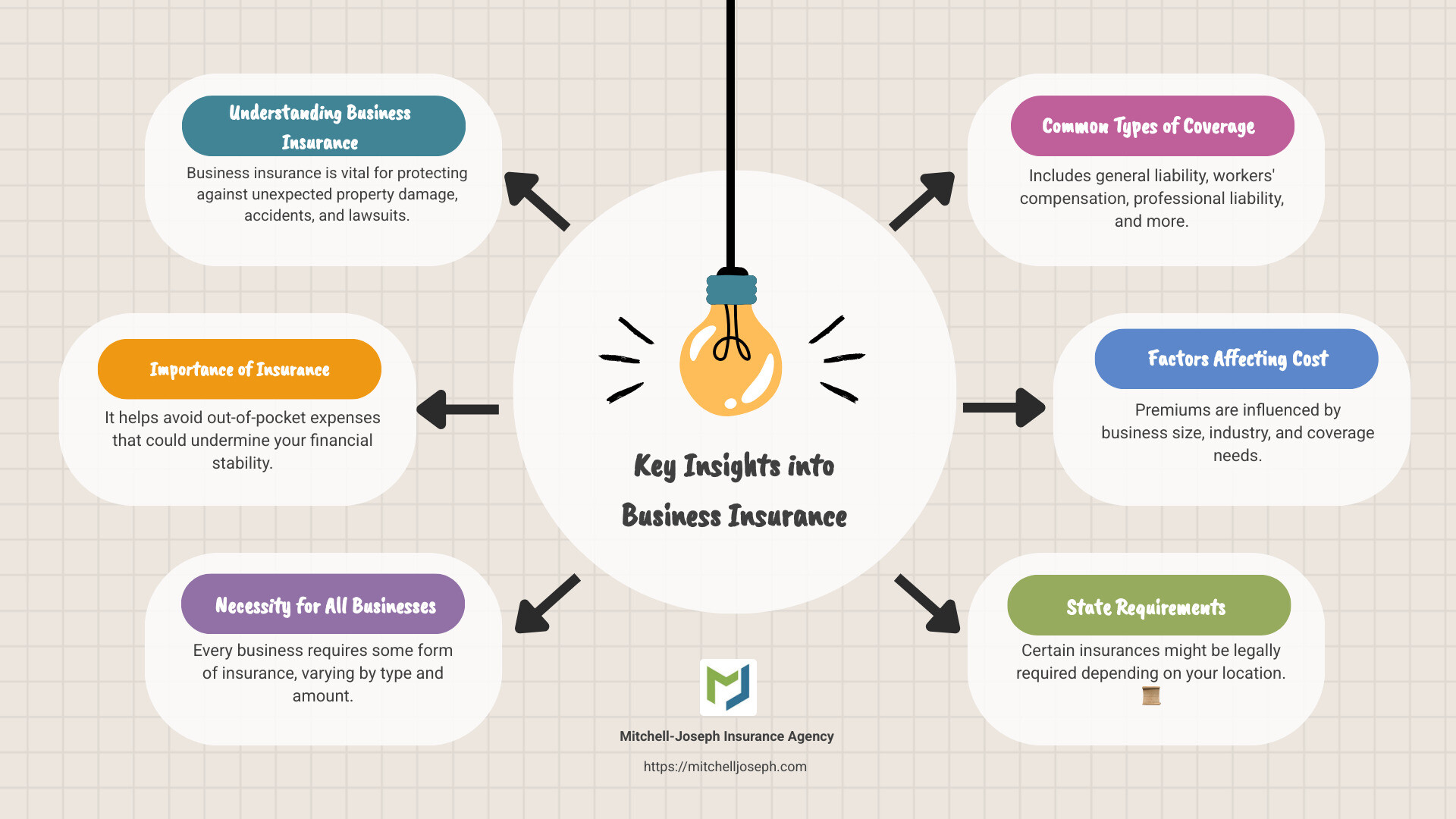
- What is Business Insurance? It’s designed to shield your business from unforeseen risks, such as property damage, accidents, or lawsuits.
- Why is it Important? Without it, you might face significant out-of-pocket expenses that can jeopardize your financial stability.
- Do All Businesses Need It? Yes, though the type and amount of insurance each business requires can vary greatly.
I’m Jeffrey Joseph from Mitchell-Joseph Insurance. With decades of experience in providing personalized insurance solutions, I’ve assisted countless businesses in deciphering their business insurance FAQ needs across New York. Let me guide you through the essential elements of safeguarding your business assets effectively.
Understanding Business Insurance
When it comes to business insurance, understanding the different types of coverage is key to protecting your business from potential risks. Let’s break down the main components:
Coverage Types
Business insurance is not one-size-fits-all. It includes various coverage types that cater to different needs. Here’s a quick overview:
-
General Liability Insurance: This is a must-have for almost every business. It covers legal fees and damages if your business is sued for causing harm to a person or property.
-
Property Insurance: Protects your physical assets like buildings, equipment, and inventory from risks such as fire, theft, and vandalism.
-
Business Owner’s Policy (BOP): A BOP bundles general liability and property insurance into one policy. It’s a cost-effective way to cover multiple risks. A BOP can also include business interruption insurance, which compensates for lost income if your business operations are halted due to a covered event.
Liability
Liability coverage is crucial because it safeguards your business from potential lawsuits. Whether it’s a customer slipping in your store or a client suing for a professional mistake, liability insurance helps cover the costs of legal defense and settlements.
-
Professional Liability Insurance: Also known as Errors and Omissions (E&O) insurance, this is essential for businesses that provide services. It covers claims of negligence or inadequate work.
-
Cyber Liability Insurance: Protecting against data breaches and cyber-attacks is vital. Cyber liability insurance covers costs associated with data breaches, including notification expenses and legal fees.
Property
Your business property is more than just a building; it includes all the tools and equipment you use to operate. Property insurance ensures that if something happens to these assets, you’re not left in a bind.
-
Commercial Property Insurance: Covers the physical location and assets within it. This can include furniture, computers, and inventory.
-
Business Interruption Insurance: Often part of a BOP, it covers lost income and operating expenses if your business is temporarily closed due to a covered loss.
Business Owner’s Policy (BOP)
A BOP is a smart choice for small to mid-sized businesses. It combines essential coverages in a single policy, often at a lower cost than purchasing each coverage separately.
-
Cost Efficiency: By bundling coverages, a BOP typically costs less than buying individual policies. This makes it an attractive option for budget-conscious business owners.
-
Customization: While a BOP covers the basics, you can add endorsements to tailor the policy to your specific needs, such as adding cyber liability or professional liability coverage.

Understanding business insurance is crucial for safeguarding your business against unforeseen risks. With the right coverage types, you can ensure your business’s stability and success. Next, we’ll explore how to choose the right business insurance to meet your specific needs.
Types of Business Insurance
When it comes to protecting your business, understanding the different types of insurance available is crucial. Let’s explore some of the most common types of business insurance:
General Liability Insurance
General Liability Insurance is a foundational policy for most businesses. It covers legal costs and damages if someone sues your business for injury or property damage. Imagine a customer slipping on a wet floor in your store. General liability insurance would help cover the medical expenses and legal fees, protecting your business from financial strain.
Workers’ Compensation Insurance
Workers’ Compensation Insurance is essential if you have employees. It covers medical expenses and lost wages for workers who get injured or fall ill due to job-related activities. This insurance not only protects your employees but also shields your business from potential lawsuits. For example, if an employee injures their back lifting a heavy box, workers’ comp would cover their medical bills and part of their lost wages.
Professional Liability Insurance
Also known as Errors and Omissions (E&O) Insurance, this coverage is vital for businesses that provide services. It protects against claims of negligence or mistakes in the services you offer. Let’s say you’re a consultant and a client claims your advice led to a financial loss. Professional liability insurance would cover your legal defense and any settlements, ensuring your business remains intact.
Cyber Insurance
In our digital world, Cyber Insurance is becoming increasingly important. It provides coverage for data breaches and cyber-attacks, which can be costly and damaging to your reputation. If your business handles sensitive customer data, cyber insurance can cover the costs of notifying affected individuals, legal fees, and even public relations efforts to repair your brand’s image.
Commercial Auto Insurance
If your business owns vehicles or employs drivers, Commercial Auto Insurance is a must. It covers damages and liability if your business vehicle is involved in an accident. Whether it’s a delivery van or a company car, this insurance ensures that you’re protected from financial loss in case of a mishap on the road.
Understanding these types of business insurance is key to choosing the right policies for your business’s unique needs. Each type offers specific protections, and having the right combination can safeguard your business against a variety of risks. Next, we’ll explore how to choose the right business insurance, considering factors like risk assessment and industry-specific needs.
How to Choose the Right Business Insurance
Choosing the right business insurance can feel overwhelming, but breaking it down into key steps can simplify the process. Here’s how you can make informed decisions to protect your business effectively:
Risk Assessment
Start with a risk assessment. This means identifying the potential risks your business faces. Every business is unique, and so are its risks. For example, a restaurant might be more concerned with kitchen fires, while a tech firm might worry more about data breaches.
Understanding these risks helps you determine which types of insurance are necessary. Consider consulting with an insurance agent who can provide insights specific to your industry.
Industry-Specific Needs
Different industries have different insurance needs. A construction company will need coverage for equipment and potential site accidents, while a retail store might prioritize coverage for customer injuries and theft.
Industry-specific insurance ensures that your policy covers the unique risks associated with your business type. For instance, if you’re in the tech industry, cyber insurance should be high on your list.
Policy Limits
Policy limits are the maximum amount your insurance will pay for a covered claim. It’s crucial to set these limits appropriately. Too low, and you might find yourself paying out-of-pocket for claims that exceed your coverage. Too high, and you could be overpaying in premiums.
Assess your business’s assets and potential liabilities to determine the right limits. An insurance agent can help you balance adequate coverage with cost-effectiveness.
Deductible
The deductible is what you pay out-of-pocket before your insurance kicks in. Choosing a higher deductible can lower your premium, but it also means you’ll pay more upfront in the event of a claim.
Consider your business’s cash flow and savings when selecting a deductible. If you have a robust emergency fund, a higher deductible might make sense. If not, a lower deductible could provide peace of mind.
By focusing on risk assessment, industry-specific needs, policy limits, and deductibles, you’ll be better equipped to choose the right business insurance. The goal is to protect your business while managing costs effectively. Up next, we’ll dive into frequently asked questions about business insurance to clarify common concerns and misconceptions.
Frequently Asked Questions about Business Insurance FAQ
What is Business Insurance?
Business insurance is a safety net for your company. It helps protect your assets and covers potential risks that could lead to financial loss. Think of it like a shield that guards against unexpected events like property damage, lawsuits, or other liabilities.
For example, if a fire damages your office, business insurance can help cover the repair costs. If a customer slips and falls in your store, it can help with legal expenses and settlements. Essentially, it keeps your business running smoothly when the unexpected happens.
How Much Does Business Insurance Cost?
The cost of business insurance, or premiums, varies widely. Several factors influence these costs, including:
-
Industry and Risk Level: High-risk industries, like construction, might pay more than low-risk ones, such as consulting.
-
Business Size and Location: Larger businesses or those in high-risk areas may face higher premiums.
-
Coverage Types and Limits: More comprehensive coverage and higher policy limits typically cost more.
-
Claims History: A history of frequent claims can increase your premiums.
To manage your budget effectively, it’s crucial to balance adequate coverage with cost. Consider bundling policies or choosing a higher deductible to reduce premiums without sacrificing protection.
Is Business Insurance Required by Law?
Whether business insurance is required by law depends on your location and industry. For instance, most states mandate workers’ compensation insurance if you have employees. Some states also require commercial auto insurance if your business uses vehicles.
Licenses and compliance can also play a role. Certain professions, like medical or legal services, might need specific liability insurance to operate legally. Always check state requirements and consult with an insurance agent to ensure you’re in compliance.
By understanding these common questions, you can better steer business insurance and make informed decisions to protect your company’s future. Up next, we’ll explore tips for saving on business insurance to help you get the most value for your investment.
Tips for Saving on Business Insurance
Saving on business insurance doesn’t mean cutting corners. It’s about being smart with your choices. Here are some strategies to help you get the best bang for your buck:
1. Bundle Your Policies
One of the simplest ways to save is by bundling your insurance policies. When you purchase multiple types of coverage from the same insurer, you may qualify for a multi-policy discount. For example, combining general liability and commercial property insurance into a Business Owner’s Policy (BOP) can often be cheaper than buying them separately.
2. Implement Strong Risk Management
Reducing risks in your business can lower your insurance premiums. Conduct a thorough risk assessment to identify potential hazards and take steps to mitigate them. This might include:
- Installing security systems to prevent theft.
- Conducting regular safety training for employees.
- Implementing cybersecurity measures to protect against data breaches.
By demonstrating to insurers that your business is less likely to face claims, you can often negotiate better rates.
3. Consider Higher Deductible Options
Opting for a higher deductible can significantly lower your premium. A deductible is the amount you pay out of pocket before your insurance kicks in. If you can afford to pay more upfront in the event of a claim, a higher deductible might be a cost-effective choice. However, ensure that the deductible is still manageable for your business’s financial situation.
4. Regularly Review and Adjust Coverage
As your business evolves, so do your insurance needs. Schedule an annual review of your policies to ensure they still align with your current operations. Look for overlapping coverages or unnecessary extras that could be eliminated to save money. An independent insurance agent can be invaluable in this process, providing insights and recommendations custom to your specific needs.
Implementing these tips can help you manage your insurance costs effectively while maintaining the necessary protection for your business. Next, we’ll conclude with how Mitchell-Joseph Insurance Agency can offer personalized service and custom coverage to meet your unique business needs.
Conclusion
At Mitchell-Joseph Insurance Agency, we understand that every business is unique. With over 200 years of combined experience, our team is dedicated to providing personalized service and custom coverage to meet your specific needs.
Personalized Service
Our family-owned agency takes pride in getting to know you and your business. We believe in building strong relationships with our clients, ensuring that we understand your goals and challenges. This personal approach allows us to offer guidance and support that aligns with your business objectives.
Custom Coverage
We offer a wide range of insurance products from 24 different companies, allowing us to craft a policy that fits your business perfectly. Whether you need general liability, workers’ compensation, or a specialized policy like cyber insurance, we have the resources to cover all your bases. Our goal is to provide comprehensive protection without unnecessary extras, ensuring you only pay for what you need.
When you choose Mitchell-Joseph Insurance Agency, you’re not just getting an insurance policy. You’re gaining a partner committed to helping your business thrive. Let us help you steer the complexities of business insurance with confidence.
For more information on how we can assist you, visit our Business Insurance page.
Thank you for trusting us with your insurance needs. We’re here to help, every step of the way.

