Why Professional Photographers Need Specialized Insurance Coverage
Best camera insurance protects your valuable photography equipment and business from theft, damage, and liability claims that standard homeowner’s policies often exclude. Here are the top considerations when choosing coverage:
Essential Coverage Types:
- Equipment Protection – Covers cameras, lenses, and accessories against theft, damage, and loss
- General Liability – Protects against third-party injury or property damage claims
- Professional Liability – Covers errors, omissions, and failure to deliver services
- Worldwide Coverage – Ensures protection during travel and destination shoots
Key Policy Features to Compare:
- Replacement cost vs. actual cash value payouts
- Coverage for rented equipment and hired gear
- Theft from vehicle provisions (many exclude unattended vehicles)
- Per-item limits ($2,000+ items often require scheduling)
- Deductible options (typically $250-$350 minimum)
Whether you’re a wedding photographer with $20,000 in gear or a hobbyist who’s sold a few prints, your camera equipment represents a significant investment that deserves proper protection. Cameras and lenses are more than just tools of the trade; they’re a means of expression. Losing them without adequate coverage can devastate both your creative pursuits and your business.
The challenge is that most homeowner’s insurance policies exclude commercial equipment or provide inadequate coverage for expensive photography gear used off-premises. Even hobbyist photographers who have sold just one photo may find their claims denied under standard policies designed for “personal” possessions.
I’m Jeffrey Joseph, and I’ve been helping photographers and small business owners in the Finger Lakes region secure the best camera insurance coverage since 1999 at Mitchell-Joseph Insurance Agency. My experience has shown me that the right specialized photography policy can mean the difference between a minor setback and a business-ending loss.
How to Find the Best Camera Insurance for Your Gear
Finding the best camera insurance doesn’t have to be overwhelming. Think of it like choosing a lens—know your gear and your goals. Here’s how to pick the right policy.
Why Your Homeowner’s Policy Isn’t Enough
Homeowner’s or renter’s insurance rarely protects camera gear used for work. The commercial use exclusion is the big one: if you’ve earned even a single dollar from photography—shooting a neighbor’s portraits or selling one print—your gear may be considered business property and a claim can be denied.
Most home policies also have very low business equipment limits, and off-premises coverage is often minimal. That’s a problem when your camera body alone can cost $3,000 and you’re constantly on the move to venues and locations.
Even for personal use, many policies apply sub-limits to valuables like cameras and lenses that fall short of your gear’s true value. And liability on a home policy won’t help if a client trips over your tripod at a venue or claims you failed to deliver services—those are business risks.
Bottom line: if your gear is worth more than a few thousand dollars, or you’ve ever used it commercially, you likely need specialized coverage.
Essential Coverage Types for Photographers
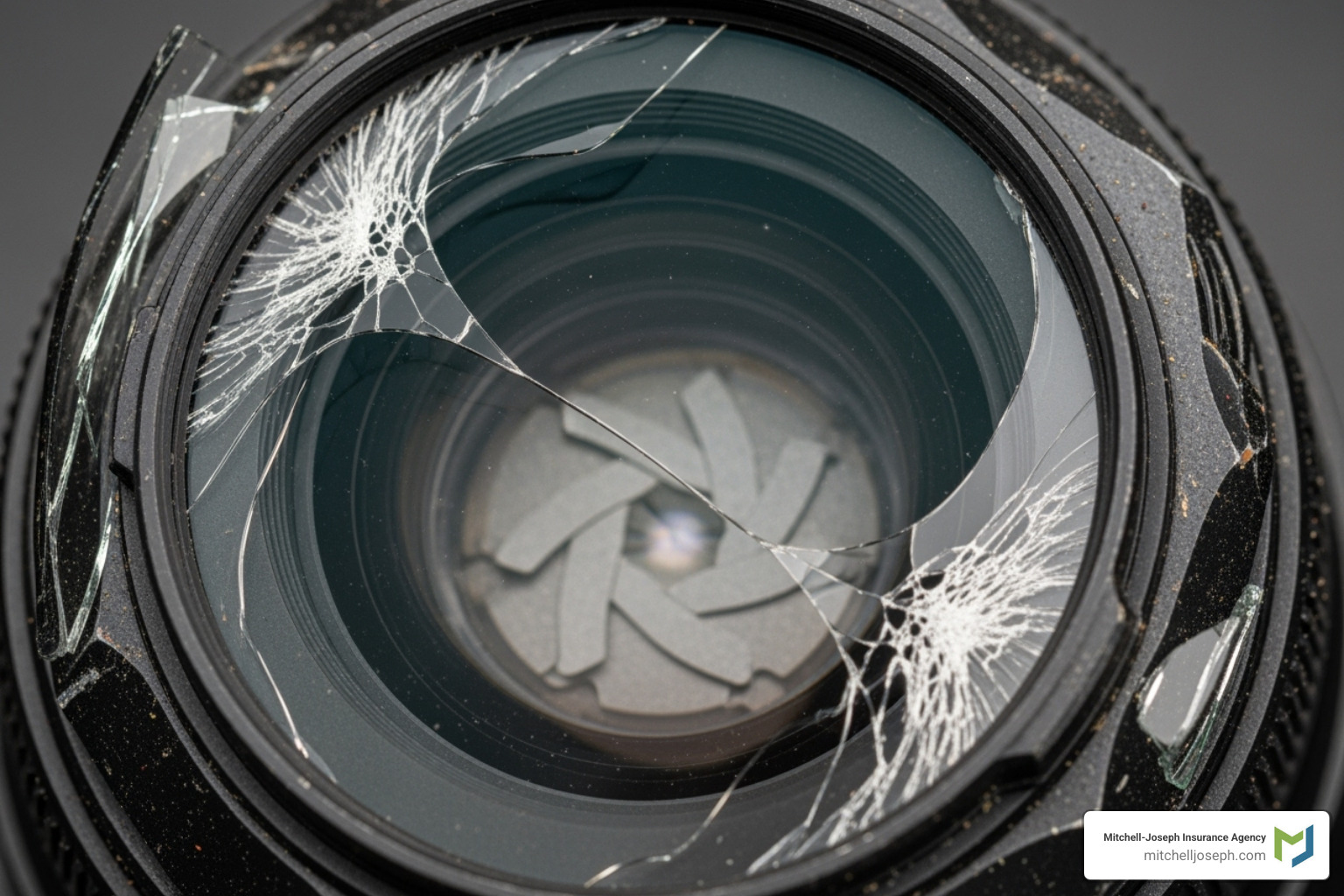
Equipment Insurance (Inland Marine) covers cameras, lenses, lighting, tripods, memory cards, and accessories against theft, damage, and fire—at your studio, on location, and often worldwide.
General Liability (CGL) protects if someone is injured or property is damaged due to your operations—think a client tripping over a light stand or an accidental venue mishap.
Professional Liability (Errors & Omissions) helps with legal defense and settlements if a client claims you didn’t deliver what was promised, files suit over missed shots, or data corruption causes loss of images.
Cyber Liability addresses hacking, stolen devices with client data, notification costs, and related legal expenses.
Drone coverage is typically excluded by standard policies; dedicated drone protection covers damage, theft, and third-party injury or property damage.
At Mitchell-Joseph Insurance Agency, we work with 24 insurance companies to tailor the right combination of coverage. With over 200 years of combined experience, we know how to match photographers with policies that fit their needs and budgets.
What to Look for in the Best Camera Insurance Policies
The replacement cost vs. actual cash value choice matters. Replacement cost pays for brand-new gear without depreciation, helping you get back to work fast. Actual cash value subtracts depreciation, which can leave you short.
Check worldwide coverage terms and durations (e.g., 30/60/90/120 days) if you travel. Confirm coverage for rented equipment—some policies include it, others require an add-on.
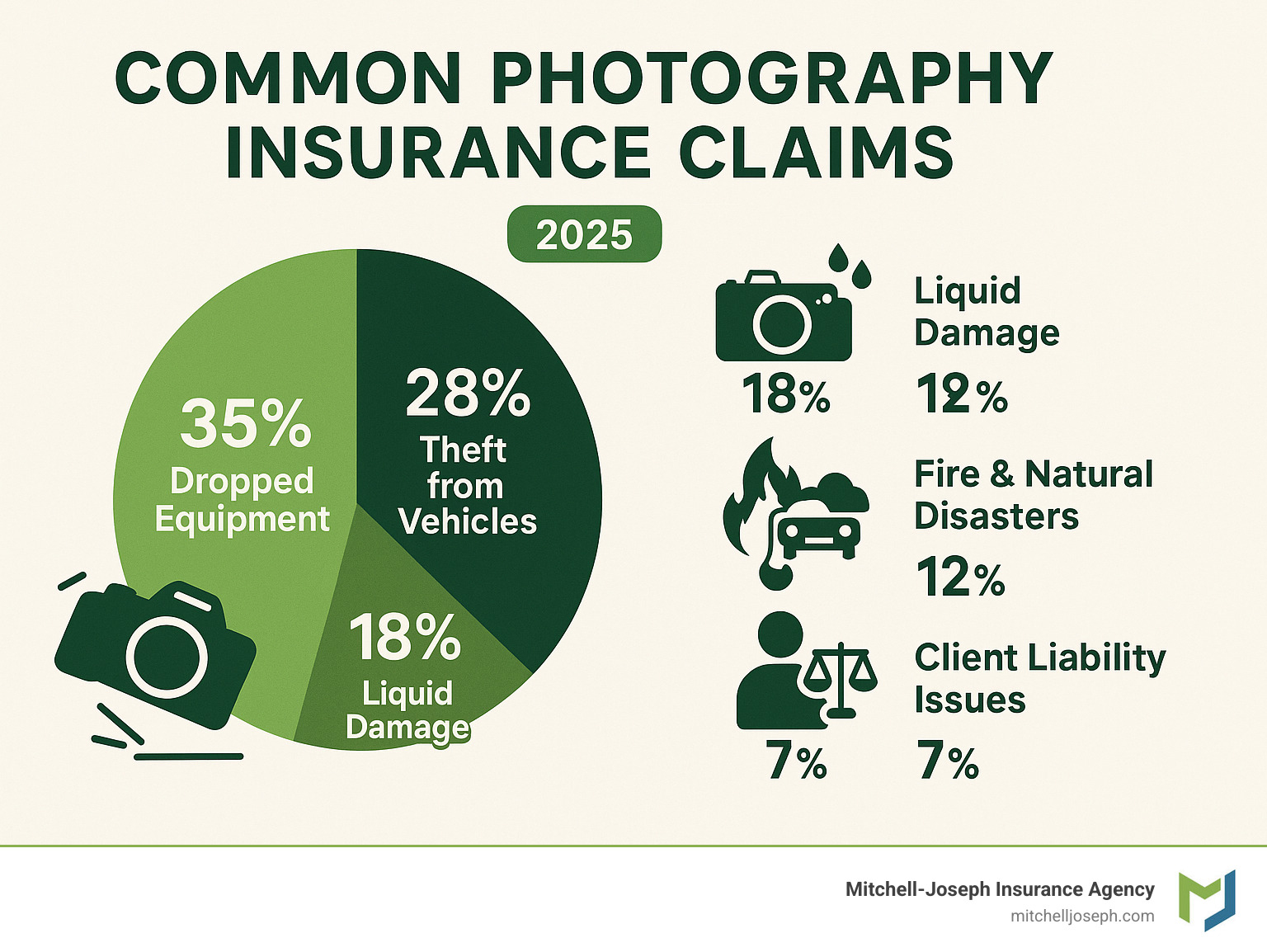
Understand theft from unattended vehicle rules. Some policies exclude it entirely; others require gear to be out of sight in a locked vehicle. This is where many claims go sideways.
Review exclusions like wear and tear, mechanical breakdown (sometimes available for newer gear), intentional damage, and high-risk activities. If the fine print is unclear, ask us—we’ll translate it into plain English.

Understanding Policy Costs, Limits, and Deductibles
Premiums are driven by equipment value, coverage types (adding professional liability or cyber increases cost but broadens protection), location, and claims history.
Typical deductibles range from $250 to $350. Higher deductibles lower premiums but increase your out-of-pocket if you file a claim—pick an amount you can comfortably afford.
Items over about $2,000 usually need to be scheduled (listed with make, model, serial number, and value). Smaller items can be covered as unscheduled equipment under a blanket limit. Make sure per-item limits and aggregate limits reflect your true gear value.
Special Considerations: International Travel and Claims
Many policies offer worldwide coverage, but may exclude countries with government advisories or limit continuous international trips (e.g., 60–120 days). Verify duration and any reduced limits abroad.
If you have a claim overseas, file a local police report for theft, keep receipts and documentation, and contact your agent promptly. We guide you through each step and liaise with the insurer to streamline the process.
Getting the Best Camera Insurance Rate with Discounts
Look for professional association discounts—groups like the Professional Photographers of America (PPA) may offer substantial savings.
Bundle policies (e.g., equipment, studio property, commercial auto) to reduce overall costs. Ask about loyalty savings and keep a clean record—fewer claims help control renewal premiums.
Some carriers offer online policy management conveniences that can lower administrative costs. We’ll help you balance price and protection so you only pay for coverage you truly need.
Conclusion: Get the Right Protection for Your Passion

Your camera isn’t just a tool – it’s how you capture memories, build your business, and express your creativity. Whether you’re shooting your first wedding or you’ve been behind the lens for decades, protecting your gear with the best camera insurance is one of the smartest investments you’ll make.
We’ve covered a lot of ground together, but here’s what really matters: assess your gear’s value honestly. Don’t just count your camera body – add up those expensive lenses, your lighting kit, that sturdy tripod, and all those little accessories that somehow cost more than you expected. Once you know what you’re protecting, choose replacement cost coverage so you can get back to shooting with brand-new equipment, not depreciated hand-me-downs.
Your homeowner’s policy isn’t your friend here. The moment you sell even one photo, you’ve crossed into commercial territory, and those policies have more exclusions than a picky eater at a buffet. Understanding liability risks goes beyond just protecting your equipment – you need coverage for when things go wrong with clients, when someone trips over your light stand, or when that memory card decides to fail at the worst possible moment.
This is where the value of an independent agent really shines through. At Mitchell-Joseph Insurance Agency, we’ve been helping photographers in Honeoye Falls, Pittsford, Naples, and throughout the Finger Lakes region since 1999. With our 200 years of combined experience and partnerships with 24 different insurance companies, we’re not trying to squeeze you into a one-size-fits-all policy. Instead, we craft coverage that actually makes sense for how you work and what you can afford.
Think of us as your insurance translators. We take all that confusing policy language about “scheduled equipment” and “aggregate limits” and turn it into plain English. When you need to file a claim – and we hope you never do – we’re here to walk you through every step, not hide behind an automated phone system.
Your passion deserves protection that works as hard as you do. Don’t let a single accident or theft turn your love of photography into a financial nightmare.