

Understanding What You’ll Actually Pay for Home Insurance
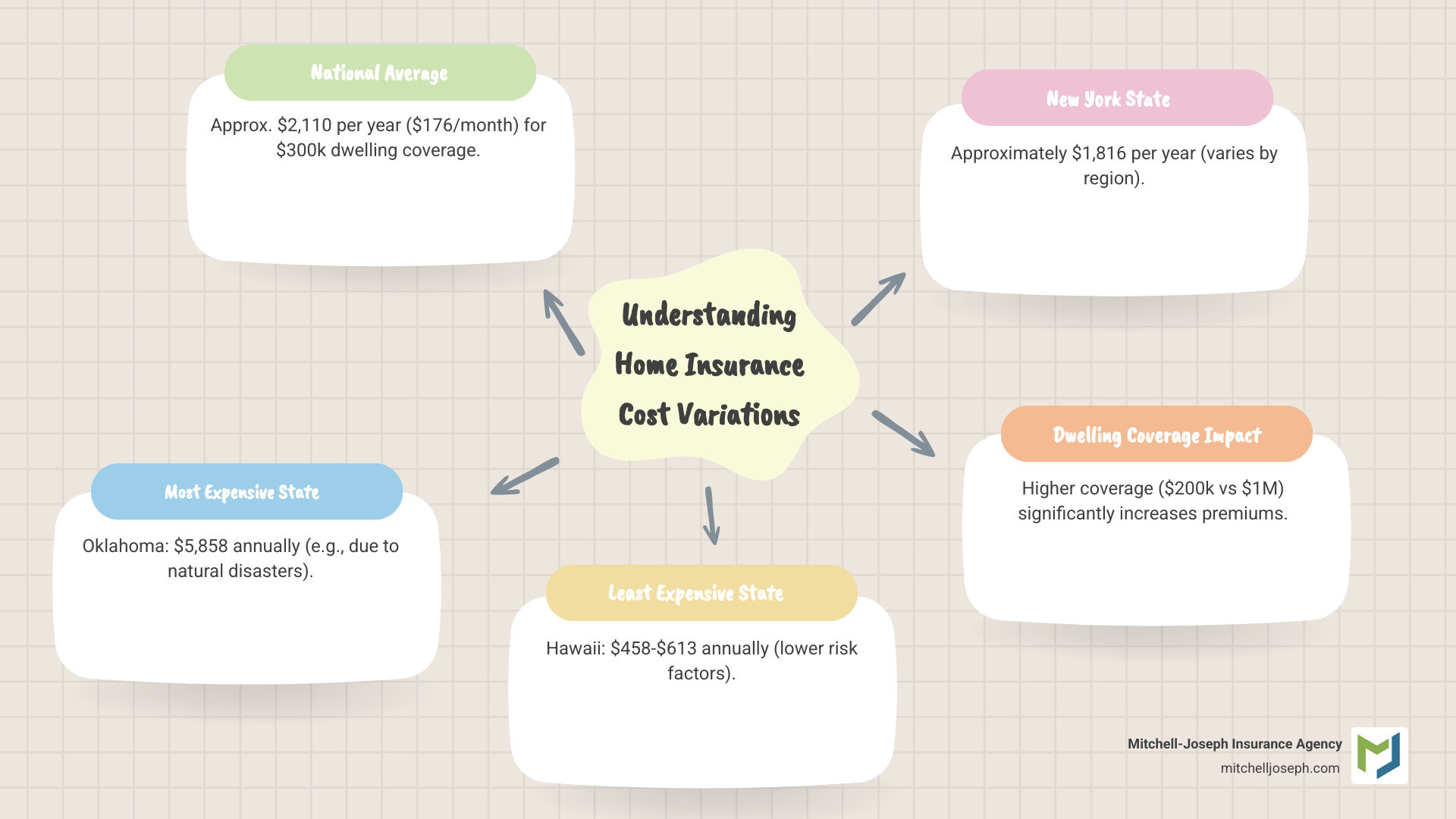
The average home insurance cost in the U.S. is about $2,110 per year for a policy with $300,000 in dwelling coverage. However, this figure is just a starting point, as costs vary dramatically by location:
- National Average: $1,903 – $2,601 annually
- New York State: Approximately $1,816 per year
- Most Expensive State: Oklahoma at $5,858 annually
- Least Expensive State: Hawaii at $458-613 annually
Your final premium depends on your home’s location, replacement value, age, construction, deductible, and credit score.
If you’re a homeowner in upstate New York, you’ve likely noticed that home insurance costs are climbing. Rates have increased nationwide due to rising material costs, more frequent severe weather, and insurers leaving high-risk areas. States prone to natural disasters like tornadoes and hurricanes face the steepest premiums, sometimes exceeding $5,000 per year.
The good news is that understanding what influences your premium puts you in control. By making informed decisions about coverage, deductibles, and discounts, you can save hundreds of dollars annually and avoid overpaying.
I’m Jeffrey Joseph, and at Mitchell-Joseph Insurance Agency, I’ve been helping homeowners across the Finger Lakes steer the complexities of average home insurance cost since 1999. My goal is to provide the straight facts on what drives your premium and how to secure the best rate for your New York home.
Understanding the Fundamentals of Home Insurance

Home insurance is a critical expense for any homeowner. While not legally mandatory, your mortgage lender will require it to protect their investment. Even if you own your home outright, going without insurance is a major financial risk, as a single event like a fire or storm could wipe out your savings.
A standard policy is a comprehensive safety net. Understanding its components helps explain why the average home insurance cost provides such broad protection.
What a Standard Policy Covers (and What It Doesn’t)
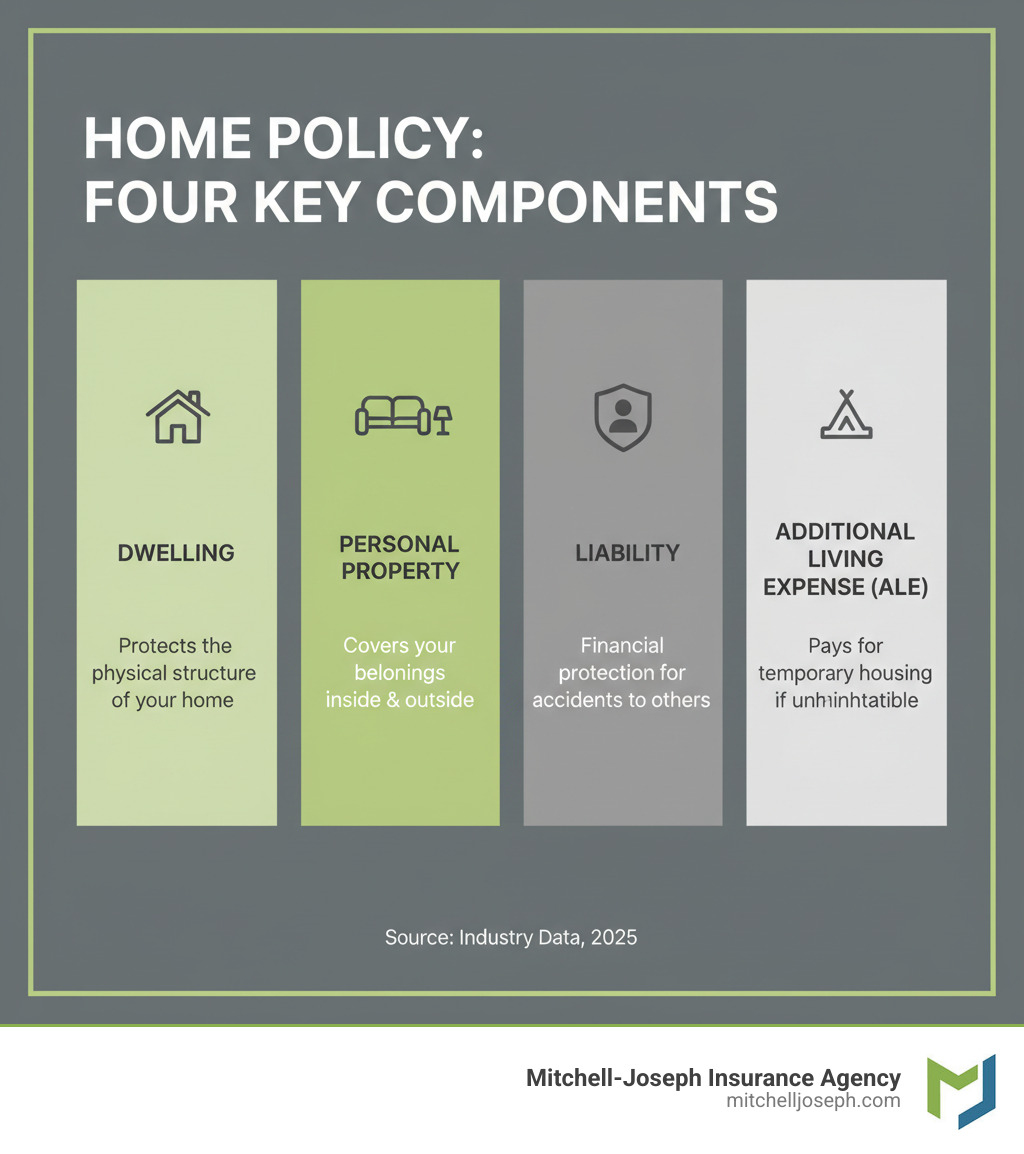
A typical policy includes four key protections:
- Dwelling Coverage: This is the core of your policy, protecting the physical structure of your house—walls, roof, foundation, and attached structures like a garage. It pays to repair or rebuild if damaged by a covered event.
- Personal Property Coverage: This protects your belongings inside the home, such as furniture, electronics, and clothing. This coverage often extends to items stolen outside your home, like a laptop from your car.
- Personal Liability Protection: This is critical coverage that protects you from lawsuits if someone is injured on your property. It covers legal fees, medical bills, and settlement costs. We recommend at least $1 million in liability coverage.
- Additional Living Expenses (ALE): If a disaster makes your home uninhabitable, ALE covers temporary living costs like hotel rooms and meals while repairs are underway.
It’s crucial to insure your home for its replacement cost (the cost to rebuild from scratch) not its market value (what it would sell for). Your insurance needs to cover the actual cost of reconstruction.
Standard policies have important exclusions. Damage from floods and earthquakes is not covered; you need separate policies for these risks. Policies also won’t cover damage from neglect or poor maintenance. We often recommend endorsements for risks like sewer backup, especially in upstate New York.
How Climate Change and Claims History Affect Premiums
Premiums are rising, and two major factors are climate change and your personal claims history.
- Impact of Natural Disasters: More frequent and severe weather events are leading to massive insured losses, as detailed in reports like the Billion-Dollar Weather and Climate Disasters. These payouts force insurers to raise rates for everyone to cover the increased risk.
- Rising Rebuilding Costs: Inflation has driven up the cost of construction materials and labor. This means the potential cost to rebuild your home is higher, which translates directly to higher premiums.
- Your Claims History: Filing a claim can increase your future rates. Insurers see a history of claims, especially frequent, small ones, as a sign of higher risk. It’s often wise to pay for minor repairs out-of-pocket to protect your claims-free discount. Water-related claims are particularly scrutinized by insurers.
Understanding these factors helps you make smarter decisions about your coverage and when to use it.
What is the Average Home Insurance Cost and What Drives It?

The average home insurance cost in the U.S. is between $1,903 and $2,601 annually, but this number is just a benchmark. Your actual premium is based on a specific risk assessment. For homeowners in New York, the average is around $1,816 per year, which is slightly below the national average. Insurers calculate these costs based on the likelihood and potential expense of a claim, as detailed in resources like an official report on homeowners insurance from the National Association of Insurance Commissioners.
Breaking Down the National Average Home Insurance Cost
The national average hides dramatic state-by-state differences driven by factors like natural disaster risk and local rebuilding costs.
- Most Expensive States: States in Tornado Alley or hurricane-prone regions have the highest rates. Oklahoma leads at $5,858 to $6,210 annually, followed by Nebraska ($4,125 – $4,505) and Florida ($3,508 – $4,419).
- Least Expensive States: States with milder weather enjoy lower premiums. Hawaii has the lowest rates at $458 to $613 per year, with Vermont ($593 – $950) and Delaware ($716 – $1,025) also being very affordable.
New York’s position below the national average is due to a lower risk of catastrophic events compared to other regions, though winter storms and localized flooding are still factors.
Top Factors That Determine Your Personal Premium
While state averages provide a baseline, your personal premium is determined by these key factors:
- Location: Your specific ZIP code matters. Proximity to risks like flood zones or areas with higher crime rates will increase your premium.
- Proximity to Fire Protection: Being close to a fire station and hydrants lowers your rate, as help can arrive faster to limit damage.
- Home’s Replacement Value: The cost to rebuild your home is a primary driver. Larger homes with high-end materials cost more to insure.
- Property Age and Condition: Newer homes built to modern codes are cheaper to insure. Older homes with outdated electrical or plumbing systems are considered higher risk.
- Construction Materials: Fire-resistant materials like brick and impact-resistant roofing can earn you lower premiums compared to wood siding or older shingles.
- Coverage Limits and Deductibles: You can control your premium by adjusting your coverage. Higher coverage limits increase your premium, while a higher deductible (what you pay out-of-pocket) will lower it.
- Your Credit Score: In most states, insurers use a credit-based insurance score to predict risk. A good credit score can significantly lower your average home insurance cost, while a poor score can increase it substantially.
How to Secure the Best Rate on Your Home Insurance

While you can’t control all the factors that influence your average home insurance cost, you have more power than you think. The single most important action you can take is to shop around. Different insurers weigh risks differently, leading to a wide range of quotes for the same property. We recommend reviewing your policy annually to ensure you’re still getting the best value.
Smart Strategies to Lower Your Average Home Insurance Cost
Here are practical strategies to lower your premium:
- Raise Your Deductible: This is the fastest way to reduce your premium. Increasing your deductible from $500 to $1,000 or $2,000 can lead to significant annual savings. Just be sure you have that amount available in an emergency fund.
| Deductible Amount | Average Annual Premium | Potential Annual Savings (vs. $500) |
|---|---|---|
| $500 | $2,090 | N/A |
| $1,000 | $1,727 | $363 |
| $2,000 | $1,523 | $567 |
Note: These are approximate savings based on national averages—your specific situation may vary.
- Ask for Discounts: Don’t leave money on the table. The most common discount is for bundling your home and auto insurance. You can also get discounts for installing security systems, smoke detectors, and water leak sensors.
- Maintain a Good Claims History: Insurers reward homeowners who are claims-free for several years. Be strategic about filing small claims; it may be cheaper in the long run to pay for minor repairs yourself.
- Improve Your Credit Score: In New York, a better credit score can lead to a lower insurance score, resulting in a cheaper premium. Paying bills on time and managing debt wisely pays off.
- Make Home Upgrades: A new roof, updated plumbing, or modern electrical systems reduce your home’s risk profile and can earn you a discount.
Getting a Personalized Quote for Your New York Home
National averages and general strategies only go so far. Your home in Honeoye Falls is unique, and your insurance should be too. A personalized approach is essential to find the right coverage at the best price.
That’s where we come in. As an independent, family-owned agency, Mitchell-Joseph Insurance Agency works for you, not the insurance carriers. With over 200 years of combined experience and partnerships with 24 different insurance companies, we shop the market on your behalf to find the most competitive rates for your needs.
We know the Finger Lakes region and understand the specific risks our communities face. Let us do the heavy lifting and find you the best value.
Get a tailored homeowners insurance quote for your NY property

