

Average cost of renters insurance is a common query for those looking to protect their belongings without breaking the bank. Generally, renters insurance costs between $15 and $20 per month, which totals approximately $190 to $225 annually. This cost can vary based on factors such as the coverage limits you choose, your location, and your deductible. Many renters find the peace of mind worth it for coverage that includes personal property protection, liability coverage, and additional living expenses if your home becomes uninhabitable.
Renters insurance can seem straightforward, but it’s important to understand what goes into determining these costs. Factors such as your location, the level of coverage you select, and whether your insurer offers discounts for safety devices or bundling with other policies all play a part. California, for instance, prohibits using credit scores in determining insurance rates, which can affect the pricing structure there in comparison to other states.
I’m Jeffrey Joseph, and I’ve spent years advising people just like you on smart insurance choices. Over the years, I’ve gathered insights and expertise in simplifying complex topics like the average cost of renters insurance. Let’s dive deeper into what makes up these costs and how you can best protect your valuables.
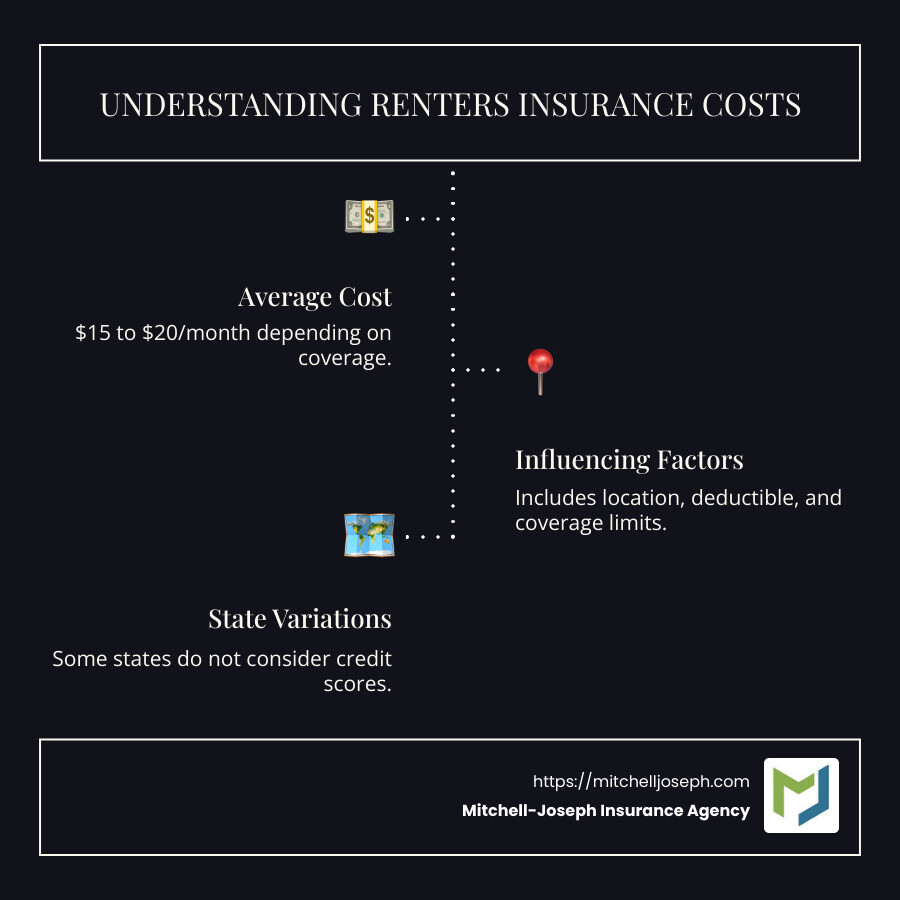
Average Cost of Renters Insurance
Renters insurance is generally affordable, with average costs ranging from $15 to $20 per month. This translates to about $190 to $225 annually. But why such a range? Well, it largely depends on where you live and the specific coverage you choose.
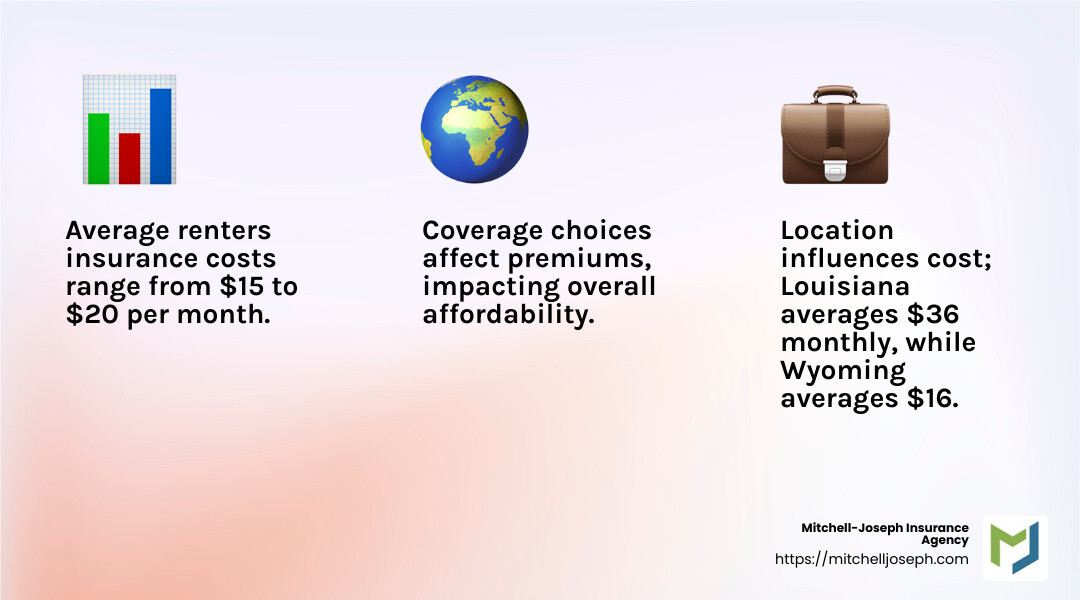
State Variations
State variations can significantly impact the cost of renters insurance. For instance, if you live in Louisiana, you might pay as much as $36 per month, one of the highest in the country. In contrast, Wyoming offers some of the cheapest rates, averaging just $16 monthly.
Why do these differences exist? It’s all about risk. States prone to natural disasters like hurricanes or wildfires often see higher insurance costs. On the flip side, states with fewer claims and lower risks generally offer cheaper rates.
Average Monthly Cost
Across the nation, the average monthly cost of renters insurance is about $18. This figure represents a middle ground, balancing out the highs and lows across different states. For many renters, this is a small price to pay for the peace of mind that comes with knowing your belongings are protected.
Key Takeaway: While the average cost of renters insurance is a helpful guideline, your actual price may vary. Consider your location and personal needs to find the best fit for your budget and coverage requirements.
Factors Influencing Renters Insurance Costs
When it comes to renters insurance, several factors can influence how much you’ll pay. Understanding these elements can help you make informed decisions and potentially save money.
Location
Where you live matters a lot. Renters insurance costs can vary significantly based on your location. If you live in an area with high crime rates or frequent natural disasters, like wildfires in California, you’ll likely pay more. Insurers see these areas as riskier, which translates to higher premiums.
Deductible
Your deductible is the amount you pay out-of-pocket before your insurance kicks in. Opting for a higher deductible can lower your monthly premium. However, make sure it’s an amount you can comfortably afford if you need to file a claim.
Coverage Type
The type of coverage you choose also impacts your premium. Basic policies cover standard risks like theft or fire, but if you add extra coverage for high-value items like jewelry or electronics, expect your premium to rise. These items require higher coverage limits to ensure they’re fully protected.
Past Claims
Your claims history can affect your insurance costs. If you’ve filed claims in the past, insurers may see you as a higher risk, leading to increased premiums. For instance, a renter in California with a recent theft claim could pay nearly 59% more than someone with no claims.
Credit History
While many states consider your credit score when determining insurance rates, California doesn’t allow insurers to use credit history as a factor. This means your premium in California won’t be affected by your credit score, unlike in many other states.
Key Takeaway
Understanding these factors can help you steer renters insurance. By considering your location, deductible, coverage needs, and claims history, you can better estimate what your renters insurance might cost.
How Much Renters Insurance Do You Need?
Determining how much renters insurance you need is crucial to ensure you’re adequately covered without overspending. Let’s break down the essentials: personal property value, liability coverage, and creating a home inventory.
Personal Property Value
Start by assessing the value of your personal belongings. This includes everything from your furniture and electronics to your clothing and kitchenware. Many people underestimate this value, which can lead to insufficient coverage.
One practical step is to create a detailed home inventory. Walk through each room and list your items, including descriptions, quantities, and estimated values. If possible, note serial numbers and purchase dates. Taking photos can also be incredibly helpful.
Liability Coverage
Liability coverage protects you if someone gets injured in your home and you’re found responsible. It can cover medical costs and legal fees, which can be quite expensive.
A standard renters insurance policy often includes $100,000 in liability coverage, but you might need more depending on your circumstances. Consider the potential risks and costs when choosing your coverage limit.
Home Inventory
A comprehensive home inventory is not just about knowing what you own. It also helps you decide how much coverage you need. By understanding the total value of your belongings, you can choose a policy that covers everything adequately.
Plus, having a home inventory can simplify the claims process if you ever need to use your insurance. Make sure to store a copy in a safe place, like a fireproof box or a digital cloud service.
By carefully evaluating your personal property value and liability needs, and maintaining a thorough home inventory, you’ll be better prepared to select the right renters insurance coverage. This approach ensures you’re protected without paying for more coverage than necessary.
Ways to Lower Your Renters Insurance Premium
Renters insurance is generally affordable, but there are still smart ways to reduce your premium even further. Here are some strategies to consider:
Security Devices
Installing basic security devices can lead to significant savings. Smoke detectors, burglar alarms, and sprinkler systems are common features that insurers value. They reduce the risk of damage or theft, which could qualify you for a discount on your premium.
Bundling Policies
Consider bundling your renters insurance with other policies, like auto or life insurance. Many insurers offer discounts when you purchase multiple policies from them. This is known as “bundling,” and it can lower your overall insurance costs.
Deductible Adjustments
Adjusting your deductible is another way to manage your premium. A higher deductible means you’ll pay more out of pocket in the event of a claim, but it often results in a lower monthly premium. Make sure the deductible you choose is an amount you’re comfortable paying if necessary.
By implementing these strategies, you can effectively lower your renters insurance premium while maintaining the coverage you need.
Frequently Asked Questions about Renters Insurance
What is the average cost per month for renters insurance?
The average cost of renters insurance is typically between $15 and $20 per month. However, your actual cost can vary depending on where you live. For example, in New York, the average annual cost is around $150, which breaks down to about $12.50 per month. Meanwhile, states like Louisiana may see higher rates due to increased risks of natural disasters. The key takeaway? Your location plays a big role in determining your insurance costs.
Is renters insurance worth it for an apartment?
Absolutely. Renters insurance provides essential coverage benefits that protect your personal belongings against theft, fire, and other unexpected events. Additionally, it includes liability protection, which covers legal costs if someone is injured in your apartment. Imagine a friend slipping and falling during a visit. Without insurance, you could be responsible for their medical bills. Renters insurance ensures you’re not caught off guard by such expenses.
How does my credit score affect my renters insurance premium?
Your credit score can significantly impact your renters insurance premium. Insurers often use credit scores to assess risk. A higher score indicates lower risk, which can lead to reduced premiums. Conversely, a lower score might result in higher costs.

To manage your premiums effectively, consider improving your credit score. This can be done by paying bills on time, reducing debt, and regularly checking your credit report for errors. These actions can lead to premium adjustments that make your renters insurance more affordable over time.
Conclusion
At Mitchell-Joseph Insurance Agency, we understand that choosing the right renters insurance can feel overwhelming. That’s why we focus on providing personalized service custom to your unique needs.
Our experienced team, with over 200 years of combined expertise, is dedicated to helping you find the most suitable coverage. We work with 24 different insurance companies to offer competitive quotes, ensuring you get the best value for your money.
Whether you’re looking to protect your personal belongings, secure liability coverage, or both, we can help you customize a policy that fits your lifestyle and budget. Our goal is to make sure your insurance experience is as straightforward and stress-free as possible.
Ready to explore your options? Contact us today to learn more about how we can help protect your home and belongings with a renters insurance policy designed just for you.

