

Why Understanding Auto Insurance Payment Options Matters
Auto insurance payment options have evolved, giving drivers more flexibility and convenience than ever. Whether you prefer to pay monthly, quarterly, or in full, understanding your choices can help you save money and maintain consistent coverage.
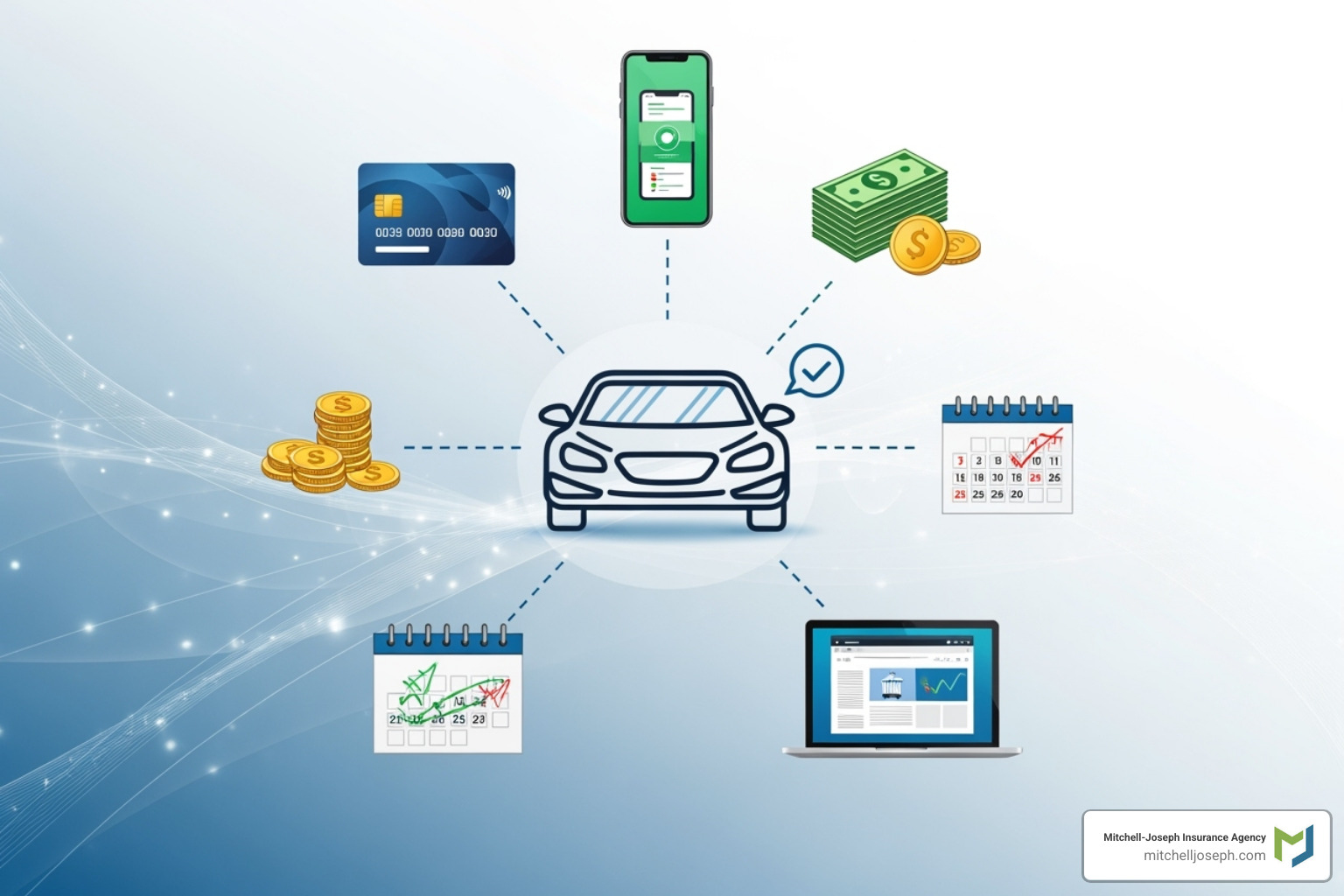
Common auto insurance payment methods include:
- Online payments – Through insurer websites or mobile apps
- Automatic payments – Electronic funds transfer (EFT) or recurring card payments
- Traditional methods – Phone, mail, or in-person payments
- Credit/debit cards – Often with processing fees
- Bank transfers – Usually the most cost-effective option
Payment frequency options typically include:
- Annual or semi-annual – Often includes pay-in-full discounts
- Monthly installments – Budget-friendly but may include fees
- Quarterly payments – A middle-ground option
Research shows that drivers who paid premiums in full saved about 4.7% on average in 2021. However, the best payment option depends on your budget.
As Jeffrey Joseph from Mitchell-Joseph Insurance Agency, I’ve helped clients across the Finger Lakes region find convenient, cost-effective auto insurance payment options for over 20 years. The key is matching your payment method and frequency to your financial goals and cash flow needs.

Quick auto insurance payment options terms:
Choosing Your Payment Frequency: Full, Monthly, or In-Between?
How often you pay your auto insurance premium affects more than just convenience—it can change your total cost. Your payment schedule is a key part of your budget management strategy. For a complete picture of what influences your total costs, check out our guide on Factors That Determine Your Auto Insurance Premium.
The main payment frequencies are lump-sum payments (annual or semi-annual) and installment plans (monthly or quarterly), each with its own trade-offs.
Paying in Full (Annually or Semi-Annually)
Paying your entire premium upfront is often the most cost-effective choice. Most insurers offer a pay-in-full discount, with drivers saving an average of 4.7% in 2021. This percentage adds up, and you get the convenience of one less bill to manage for six to twelve months. This approach shows financial planning discipline and eliminates the risk of policy lapses from forgotten payments.
However, the large upfront cost isn’t realistic for everyone. If it would strain your budget or emergency fund, monthly payments may be a better fit.
Monthly Installment Plans
Monthly payments are popular because they are budget-friendly, spreading the cost into smaller, manageable amounts. This option is ideal for steady cash flow, but most insurers charge potential installment fees for processing multiple payments. These service charges (often around $5 per payment) add up. While convenient, you’ll likely pay more overall than with an annual plan for the privilege of avoiding large payments.
Quarterly and Other Payment Schedules
Quarterly payments offer a middle-ground option, with two or four payments per policy term. This schedule helps balance discounts and budget concerns, often with lower fees than monthly plans and without the large upfront cost of an annual payment. This less common option works well for those with periodic income or who budget on a longer cycle. It’s worth asking your insurer if it fits your financial rhythm.
The best payment frequency depends on your personal financial situation. We’re here to help you weigh the pros and cons to find the option that gives you the most peace of mind and the best value.
A Breakdown of Common Auto Insurance Payment Options
Today’s auto insurance payment options are varied, offering something for everyone, from tech-savvy users to those who prefer a phone call. While most insurers offer similar options, details can vary. At Mitchell-Joseph Insurance Agency, we work with 24 different companies and have seen nearly every payment method. For more details, visit our Payments & Claims page.
Digital Payments: Online, Mobile, and EFT
Digital payments are now dominant because they are fast, convenient, and flexible.
- Electronic Funds Transfer (EFT): With EFT, your insurer automatically deducts your premium from your bank account. Many insurers reward EFT use by reducing their service fees, sometimes from $5.00 to just $1.00 per payment.
- Debit card payments: These work like EFT, but you must initiate each payment yourself, offering more hands-on control.
- Online portals: Most insurers have secure online portals for making payments, reviewing history, and updating information. Many offer a “guest payment” option (policy number and date of birth required), which may have a small processing fee (around $3.95).
- Mobile apps: These mirror website functionality for smartphones, allowing you to pay, view documents, and even file claims.
- Digital wallets: Wallets like PayPal are still rare for auto insurance payments, though this may change.
Traditional Methods: Mail, Phone, and In-Person
Traditional payment methods are still widely available for those who prefer them.
- Pay-by-phone: This is very popular, with most insurers offering 24/7 automated systems and customer service representatives during business hours.
- Mailing a check or money order: A classic method. Remember to write your policy number on the check and allow for mail time to ensure it’s postmarked by the due date. Avoid sending cash by mail.
- Paying in person: Paying at a local agent’s office, like Mitchell-Joseph Insurance Agency, offers a personal touch. We can accept payments and answer any questions you have on the spot.
The beauty of having all these auto insurance payment options is that you can choose what works best for your lifestyle. Whether you’re in Honeoye Falls, Rochester, or anywhere else in New York, we’re here to help you find the payment method that makes managing your insurance as easy as possible.
The Pros and Cons of Paying with a Credit Card
Paying your auto insurance with a credit card to earn rewards or build credit seems appealing, but it’s a financial strategy that requires careful consideration. If you’re pondering this approach, you might find more insights in articles like Should you pay for your insurance with a credit card? Here’s what you need to know.

Advantages of This Auto Insurance Payment Option
- Earning Rewards: Many credit cards offer rewards like cash back or travel points. Using your card for insurance can help you accumulate these rewards faster.
- Consumer Fraud Protection: Credit cards offer better fraud protection than debit cards. The credit card company, not your bank account, is typically liable for fraudulent charges.
- Building Credit History: For those with good spending habits, paying your insurance with a credit card and paying the balance in full each month can positively impact your credit score.
- Payment Flexibility: A credit card can help with cash flow management, as the funds don’t leave your bank account until the credit card bill is due.
Disadvantages of This Auto Insurance Payment Option
- High-Interest Debt: If you carry a balance, high credit card interest rates can quickly negate any rewards earned, turning a good deal into a costly burden.
- Potential Processing Fees: Some insurers charge a processing fee for credit card payments. This fee can reduce or eliminate the value of any rewards earned.
- Damaging Credit Score: A large insurance payment could increase your credit utilization ratio. Pushing this ratio above 30% can negatively affect your credit score, as noted by sources like Experian.
- Risk of Overspending: Using a credit card can encourage overspending. If you tend to carry a balance, this method adds unnecessary financial risk.
In summary, paying with a credit card can be a smart move if you pay the balance in full each month and your insurer doesn’t charge high processing fees. Otherwise, it’s better to explore other auto insurance payment options to avoid high-interest debt.
Opening up Savings: Discounts and Automated Payments
You can reduce your auto insurance premiums by making smart choices about how you pay. These simple billing preferences can lead to real savings. If you’re looking for ways to reduce your costs, check out our guide on Cheap Auto Insurance Rochester NY for more money-saving strategies.
The Power of “Pay-in-Full” Discounts
Paying your premium in full often comes with a pay-in-full discount, which averaged 4.7% in 2021. Insurers offer this to reduce their administrative work and the risk of missed payments. Beyond the discount, paying upfront avoids the installment fees that are added to monthly or quarterly payments. This method also simplifies your insurance billing into a “set it and forget it” situation for six to twelve months, offering peace of mind and demonstrating financial discipline.
How to Set Up Auto-Pay for Convenience and Savings
Automatic payments eliminate the hassle of remembering due dates. Most insurers offer auto-pay through Electronic Funds Transfer (EFT) or recurring credit card payments. Once set up, payments are deducted automatically, so you’ll never face late fees for forgetting a payment. Many insurers offer a small discount for auto-pay because it reduces their administrative work. Some also reduce service fees for using EFT, sometimes from $5.00 to just $1.00, which adds up to significant savings.
The “set it and forget it” convenience is a major benefit. To set it up, log into your insurer’s online portal or app, or call customer service. Ensure you have sufficient funds in your account to avoid overdraft fees, which can negate your savings.
Other Billing-Related Discounts
- Paperless Billing Discount: This is an easy way to save. Many insurers offer it for receiving documents electronically, which also reduces clutter and helps the environment.
- Bundling Policies: Combining policies, like auto and home insurance, with the same carrier often leads to significant discounts and simplifies your billing.
We encourage all our clients to explore these easy ways to save. Every dollar saved on your premium is a dollar that stays in your wallet.
What Happens If You Miss a Payment?
Missing an auto insurance payment can seem like a minor slip-up, but it can create a domino effect of negative consequences for your coverage, finances, and future rates. If you’ve been Noticing Higher Auto Insurance Costs?, a previous missed payment could be part of the reason why.

Understanding Your Policy’s Grace Period
Most insurers offer a grace period, a short window after your due date to make a payment without losing coverage. The length of the grace period varies by insurer and state, but your coverage typically remains active during this time. Your insurer will send a cancellation notice with a final payment date. Treat this notice with urgency and take immediate action.
Consequences of a Late or Missed Payment
If you miss the grace period deadline, the consequences can escalate quickly.
- Late Fees: You’ll be charged a late fee, an unnecessary expense that is often just the start of the problems.
- Policy Cancellation and Lapse in Coverage: You’ll receive a policy cancellation notice, leading to a lapse in coverage. Driving without insurance is illegal and can result in fines, license suspension, or even jail time.
- Financial Liability: If you have an accident during a coverage lapse, you are personally liable for all damages and injuries, which could amount to hundreds of thousands of dollars.
- SR-22 Requirement: Your state’s DMV might require an SR-22 form, a certificate of insurance for high-risk drivers, which makes finding affordable coverage more difficult.
- Higher Future Premiums: A coverage gap will likely lead to higher future premiums. Insurers see this as a red flag, and you’ll lose continuous coverage discounts.
- Credit Score Damage: If your unpaid bill goes to collections, it will damage your credit score, affecting future financial opportunities.
Maintaining continuous coverage is critical. If you’re having trouble making a payment, contact us or your insurer immediately. We can explore different auto insurance payment options or find solutions before a small problem becomes a big one.
Frequently Asked Questions about Auto Insurance Payment Options
Here are answers to the most common questions we receive about auto insurance payment options. For broader insurance topics, our Auto Insurance FAQs page has even more helpful information.
Do all insurance companies offer the same payment methods?
No, payment methods and fees vary significantly between insurers. For example, some carriers accept PayPal while others may offer more flexible installment plans or lower fees for certain payment types. Fee structures also differ; one insurer might charge a $5 processing fee for credit cards, while another waives it for bank transfers. As an independent agency representing 24 different insurance companies, we can compare payment methods and fees to find a carrier that aligns with your budget and preferences.
Can paying my car insurance on time build my credit score?
Auto insurance payments don’t directly impact your credit score, as insurers don’t report your payment history to credit bureaus. However, if you pay your premium with a credit card and pay the balance on time, that responsible behavior can help build your credit score. Conversely, missed payments that go to collections will hurt your credit score, making future credit and housing more difficult to obtain.
How can I change my payment method or frequency?
Most insurers make it easy to change your auto insurance payment options. The easiest way is through your insurer’s online portal or mobile app, where you can update payment details or frequency 24/7. Calling customer service is another option; a representative can guide you through the process and explain how changes might affect your premium. As your independent agent, we can also help you make these changes, simplifying the process.
Changing your payment frequency might affect your overall premium. For example, switching from monthly to annual payments could earn you a discount. We recommend confirming any changes and associated costs before making the switch.
Find the Best Payment Plan for Your Needs
Choosing the right auto insurance payment options is about finding what fits your lifestyle and budget. The key is to find a plan that supports your financial goals without adding stress. Whether you prefer the convenience of auto-pay, the control of manual payments, or the savings from paying in full, the right option exists for you. Your payment plan should work for you.
This is where an independent agency like Mitchell-Joseph Insurance Agency helps. With decades of experience serving the Finger Lakes region, our team is committed to finding personalized solutions. As an independent, family-owned agency, we work with 24 different carriers. This allows us to compare not just coverage, but also the auto insurance payment options and fees, giving you a much broader range of choices.
Whether you’re in Honeoye Falls, Pittsford, Victor, or any of our service communities across New York, we’re here to help you steer these choices with confidence. We’ll take the time to understand your budget and preferences to match you with the right coverage and payment plan.
Don’t let payment complexities keep you from getting the protection you need. Let us handle the comparison shopping and guide you toward the solution that brings you peace of mind and fits your wallet. Get a Rochester Auto Insurance Quote Today! and find how much easier insurance can be when you have the right team on your side.

