

Why Medical Professionals Deserve Better Auto Insurance Rates
Auto insurance for medical professionals comes with unique challenges and opportunities that most healthcare workers don’t fully understand. While doctors, nurses, and other medical staff face higher stress levels and irregular driving patterns, they also qualify for exclusive discounts and specialized coverage options that can significantly reduce their premiums.
Key Auto Insurance Benefits for Medical Professionals:
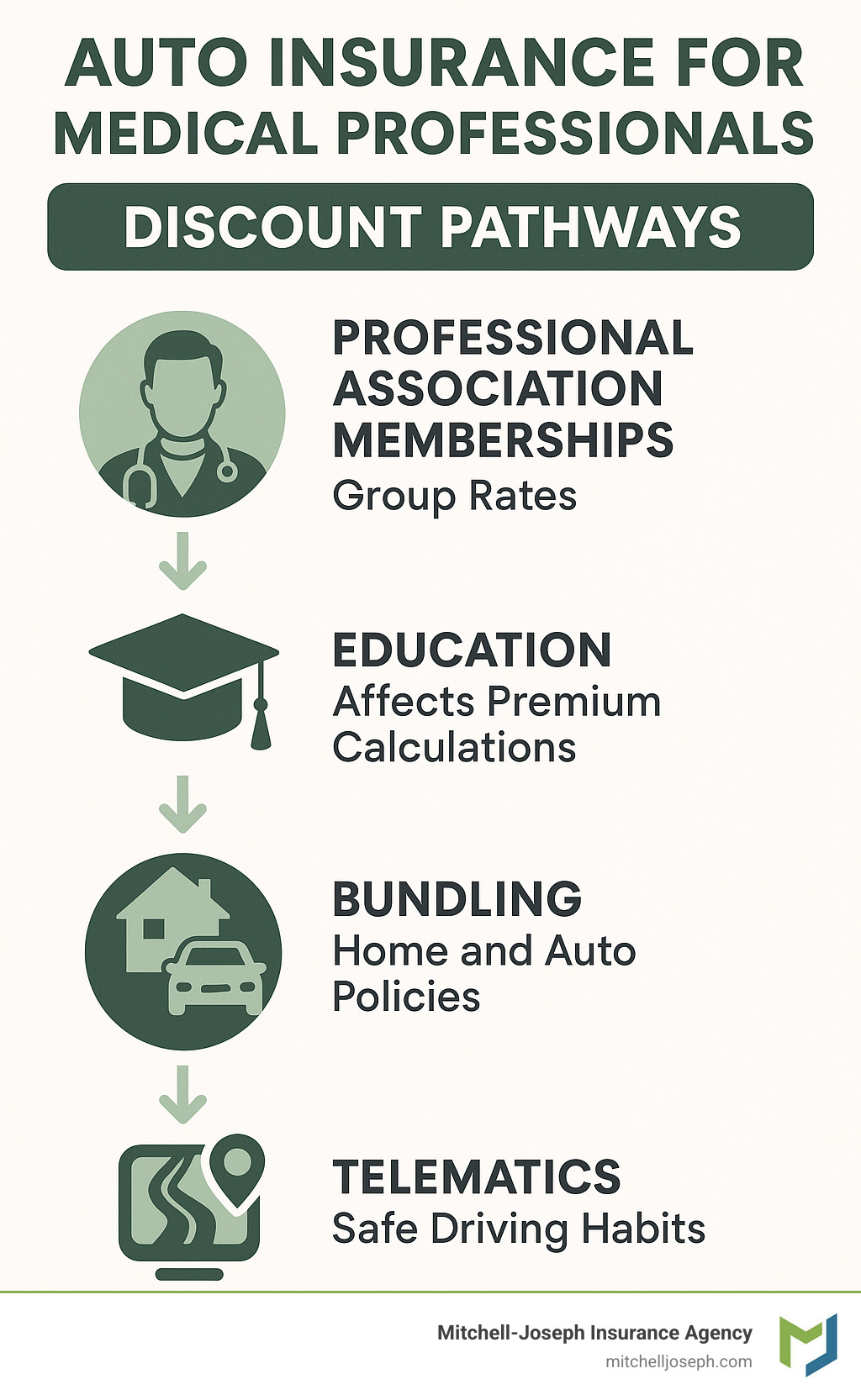
– Professional association discounts – Up to 20% savings through AMA, OMA, and other medical groups
– Education-based rate reductions – Lower premiums for advanced degrees and professional certifications
– Bundling opportunities – Save up to 35% when combining home and auto policies
– Occupation-specific programs – Exclusive group rates not available to the general public
– Flexible coverage options – Policies designed for shift work, on-call duties, and work-related driving
Despite working long shifts and dealing with high-stress situations, medical professionals often pay more for auto insurance than necessary. Many insurers offer specialized discounts for healthcare workers, but these savings aren’t always advertised or easy to find.
The average healthcare worker can save hundreds of dollars annually by leveraging professional discounts, but only if they know where to look and how to qualify.
I’m Jeffrey Joseph, and I’ve been helping medical professionals in the Finger Lakes region secure affordable auto insurance for medical professionals since 1999 through Mitchell-Joseph Insurance Agency. My experience working with doctors, nurses, and healthcare facilities has shown me exactly which carriers offer the best rates and coverage for your unique needs.
Glossary for auto insurance for medical professionals:
– auto insurance for business owners
– auto insurance for families
– auto insurance rochester
Why Medical Professionals Need Custom Coverage
If you’ve ever driven home after a grueling 12-hour shift, you already understand why auto insurance for medical professionals needs to be different. Your work creates driving situations that most people never face, and unfortunately, standard insurance policies don’t always account for these unique challenges.
After helping hundreds of doctors, nurses, and healthcare workers across Rochester, Canandaigua, and the Finger Lakes region, I’ve seen how your profession affects your driving risks and insurance needs.
Unique Risk Factors in Healthcare Driving
Fatigue becomes your biggest enemy after those marathon shifts. When you’ve been awake for 18 hours straight – which happens regularly in healthcare – your driving ability is similar to someone with a blood alcohol level of 0.05%. This creates a risk profile that traditional insurance companies struggle to properly evaluate.
Your mileage patterns are completely unpredictable. While most people drive the same route to work every day, you might get called in for emergencies, travel between multiple facilities, or make house calls to patients. This irregular driving pattern often means higher annual mileage and more exposure to accidents during off-peak hours.
Hospital parking is a nightmare for more reasons than just finding a spot. Urban medical centers have higher rates of vehicle break-ins, tight parking spaces that lead to dings and scratches, and poor lighting that increases accident risk.
Impact on Premiums
Research shows that nurses are actually safer drivers than doctors, which translates into different premium structures. Nurses typically file fewer accident claims than physicians, partly because they often drive less expensive vehicles and work more predictable shifts.
Doctors face higher premiums for several reasons. Specialists often travel between multiple practice locations, increasing their road exposure. Many physicians drive luxury vehicles, which cost more to repair or replace.
The good news? Your education works in your favor. Insurance companies recognize that medical professionals with advanced degrees statistically have fewer accidents. Your medical degree, nursing certification, or pharmacy doctorate can directly reduce your premiums by around 4%.
Auto Insurance Discounts and Savings Programs for Medical Professionals
If you’re a healthcare worker, you’re probably paying too much for car insurance. Auto insurance for medical professionals comes with fantastic discount opportunities that most people don’t even know exist.
After helping hundreds of doctors, nurses, and healthcare workers in the Rochester area find better rates, I’ve learned that the average medical professional can save between $300-800 annually just by taking advantage of discounts they already qualify for.
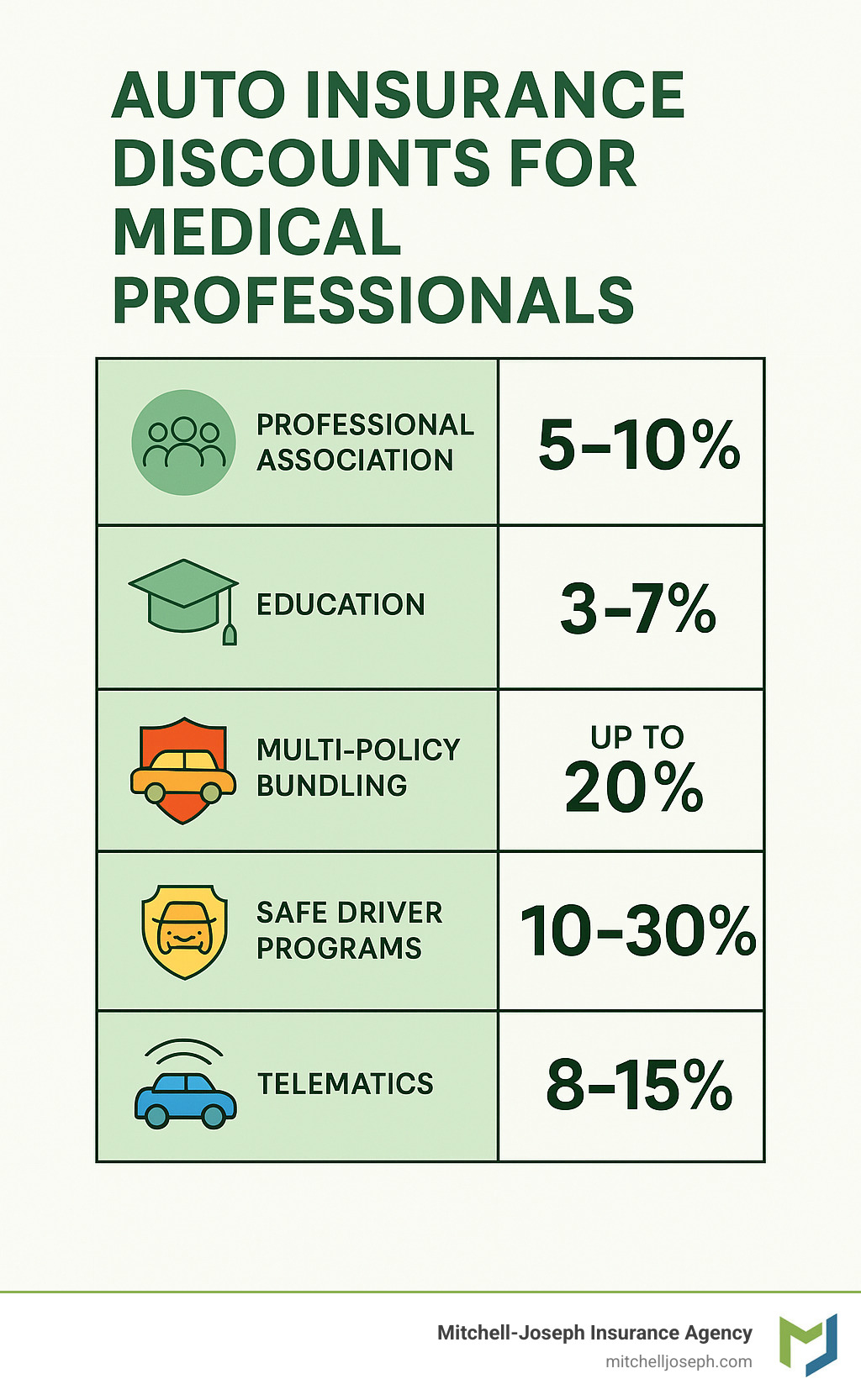
The biggest savings come from affinity group discounts through your professional associations, which can cut your premiums by 5-20%. Multi-policy bundling can save up to 35% on your home coverage when you combine home and auto policies.
Occupational & Association Discounts
Your professional memberships are worth more than you might think when it comes to auto insurance for medical professionals. These aren’t just small discounts – we’re talking about substantial savings that can add up to hundreds of dollars each year.
American Medical Association members get access to exclusive group rates that aren’t available to anyone else. These programs typically offer 10-15% discounts compared to regular rates, plus extras like accident forgiveness.
Ontario Medical Association group rates offer unique benefits for those working near the Canadian border. Their Accident-Free Protection means your first at-fault accident won’t raise your premium, and you get 24/7 roadside assistance anywhere in North America.
Pharmacists and nurses have their own specialized programs through state associations and nursing organizations that include perks like identity theft coverage.
Bundling Opportunities
This is where medical professionals can really maximize savings. When you bundle your auto insurance with other policies, the math works heavily in your favor.
Home and auto combinations regularly save healthcare workers 20-35% on their home insurance premiums. If you’re a specialist with a $400,000 home, that 25% discount could save you $500-800 annually.
Umbrella coverage makes particular sense for medical professionals. Given your liability exposure, an umbrella policy provides an extra $1-5 million in liability protection for less than $300 per year when bundled.
For more detailed information about protecting your family’s coverage needs, check out our guide on Auto Insurance for Families.
How to Qualify, Apply & Document Your Eligibility
Getting the auto insurance for medical professionals discounts you deserve requires the right paperwork and approach. After helping hundreds of healthcare workers steer this process, I’ve learned that preparation is everything.
Step-by-Step Application Checklist
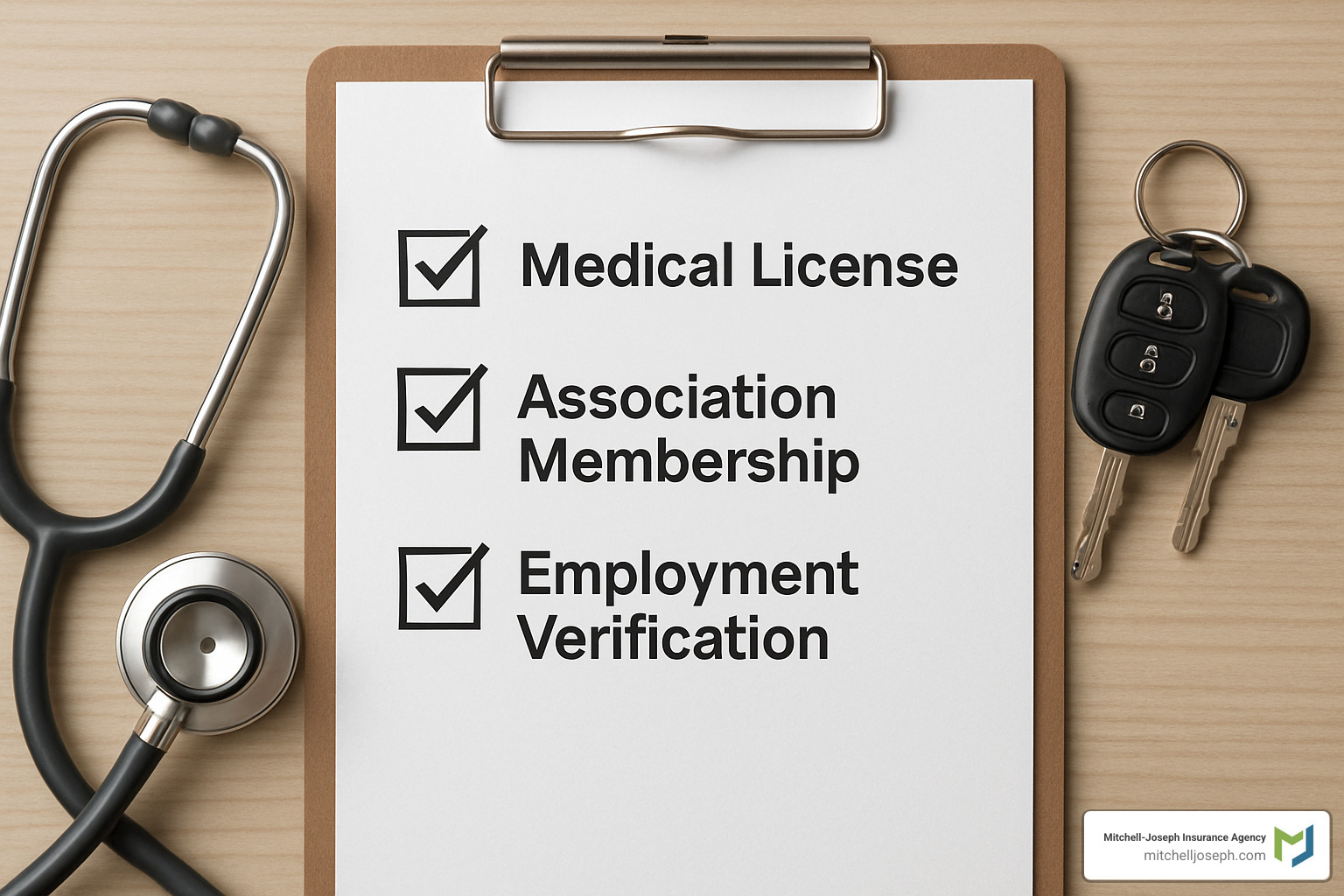
Start by gathering your professional credentials. Your medical license, nursing certification, or pharmacy license serves as your primary proof of professional status. Keep a clear photo or scan on your phone for online applications.
Don’t forget your association memberships. That AMA card in your wallet could be worth hundreds in annual savings. Alumni associations from your medical school often provide additional discounts that stack with professional ones.
Your employment verification matters too. A recent pay stub or employment letter from your hospital confirms your active healthcare status.
When requesting quotes, mention your medical profession immediately. Lead with “I’m a registered nurse at Rochester General” or “I’m a physician at Highland Hospital.” This signals the agent to look for all available medical professional discounts.
Always ask about bundling opportunities. Even if you’re happy with your current home insurance, get a bundled quote. We’ve had doctors save over $1,200 annually by bundling policies.
Avoiding Common Pitfalls & Exclusions
Business use exclusions can leave you exposed. If you drive between multiple practice locations or make house calls, your standard personal auto policy might not cover accidents during these activities. Many insurers offer simple endorsements to add this coverage.
Be honest about your annual mileage, but don’t overestimate. Track your actual mileage for a month and multiply by 12. Overestimating costs you low-mileage discounts.
Telematics programs require special consideration for healthcare workers. Night shift driving and emergency calls can trigger alerts that might affect your discount. Ask about healthcare-worker-friendly programs that account for your unique driving patterns.
Coverage Considerations for Work-Related Driving
Your daily routine as a healthcare professional probably involves more than just driving to and from the hospital. Whether you’re making house calls, transporting equipment between clinics, or rushing to respond to emergency situations, your driving needs go beyond standard “personal use.”
This is where auto insurance for medical professionals gets tricky. Standard personal auto policies weren’t designed with healthcare workers in mind.
When Do You Need Commercial Auto?
Transporting Patients Changes Everything
If you ever drive patients in your personal vehicle, your personal auto policy might not cover you. Most standard policies exclude coverage when you’re transporting people as part of your professional duties.
Carrying Medical Equipment Regularly
Do you transport expensive medical equipment between facilities? Your personal auto policy provides limited coverage for personal belongings, but specialized medical equipment needs broader protection that commercial policies offer.
Multiple Practice Locations
If you work at several locations or make regular house calls, you’re probably crossing into commercial territory. Many insurers use a simple rule: if more than 20-30% of your annual mileage is work-related, you likely need commercial auto coverage.
Optional Improvements for Peace of Mind
Gap Insurance Makes Sense
If you’re financing or leasing your vehicle, gap insurance covers the difference between what your car is worth and what you still owe. This protection is especially valuable for medical professionals who often drive newer, more expensive vehicles.
Premium Roadside Assistance
Guaranteed response times are crucial when you’re on-call and can’t afford to wait hours for help. The best programs cover multiple service calls per year and provide assistance anywhere in North America.
Accident Forgiveness Protects Your Record
Scientific research on claims satisfaction shows that accident forgiveness programs significantly improve customer satisfaction. For medical professionals, this prevents rate increases after your first at-fault accident, helping maintain your good driver status despite the increased accident risk from fatigue and irregular schedules.
Smart Shopping & Comparison Tips
Finding the best auto insurance for medical professionals doesn’t have to feel overwhelming. The key is taking a strategic approach that looks beyond advertised rates and focuses on real value for your unique situation as a healthcare worker.
The biggest mistake people make is shopping based solely on price. Your time is valuable, and getting stuck with poor coverage will cost you far more than any premium savings.
Using Independent Agencies vs. Direct Carriers
Working with an independent agency gives you access to options you’ll never find shopping online or calling insurance companies directly.
The Power of Multi-Carrier Comparison
At Mitchell-Joseph Insurance Agency, we represent 24 different insurance companies. This means I can pull quotes from multiple carriers in one conversation instead of you spending precious free time calling around or filling out endless online forms.
Having Someone in Your Corner
When you’re dealing with a claim after a long shift, you don’t want to fight with an insurance company alone. As your independent agent, I become your advocate, knowing which adjusters are reasonable and how to present your case effectively.
Ongoing Partnership, Not Just a Transaction
Your insurance needs change as your career evolves. I proactively review my clients’ coverage every year, looking for new discounts and better rates. Last year alone, I helped clients save an average of $400 by switching carriers or adjusting coverage.
Local Knowledge Makes a Difference
Working exclusively in the Finger Lakes region means I understand the specific factors that affect medical professionals here. I know the different risks of parking at various hospitals and which carriers offer the best rates for different areas.
For more information about rate factors, check out our guide on Factors That Determine Your Auto Insurance Premium.
Regional Variations & Regulatory Notes
State-Specific Occupation Rules
Some states prohibit insurance companies from giving discounts based on profession. New York has restrictions on how insurers can use occupation in pricing, but these same discounts are often available through professional association memberships or education-based programs.
Privacy and Technology Concerns
Telematics programs can offer substantial savings, but medical professionals need to be careful about privacy implications. If you’re making house calls, location tracking could create confidentiality issues. Most modern programs allow you to opt out of location tracking while still monitoring driving habits.
Frequently Asked Questions about Auto Insurance for Medical Professionals
These are the questions that come up most often when medical professionals call our office looking for auto insurance for medical professionals.
What documents prove my healthcare status?
Your professional license is typically all you need. Whether you’re a doctor, nurse, pharmacist, or therapist, your current state license serves as primary proof of your healthcare status.
Professional association memberships can boost your savings. AMA membership, state medical society, or nursing associations often open up the biggest discounts – sometimes up to 20% off your premiums.
Employment verification works too. A recent pay stub from your hospital or clinic, employment verification letter, or hospital ID badge can satisfy most insurers’ requirements.
How much can I realistically save?
Professional discounts typically range from 5% to 20%. AMA members often see the higher end of this range, while other healthcare workers might see more modest savings.
Education discounts add another 3% to 5%. Your medical degree, nursing certification, or pharmacy doctorate signals to insurers that you’re a lower risk.
Bundling creates the biggest savings opportunity. When you combine auto with homeowners coverage, you might save 15% to 35% on your home insurance and 5% to 15% on your auto.
Real example: Last year, we helped a family physician who was paying $2,400 annually for auto and home insurance. After applying his AMA discount, education discount, and multi-policy bundle, his total premium dropped to $1,650 – that’s $750 in annual savings.
Can I bundle malpractice and auto policies together?
Individual malpractice policies sometimes offer small discounts. If you purchase your own professional liability coverage, a few carriers will give you a modest discount (usually 2% to 5%) for bundling with personal auto insurance.
Employer-provided malpractice doesn’t help with bundling since you’re not directly paying those premiums.
The real bundling opportunity is still home and auto. You’ll typically save much more money by focusing on traditional home and auto bundles, then adding an umbrella policy for extra liability protection.
Conclusion
Finding the right auto insurance for medical professionals doesn’t have to be another stressful item on your already overwhelming to-do list. The savings opportunities are real – we’ve seen healthcare workers save anywhere from $500 to over $1,200 annually just by taking advantage of the discounts they’ve already earned through their education and professional status.
The secret isn’t just knowing these discounts exist. It’s about properly documenting your eligibility and finding an insurance partner who understands the unique challenges you face as a healthcare worker. Whether you’re driving home exhausted after a 12-hour shift or rushing to the hospital for an emergency call, your insurance should work as hard as you do.
Your professional dedication deserves professional recognition – and that includes recognition through lower insurance premiums. We’ve helped hundreds of doctors, nurses, and other medical professionals throughout Rochester, Canandaigua, and the entire Finger Lakes region find savings they didn’t even know existed.
At Mitchell-Joseph Insurance Agency, we take a different approach than the big insurance companies. Instead of treating you like just another policy number, we take time to understand your specific situation. Are you a resident working crazy hours? A seasoned physician with multiple practice locations? A nurse considering a career change? Each situation requires different coverage considerations and discount strategies.
Our 24 insurance company partnerships mean we can shop your coverage across multiple carriers simultaneously. While other agents might only show you one or two options, we can compare rates and coverage from nearly two dozen companies to find your best match. It’s like having a personal insurance shopper who knows exactly what questions to ask and which carriers offer the best deals for medical professionals.
The bundling opportunities alone can be game-changing. When we help you combine your auto insurance with home and umbrella coverage, the savings on your home insurance often pay for your entire auto policy. It’s not uncommon for us to save families $2,000 or more annually through strategic bundling.
Don’t let another year go by paying more than necessary for your auto insurance. Your medical training taught you the importance of getting a second opinion on important decisions. Consider this your second opinion on your insurance coverage.
Ready to see what you could be saving? Visit our Auto Insurance Quotes Rochester NY page to get started, or give us a call. We’ll handle all the comparison shopping, paperwork, and follow-up so you can focus on what matters most – taking care of your patients and your family.
After all, you spend your days taking care of others. Let us take care of protecting what matters most to you.

