

Flood insurance faqs can sometimes feel complex, but understanding them is crucial for safeguarding your home and business. Floods may occur unexpectedly due to heavy rains, storms, or broken dams, potentially causing significant financial strain. Here’s a quick overview of the essentials:
- What is covered? Flood insurance covers losses caused by flooding, specifically for building structures and personal belongings.
- Who needs it? Homeowners in high-risk flood zones are required to have flood insurance to secure federally backed mortgages.
- Who’s involved? Policies are available through the National Flood Insurance Program (NFIP) and private insurers.
- Why is it important? Without flood insurance, property owners may face costly damages that are not covered by standard homeowners insurance.
I’m Jeffrey Joseph from Mitchell-Joseph Insurance, leveraging over 20 years of experience to help clients steer complex insurance needs. My expertise ensures that you understand the ins and outs of flood insurance and how it can protect your assets.
Flood insurance faqs vocabulary:
– flood insurance claim process
– flood insurance coverage limits
– flood insurance deductible options
What is Flood Insurance?
Flood insurance is a type of property insurance designed to cover your home or business from losses caused by flooding. Flooding can result from various events, such as heavy rain, storm surges, or even melting snow. Unlike standard homeowners insurance, which typically doesn’t cover flood damage, flood insurance specifically addresses these risks.
Coverage Details
Flood insurance policies generally cover two main areas:
- Building Coverage: This includes the structural components of your home or business, such as:
- Foundation walls and staircases
- Plumbing and electrical systems
- Central air systems, water heaters, and furnaces
-
Major appliances like refrigerators and stoves
-
Contents Coverage: This protects personal belongings within the property, including:
- Furniture and electronics
- Clothing and other personal items
- Portable appliances

Why is Flood Insurance Important?
Flooding can cause devastating damage, often leading to repair costs exceeding $25,000 for just a few inches of water. This is why flood insurance is critical, especially for those living in high-risk areas. It acts as a financial safety net, ensuring that you can recover more easily from flood-related disasters.
In many cases, flood insurance is required for properties in high-risk flood zones, especially if you have a federally backed mortgage. However, even if you live in a low-to-moderate risk area, flood insurance can still provide valuable protection.
Understanding the specifics of flood insurance can help you make informed decisions about protecting your property. The National Flood Insurance Program (NFIP) and private insurers offer policies custom to different needs, ensuring that you have the coverage necessary to protect your home or business from potential flood damage.
Understanding Flood Insurance Requirements
Navigating flood insurance requirements can feel complex, but it’s crucial for homeowners, especially those in high-risk areas. Let’s break down the essentials to help you understand what you need to know.
Federal Requirements
The National Flood Insurance Program (NFIP), administered by FEMA, sets the baseline for flood insurance requirements in the United States. If your property is located in a designated Special Flood Hazard Area (SFHA), and you have a federally backed mortgage, you’re required to have flood insurance. This mandate aims to protect both the homeowner and the lender from the financial devastation that flooding can cause.
High-Risk Zones
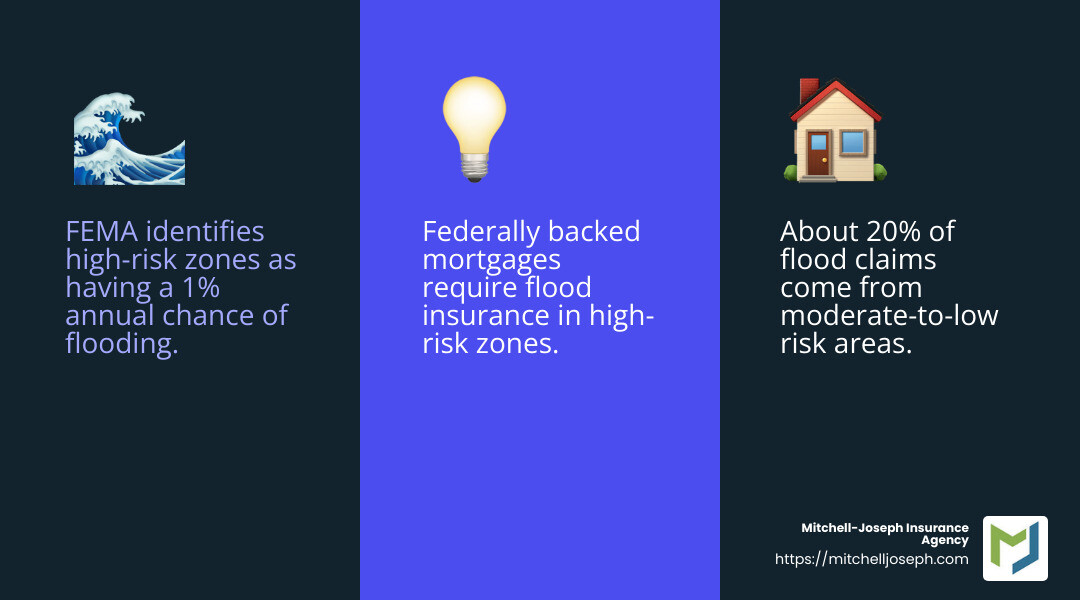
High-risk zones, or SFHAs, are areas identified by FEMA that have a 1% annual chance of flooding, also known as the “100-year floodplain.” In these zones, flood insurance is not just recommended; it’s often mandatory. Even if you live outside these zones, it’s worth noting that about 20% of flood claims come from moderate-to-low risk areas. Therefore, considering flood insurance even when it’s not required can be a smart decision for peace of mind and financial security.
Lender Requirements
Mortgage lenders have their own set of criteria when it comes to flood insurance. If your property is in a high-risk area, lenders typically require you to purchase flood insurance to protect their investment. This is because the property serves as collateral for the loan. In case of flood damage, insurance ensures that the property can be repaired, maintaining its value and the lender’s security.
Lenders often specify that the insurance cover at least the outstanding mortgage balance or the maximum coverage available under the NFIP—whichever is less. It’s important to check with your lender about their specific requirements to ensure compliance and avoid any issues.
Understanding these requirements helps you stay prepared and ensures that you’re adequately protected. Whether you’re in a high-risk zone or not, knowing the ins and outs of flood insurance can safeguard your home and your finances.
Types of Flood Insurance Policies
When it comes to flood insurance, you have a few options to choose from, each with its own set of features and benefits. Understanding these options can help you make an informed decision that best suits your needs.
National Flood Insurance Program (NFIP)
The National Flood Insurance Program (NFIP) is a federally subsidized program managed by FEMA. It provides flood insurance to homeowners, renters, and businesses in participating communities. The NFIP is designed to help property owners in high-risk flood areas where private insurers may not offer coverage.
Under the NFIP, policies cover both building and contents. However, coverage limits apply: up to $250,000 for residential buildings and $100,000 for contents. For commercial properties, the coverage limit is $500,000 for the building and $500,000 for contents. The NFIP policies are available through private insurers, but the rates and coverage are set by the NFIP itself.
Private Insurance
Private flood insurance is an alternative to the NFIP and can be a great option if you need more coverage than the NFIP offers. Private insurers often provide higher limits and additional coverage options, such as temporary living expenses or business interruption coverage. They also have more flexibility in terms of underwriting and pricing, which can sometimes result in lower premiums for properties that are not in high-risk zones.
Choosing a private insurance policy can be beneficial if you’re looking for comprehensive coverage or if you own a property that exceeds NFIP limits. However, it’s crucial to compare policies and ensure that the private coverage meets or exceeds what the NFIP offers, especially if you’re in a high-risk area.
Surplus Lines
Surplus lines insurance refers to coverage from insurers that are not licensed in your state but are legally allowed to provide insurance through a licensed surplus lines broker. These policies do not require rate or coverage approval by the state’s insurance department, which allows them to offer specialized coverage that may not be available from standard insurers.
Surplus lines can be particularly useful for unique or high-value properties that may not fit the underwriting criteria of traditional insurers. However, because they are not subject to state regulations, work with a knowledgeable broker to ensure that the policy is reliable and that the insurer is financially stable.
Choosing the right flood insurance policy requires careful consideration of your property’s risk level, the coverage limits you need, and your financial situation. Whether you opt for NFIP, private insurance, or surplus lines, make sure to evaluate all options to find the best fit for your needs.
Flood Insurance FAQs
When considering flood insurance, it’s crucial to understand the scope of coverage, exclusions, and how to purchase a policy. Here, we address some flood insurance FAQs to help you steer your options.
What does flood insurance cover?
Flood insurance primarily covers direct physical losses caused by flooding. This includes damage to the building and its contents. Under the National Flood Insurance Program (NFIP), there are two main types of coverage:
- Building Coverage: Protects the physical structure of your home or business, including the foundation, electrical and plumbing systems, central air conditioning, water heaters, and built-in appliances. Coverage limits are up to $250,000 for residential buildings and $500,000 for commercial buildings.
- Contents Coverage: Covers personal belongings like furniture, clothing, and electronics. Coverage limits are up to $100,000 for residential contents and $500,000 for commercial contents.
Important Note: The NFIP’s coverage limits may not fully cover high-value properties. In such cases, consider private flood insurance for additional protection.
What does flood insurance not cover?
Flood insurance has certain exclusions and limitations. It does not cover:
- Personal property kept in basements: Items stored below ground level are typically excluded.
- Temporary housing costs: Expenses incurred from living elsewhere while your home is being repaired.
- Business interruption losses: Financial losses due to business closure from flooding.
- Property outside the insured building: This includes landscaping, decks, patios, and vehicles.
Additionally, damages from moisture, mildew, or mold that could have been prevented by the property owner, and sewer backups not directly caused by flooding, are generally not covered.
How can I purchase flood insurance?
Purchase Options:
-
Through NFIP: You can buy flood insurance through the NFIP, which is available in participating communities. Most homeowners purchase NFIP policies through private insurers who administer these policies on behalf of the program.
-
Private Insurers: If you need higher coverage than NFIP limits, consider private flood insurance. These policies often offer more comprehensive coverage and flexibility.
Timing:
- 30-Day Waiting Period: NFIP policies typically have a 30-day waiting period before coverage begins. Plan ahead to ensure you’re protected when the risk of flooding is high.
- Immediate Coverage: Some private insurers may offer immediate coverage or shorter waiting periods, especially if you’re renewing an existing policy.
Purchasing flood insurance is a proactive step in protecting your property from the financial impact of flooding. Evaluate your needs and explore both NFIP and private options to find the best fit for your circumstances.
Recent Changes in Flood Insurance Regulations
Flood insurance regulations have undergone significant changes in recent years, primarily due to the Biggert-Waters Flood Insurance Reform Act of 2012 and the Homeowner Flood Insurance Affordability Act of 2014. These legislative acts were introduced to address the evolving needs of flood insurance policyholders and to ensure the program’s financial sustainability.
Biggert-Waters Flood Insurance Reform Act of 2012
The Biggert-Waters Act was a pivotal piece of legislation aimed at reforming the National Flood Insurance Program (NFIP). It sought to make the program more financially stable by phasing out subsidies on certain properties and allowing rates to rise to reflect true risk levels. This meant that some property owners saw significant increases in their flood insurance premiums.
Key changes under Biggert-Waters included:
- Rate Increases: The Act mandated that flood insurance rates should reflect the actual risk of flooding. This led to substantial premium increases for properties in high-risk areas.
- Subsidy Reductions: Many properties lost their subsidized rates, particularly second homes, commercial properties, and properties with severe repetitive loss.
Homeowner Flood Insurance Affordability Act of 2014
In response to the backlash over rising premiums, the Homeowner Flood Insurance Affordability Act was enacted to ease the financial burden on policyholders and to address affordability concerns.
Important provisions included:
- Rate Relief: The Act capped annual premium increases at 18% for primary residences, providing some relief to homeowners facing steep rate hikes.
- Reinstatement of Subsidies: It reinstated subsidies for certain properties and allowed for gradual increases in premiums instead of immediate hikes.
- Refunds for Overpayments: Homeowners who experienced significant premium increases due to Biggert-Waters were eligible for refunds.
Legislative Changes and Their Impact
These legislative changes reflect a balancing act between maintaining the financial health of the NFIP and ensuring affordability for policyholders. They aim to encourage responsible development in flood-prone areas while providing financial relief to affected homeowners.
The revised Interagency Questions and Answers Regarding Flood Insurance issued by federal agencies further clarify these legislative changes and assist financial institutions in complying with updated flood insurance requirements. These Q&As address technical issues like the escrow of flood insurance premiums and the force placement procedures.
Understanding these changes is crucial for property owners, especially those in high-risk flood zones. By staying informed, you can make better decisions about your flood insurance needs and ensure that your property is adequately protected.
Conclusion
At Mitchell-Joseph Insurance Agency, we understand that navigating the complexities of flood insurance can be daunting. That’s why we’re here to help you every step of the way. With over 200 years of combined experience and a commitment to personalized service, we provide our clients with custom coverage solutions custom to their unique needs.
Our team works closely with you to assess your flood risk and determine the most suitable insurance options. Whether you’re considering a policy through the National Flood Insurance Program (NFIP) or exploring private insurance alternatives, we’re equipped to guide you through the process.
Why Choose Us?
-
Personalized Service: We prioritize understanding your specific situation and insurance needs. This allows us to offer advice and coverage options that best fit your circumstances.
-
Custom Coverage: With access to competitive quotes from 24 insurance companies, we ensure that you receive the best possible coverage at a fair price. Our goal is to provide peace of mind by protecting your property against the financial impact of flood damage.
-
Local Expertise: Serving areas across Honeoye Falls, Pittsford, Naples, and more, we have a deep understanding of the local flood risks and insurance requirements. This local knowledge helps us offer relevant and effective insurance solutions.
Flood insurance is a critical component of protecting your home or business from potential disasters. By choosing Mitchell-Joseph Insurance Agency, you’re not just getting an insurance policy; you’re gaining a partner dedicated to safeguarding your assets and helping you weather any storm.
For more information on flood insurance and to explore your options, contact us today. Let us help you find the right coverage to secure your future.

