

Why Agricultural Equipment Insurance Is Essential for Your Farm’s Success
Agricultural equipment insurance is the safety net that keeps your operation running when costly machinery is damaged, stolen, or destroyed. By transferring risk to the insurer, you protect both your balance sheet and your ability to get work done during critical planting and harvest windows.
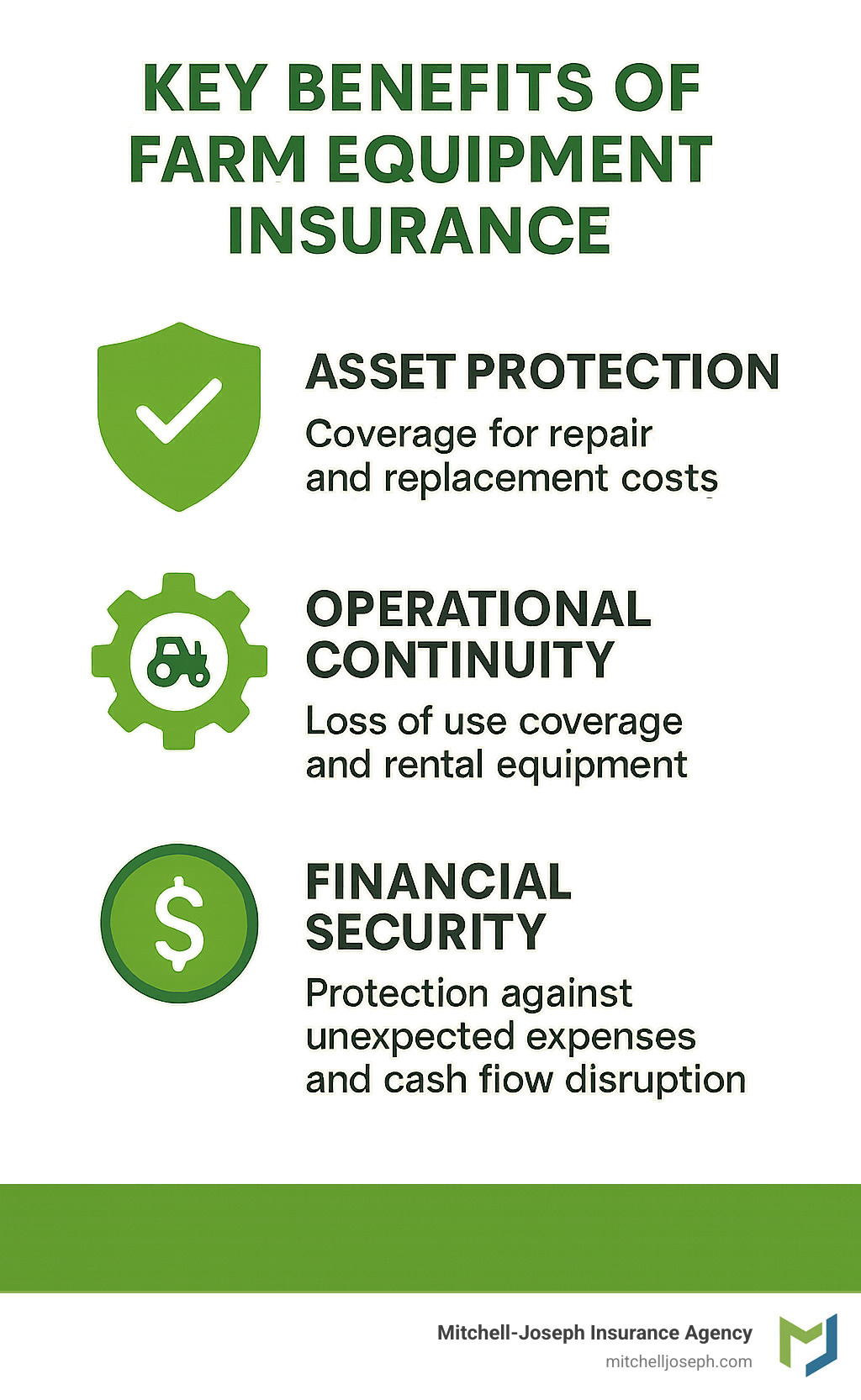
Key Benefits of Agricultural Equipment Insurance:
- Asset Protection – Pays for covered repairs or full replacement
- Operational Continuity – Helps you secure rental equipment and avoid downtime
- Financial Security – Shields cash flow from large, unexpected bills
- Peace of Mind – Lets you focus on farming, not “what-ifs”
A single combine can easily top $500,000, and tractors often exceed $100,000. With tens of millions of dollars in farm equipment stolen across Canada and the U.S. each year, one uncovered loss could jeopardize an entire season’s profits.
I’m Jeffrey Joseph. Since 1999 I’ve helped growers across the Finger Lakes region recover quickly from fires, storms, and theft by putting the right coverage in place before disaster strikes.
Similar topics to agricultural equipment insurance:
What is Agricultural Equipment Insurance and Why Is It Crucial?
Imagine your combine quits halfway through harvest or your tractor disappears overnight. Agricultural equipment insurance steps in to pay for repair or replacement so the season—and your income—stay on track. Modern farms rely on machinery that often costs more than the family home, making coverage indispensable.
North American Equipment Dealers Association data and law-enforcement reports confirm that equipment theft and weather losses cost producers tens of millions annually. After 20-plus years helping Finger Lakes farmers, I’ve seen those with proper coverage recover quickly while the uninsured struggled for years.
What Types of Farm Equipment Are Typically Covered?
- Tractors of every size
- Combines and harvesters
- Balers, plows, and tillage tools
- Sprayers, seeders, and precision-planting gear
- Irrigation pivots and pumps
- GPS, monitors, and ag-tech add-ons
- Livestock handling and feeding equipment
Need details on your biggest workhorse? See our guide to tractor insurance.
Common Perils and Damages Protected Against
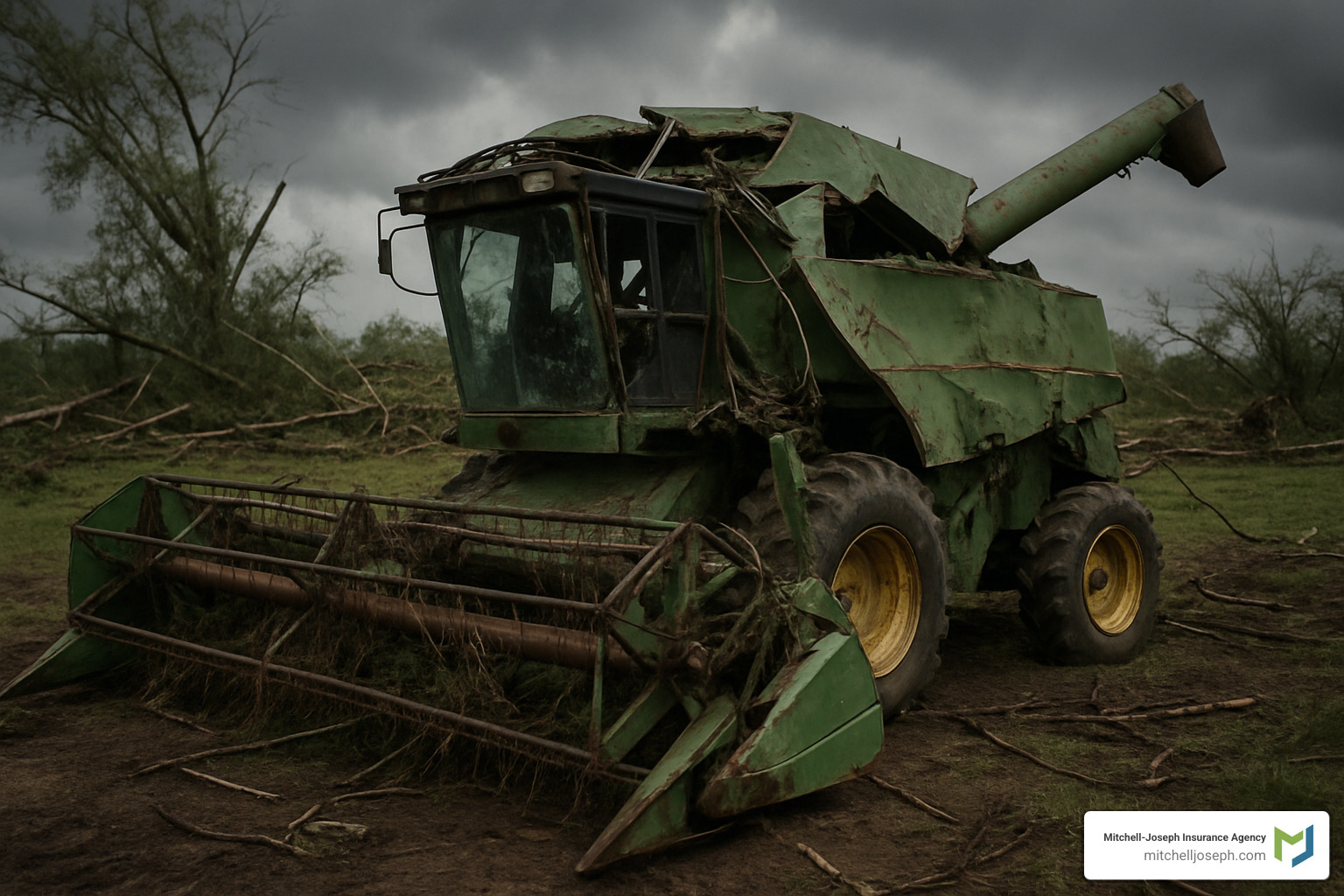
Most policies offer broad protection against sudden and accidental events. Fire, lightning, theft, and vandalism are standard. Coverage also extends to collision and overturn, whether in the field or on the road. Weather perils like wind, hail, and flood are crucial protections. Unique farm-specific risks like foreign-object ingestion (e.g., a rock destroying internal combine components) and damage during transit between fields are also typically covered.
Common Exclusions: What Isn’t Covered?
Understanding exclusions is key to avoiding surprises. Insurance is for unexpected events, not predictable failures. Therefore, normal wear and tear, rust, and mechanical breakdown due to poor maintenance or age are not covered. These are considered operational costs. Likewise, damage you cause intentionally is excluded. Finally, items that need their own specific policies, such as unlicensed recreational vehicles (ATVs), aircraft, watercraft, and the crops themselves, fall outside the scope of an equipment policy.
Decoding Your Coverage Options: Policies and Valuations
Choosing coverage is like matching the right tractor to the right job—one size never fits all. Our quick guide below spares you the legalese so you can make smart decisions. For the full deep-dive, visit Farm Equipment Insurance Explained.
Blanket vs. Scheduled Policies
Blanket coverage combines all machinery under one total insurance limit—perfect for numerous mid-value implements and attachments where listing each one would be cumbersome. Scheduled coverage lists high-value items one-by-one, giving them precise, dedicated protection. This is essential for your most expensive assets.
| Blanket | Scheduled |
|---|---|
| One total limit | Separate limit per item |
| Simple updates | Precise valuations |
| Lower cost for mixed small gear | Ideal for big-ticket machines |
Most farms blend the two: schedule the $350,000 combine and primary tractors, then use a blanket limit to cover the collection of plows, augers, and post-hole diggers.
Replacement Cost (RCV) vs. Actual Cash Value (ACV)
This choice dictates your payout after a total loss. RCV pays what it costs to buy a new, comparable unit, with no deduction for age or wear. It’s the best choice for newer, mission-critical equipment. ACV pays the replacement cost minus depreciation. For example, a 10-year-old tractor worth $40,000 might cost $150,000 new; ACV would pay around $40,000. Choosing ACV for older, less critical backup equipment is a practical way to trim premiums.
Beyond Repairs: Loss of Use and Business Interruption
These vital endorsements protect you from the consequences of downtime. Rental reimbursement (loss of use) covers the cost of substitute machinery so jobs stay on schedule. This is crucial during planting or harvest. Business interruption coverage is broader, replacing lost income and covering ongoing expenses like loan payments when a covered loss cripples production. See how to cap costs without cutting corners at Find Affordable Farm Equipment Insurance.
Understanding Your Agricultural Equipment Insurance Policy
Creating a solid policy starts with a current inventory, realistic replacement costs, and a clear picture of your farm’s unique risks.
Key Factors for Your Agricultural Equipment Insurance Plan
- Maintain a detailed, photo-supported equipment list—including GPS units and attachments.
- Match coverage to local hazards (flood-plain, tornado alley, etc.).
- Choose deductibles you can truly afford when a loss hits.
- Add endorsements for newly acquired or non-owned equipment so coverage never lags.
The Role of an Independent Insurance Broker
As an independent agency, Mitchell-Joseph shops 24 carriers, tailoring quotes to your acreage, budget, and machinery mix. We also advocate during claims and revisit your policy each year so your protection evolves with your farm.
The Claims Process for Agricultural Equipment Insurance
- Ensure everyone’s safe, then secure the scene.
- Document damage thoroughly (photos, video, notes).
- Call us promptly—many policies require quick notice.
- Leave equipment in place until the adjuster inspects.
- Obtain repair estimates and approve work once the claim is settled.
Smart Risk Management: Preventing Losses and Lowering Costs
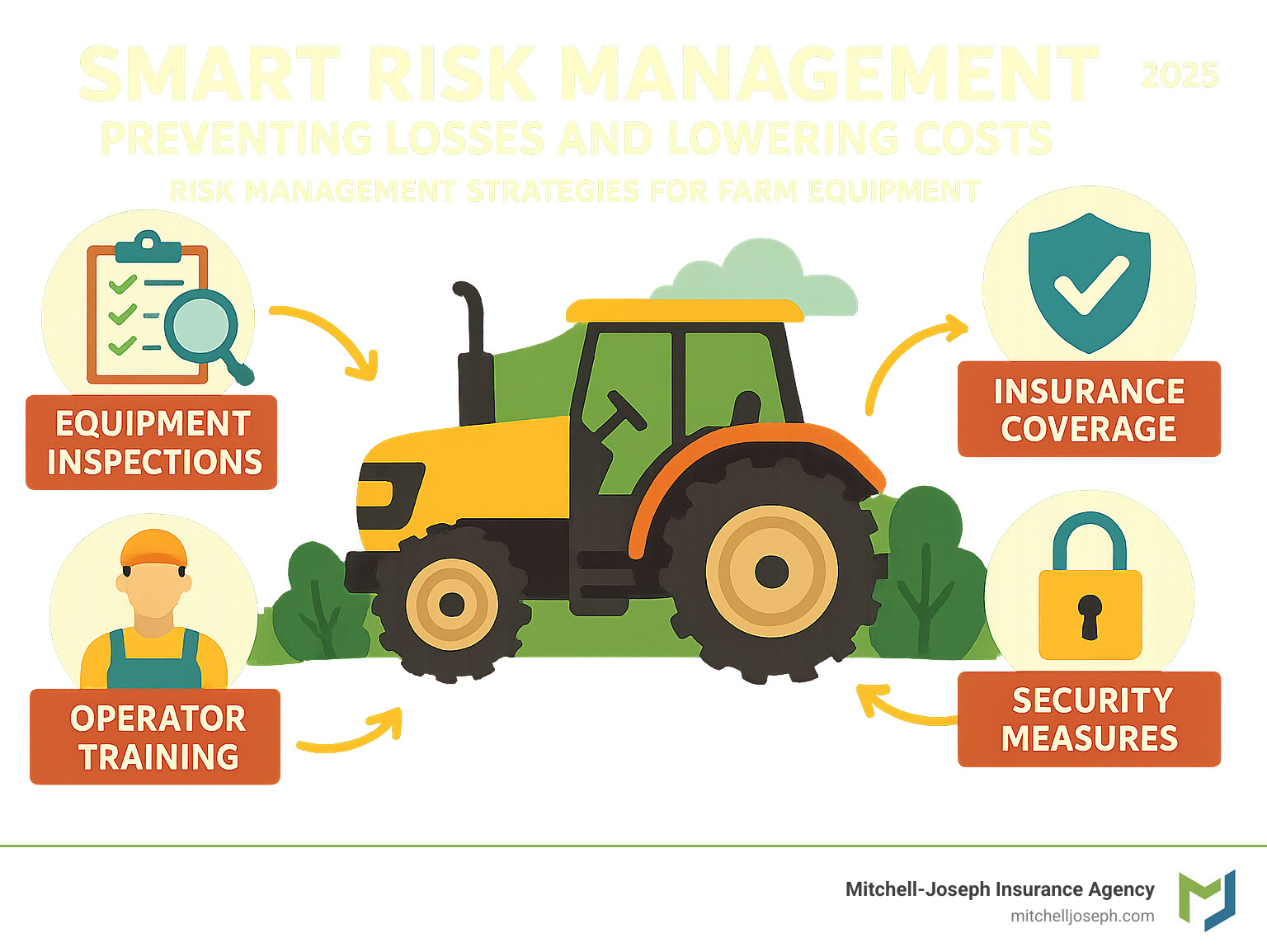
The best claim is the one you never file. Insurers recognize this and often reward proactive farms with premium credits for implementing strong safety and security measures.
Key Risk Management Tips
- Follow Written Maintenance Schedules: Keep detailed logs and receipts for all service. This proves due diligence and can be invaluable during a claim.
- Secure Your Assets: Store equipment in locked buildings whenever possible. For items in the field, consider anti-theft devices like kill switches or fuel cut-offs. Good lighting, cameras, and fencing around the farmstead are strong deterrents.
- Prioritize Operator Training: Ensure every operator is fully trained on the specific equipment they use. Document this training and hold seasonal safety refreshers to keep best practices top of mind.
- Reduce Fire Risk: Be vigilant about fire prevention, especially during harvest. Regularly use compressed air to clean chaff and debris from engine compartments. Ensure proper fuel storage, have building electrical systems inspected, and keep charged ABC fire extinguishers readily accessible in shops, barns, and on major equipment.
- Maintain Detailed Inventories: Keep a running list with photos, serial numbers, and purchase dates for all equipment. For high-value machinery, GPS trackers can significantly speed up recovery after a theft and make for a smoother claims process.
Frequently Asked Questions

How are agricultural equipment insurance premiums calculated?
Rates reflect a combination of factors: the value, type, and age of your equipment; your farm’s location and its associated risks (e.g., hail, flood zones); your past claims history; and the coverage limits and deductibles you select. Demonstrating good risk management, such as having detailed maintenance logs and secure storage, can help reduce your costs. Explore more at our Farm Insurance FAQs.
Can I insure equipment that I rent or borrow?
Yes, through an endorsement for non-owned equipment. When you rent or borrow a machine, you are typically responsible for it. This coverage protects you if that equipment is damaged or stolen while in your care, preventing a potentially massive out-of-pocket expense.
How often should I review my policy?
Review your policy annually at renewal with your agent. It’s also critical to contact your agent immediately after buying, selling, or significantly modifying any equipment to ensure your coverage remains accurate and you aren’t over- or under-insured.
What is a deductible?
A deductible is the amount of money you are responsible for paying out-of-pocket on a covered claim before the insurance company pays. For example, if you have a $2,500 deductible and a covered repair costs $10,000, you would pay the first $2,500 and your insurer would pay the remaining $7,500. Choosing a higher deductible typically lowers your premium, but you must be comfortable paying that amount if a loss occurs.
Conclusion: Secure Your Livelihood with the Right Protection
Your machinery is the heartbeat of your farm. With comprehensive agricultural equipment insurance, you defend that heartbeat against fires, storms, accidents, and theft—risks that could otherwise halt production and drain savings.
Mitchell-Joseph Insurance Agency has safeguarded Finger Lakes farms since 1999. With access to 24 insurers and more than 200 years of combined experience, we craft coverage that fits your acreage, budget, and goals.
Don’t wait for a costly surprise. Get your custom farm insurance coverage today and find peace of mind that lets you focus on growing what matters most.

